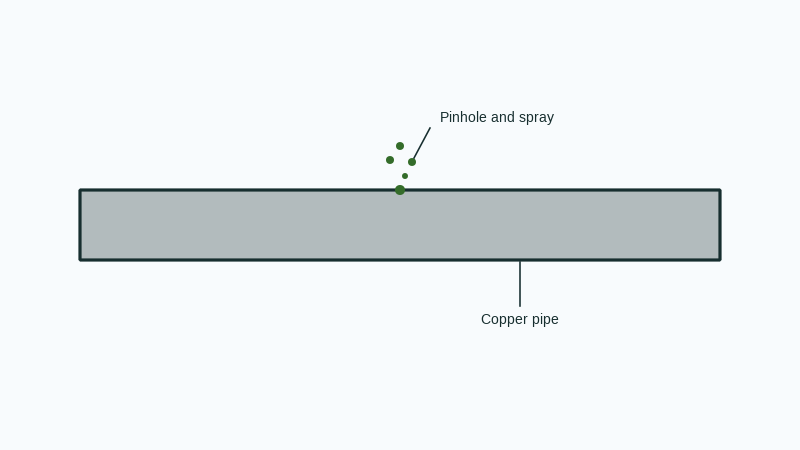
What comes first when I discover a pinhole leak?
Stop the water first, then deal with the leak. Close the shutoff valve nearest to it, or the main valve if that one is hard to find, then open a low tap so the line drains. Mop up, keep electricity away from wet spots and photograph the damage in case you file an insurance claim. Our Arroyo Simi Plumbing home page describes how requests work if you want a plumber on the way.
Should the water be close to outlets, a panel or a light fitting, turn off the breaker for that zone, but only when you can get to the panel without wading through water. If that is unsafe, stay back and treat the situation as an emergency; our guide to burst pipes lists the steps.
It is easy to underrate a pinhole because the spray is so thin. Yet one can run for hours or days inside a wall, soaking drywall and insulation. The EPA estimates that leaks cost the average home over 9,300 gallons a year, and a concealed pinhole adds to that total.
What causes pinholes in copper pipe?
A pinhole forms when corrosion eats through the pipe wall, beginning on either the inside or the outside. Contributing factors include water chemistry that attacks copper, fast flow that erodes the wall, flux or debris left in the line, and outside contact with other metals or chemicals. After one shows up in a run, more tend to follow, since the whole line faces the same conditions.
This matters for the repair choice. One pinhole in a young pipe may be a lone flaw. Pinholes in several rooms mean the pipe is reaching the end of its life. In Simi Valley and Moorpark, tract homes from the 1960s to the 1990s often have copper supply lines old enough for pinholes to be a known concern, although your own pipes and water set the actual risk.
Water chemistry varies by location: each supplier issues an annual quality report, and your bill names the supplier. To judge the pipe, a plumber studies where the leaks are and what a cut section looks like inside.
What is a temporary way to seal a pinhole?
After the water is shut and the pipe is dry, choose among a rubber-lined repair clamp, two-part epoxy putty and self-sealing silicone tape. Clean the copper beforehand. Treat these as stopgaps until a proper repair is done; they do not belong in a wall for years.
Steps:
- Close the water supply and drain the line.
- Dry the pipe and sand the spot with fine abrasive until the copper is bright.
- Use the product as directed: a clamp over the hole, putty worked soft and pressed in place, or tape pulled taut and wound tightly past the hole on both sides.
- Restore the supply slowly, watching for any weeping.
Keep an eye on it over several days. A patch that weeps, or a pipe that feels soft, indicates widespread thinning. Temporary patches also conceal the cause, so the plumber will want to examine the section regardless.
What is the permanent repair for a copper pinhole?
A lasting fix means cutting out the damaged section and joining new pipe with couplings, either soldered or push-fit. Make the cuts in sound copper past the damaged area, and confirm the line is completely empty and dry before soldering. Where the pipe is thin elsewhere, a repair only buys time before the next leak.
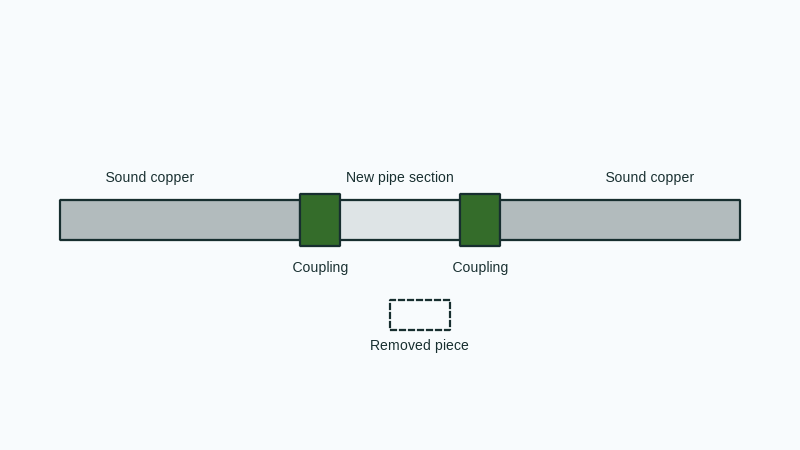
Push-fit couplings are simpler than soldering because no torch is involved, and a careful homeowner can use them on accessible pipe. Soldering takes practice and carries a fire risk inside a wall, so many homeowners hand the job to a plumber. Choose lead-free parts approved for drinking water. Never point a torch toward gas piping, and leave gas pipework to a plumber who handles it daily.
If the leak lies under a slab or in a wall you cannot reach, a plumber uses leak detection to pinpoint it before opening anything. Two pages cover this: slab leak detection and repair and leak detection cost.
Is replacing the pipe smarter than patching it?
Replace when two or more pinhole leaks have occurred, when the pipe shows green crust or pitting, when the water looks discolored, or when the plumber finds thin walls in the cut-out section. A repipe costs more than a patch, but repeat repairs and water damage add up. Compare both options in writing.
A simple log of leak dates and locations makes the case for or against a repipe much clearer. Our pages on the reasons homeowners repipe and repiping service walk through the decision.
Larger plumbing work needs permits. In Simi Valley the city's Building and Safety Division handles them, while Moorpark has its own Building and Safety office. California requires a contractor license for permitted work, and generally once a job's combined labor and materials reach $1,000. We don't state dollar prices, since no local figures are verified.
To have a plumber track down and fix the leak, submit a leak request stating where the pipe runs, what you can see and how many leaks have occurred. We pass the request to a local plumbing business, and the business that accepts it pays us a fee. A person reads submissions every weekday from 9am to 5pm.
Common questions
Is epoxy or a clamp good enough as a lasting repair?
They can hold a while, but they are meant as temporary measures. A clamp or putty seals a small hole, yet if the surrounding pipe is thin, a new leak can open next to the patch. Schedule a proper repair or a plumber's assessment.
Watch for damp drywall, stains, a musty smell, warm patches on the floor, a hissing noise, or a water meter still spinning while every tap is closed. Acoustic or thermal tools let a plumber locate the spot before cutting, which limits wall damage. See ceiling leaks.
Is a pinhole leak an emergency?
Handle it as urgent. Shut the water to the affected section, because hidden leaks saturate walls and floors fast. If water is close to electrics or flowing heavily, treat it as a burst pipe emergency, and stay away from wet outlets and panels.
Would my home insurance pay for a pinhole leak?
That hinges on the policy, which often distinguishes sudden damage from gradual leaks and wear. We cannot tell you what yours covers. Take photos of the damage, stop the leak, then review the policy or ask your insurer. A slab leak is a separate case.
Can pinholes cause a slab leak?
Slab leaks are known to start from pinholes in copper lines under a concrete floor slab, since the same corrosion can happen there. If your bill keeps rising, the floor has warm spots or you hear water running, have a plumber test for a slab leak.