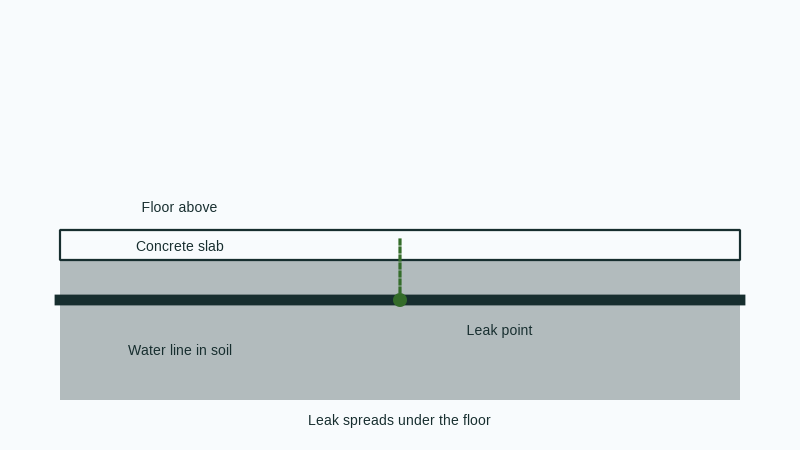
A slab leak is a leak in a water line that runs under or inside a house's concrete floor. Typically the decision is between opening the floor to repair the one damaged spot, or leaving the old line alone and running new pipe through the walls and attic. A local plumber decides after a leak detection visit. Use the quote form on the home page and we pass the request along to a plumbing company. The companies that take requests pay us a fee.
Is it better to patch a slab leak or replace the pipes?
Fix the spot when the leak is one failure in otherwise healthy pipe. Choose new piping when leaks keep returning, when several lines are corroded, or when the pipe type has a record of failing. After the plumber locates the leak, they can tell you which case applies, so you pay to cure the cause rather than one symptom.
A single repair is often cheaper in the short term, but it means breaking into the slab, and the flooring above it becomes part of the bill. A repipe takes the water lines out of the slab entirely, so any later leak is in a wall or attic, where it is easier to reach and less likely to ruin flooring.
Age and material matter. Homes in Simi Valley and Moorpark range widely in age, and the pipe materials used shifted over the decades. If your house still has older galvanized steel or polybutylene, read about replacing galvanized pipe and swapping out polybutylene before you patch one more leak. A second leak in the same house within a few years suggests the pipe, not the spot, is the problem.
Which methods exist for fixing a leak under the slab?
Three main routes exist. Direct access cuts through the floor to reach and replace the damaged section. Tunneling goes beneath the slab from outside the footing. Rerouting abandons the leaking line and brings new pipe in through walls or the attic. Some plumbers also offer epoxy lining inside the pipe, which suits only some conditions.
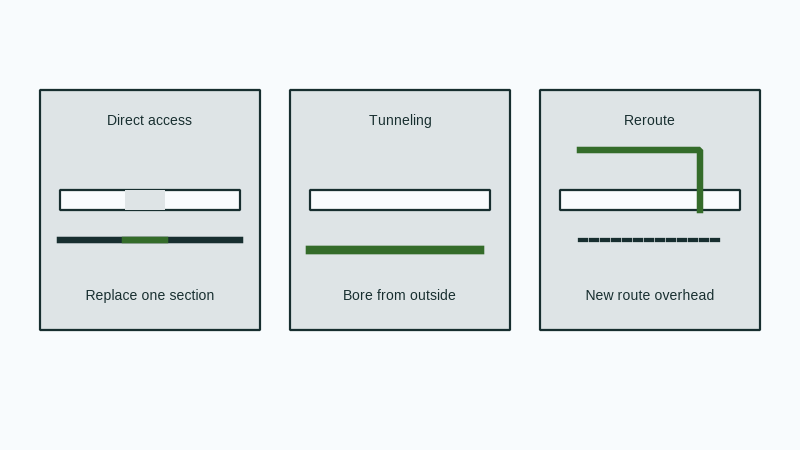
Direct access disrupts floors the most but is the quickest to understand: the plumber sees the pipe, replaces it, and patches the concrete. Tunneling spares your living space but needs room outside the house and does not fit every lot or every pipe position.
Epoxy lining puts a resin coating inside an existing pipe. It can work when the remainder of the pipe is in good shape and access is hard, though it does not suit every failure or every pipe. Ask the plumber, in writing, which warranty the installer gives on the lining and what follows if the pipe fails again. Never accept epoxy on a pipe with several leaks unless you get a clear explanation of why it will hold.
Rerouting is the approach most tied to a full repipe, and plumbers often suggest it once a house has leaked more than once. For the material choice, see the repiping process and PEX against copper.
What makes the cost of a slab leak repair or a repipe go up or down?
Three things drive price: access, scope and finish work. Access covers where the leak sits and how deep; scope covers one repair, a reroute or a whole-house repipe; finish work covers flooring, drywall, paint and permits. Leak detection usually shows up as a separate item on the quote. The visiting plumber sets the real figure after seeing the house.
Floors swing the total. Restoring tile in a kitchen costs more than carpet in a hallway, and a plumber who quotes only the pipe work may leave you with a flooring bill afterward. Ask whether the quote covers patching concrete and who handles the finishes.
Other drivers are the number of fixtures, the chosen pipe material, whether the house has one story or two, and whether other trades such as a drywall or flooring contractor are needed. A permit is typically part of repiping work, and the Building and Safety office in your city, Simi Valley or Moorpark, can confirm what applies.
We publish no dollar range for slab leaks, since no source we trust exists for Simi Valley prices. Our pages on what slab leak repair costs and pricing a repipe show how plumbers price these jobs, then compare written quotes.
Which symptoms point to a slab leak or a repipe?
The classic signs are floor areas that feel warm, running water heard with every fixture off, a water meter that never stops, and damp carpet or baseboards. A higher water bill is another. Any one of them justifies booking leak detection instead of waiting.
The meter test is simple: turn off every fixture, then watch the leak indicator on your water meter. Any movement means water is escaping somewhere. The EPA says a meter that changes at all across a two-hour stretch with no water in use probably means a leak, so note both readings and the times.
Other signs include cracked tile, a musty smell, mold along baseboards, and low pressure. If water is visibly pooling, close the main valve to the house first. A leak running for weeks can undermine flooring and invite mold, so act as soon as you suspect one. Our guides on detecting a pipe burst underground and how slab leaks are found and repaired cover the signs in more detail, and leak detection cost explains the first step.
A burst pipe is a different emergency from a slow leak. If water is flooding, close the main and keep electrical items away from the water. For the steps to take, see dealing with a burst water pipe.
How should you choose a slab leak contractor?
Have each plumber give you a written scope naming the method, pipe material, permit, finish work and cleanup. Weigh scope before price. Most jobs this size need a California contractor license, which the Contractors State License Board website lets you verify. Our notes on picking a slab leak repair company help.
Common questions
How long does a slab leak fix or repipe usually take?
A single-spot repair can take a matter of days including the patch. A whole-house repipe usually runs longer because walls are opened and then closed. A schedule comes from the plumber along with the quote, and any promise on timing should be in writing. We do not set times ourselves, because the plumber decides them after seeing the home.
Which questions come first when I line up a slab leak plumber?
Ask which method they would use and why, who applies for the permit, whether the quote includes flooring and drywall, and which warranty applies to the repair. Have the scope written down. Look up the contractor's license number on the CSLB website, and ask whether the price shifts if the leak turns up somewhere unexpected.
Must someone stay at the house during slab leak work?
Be there at the first visit, because the plumber needs to shut off water, move furniture and go over the quote. For work days, ask what access they need and whether pets must stay out. Any arrangement for a key or lockbox is between you and the plumber, and should be agreed in writing.
Will waiting make a slab leak harm my home?
Yes. A leak below a slab can saturate soil and flooring, raise your water bill, and encourage mold. To keep mold from taking hold, the EPA advises that damp materials be dried inside 24 to 48 hours, which is hard when the water source is under concrete. Shut off the main if you suspect a leak, and book a detection visit.