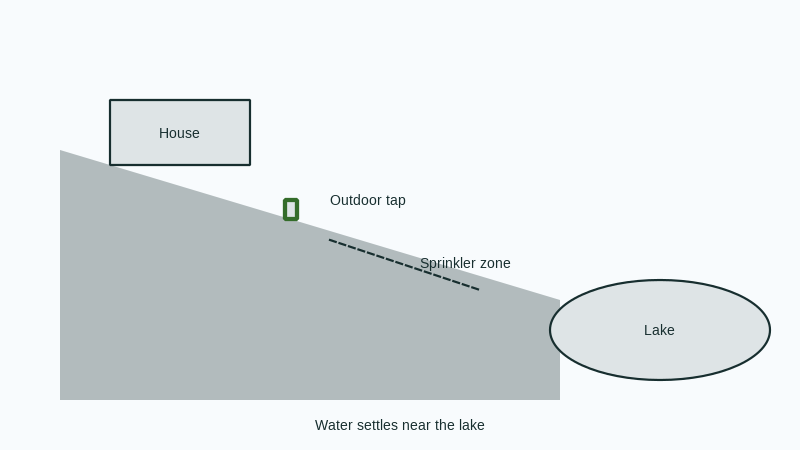
Sinaloa Lake sits in southwestern Simi Valley, and homes around it have a setting of their own: a private lake, an association and lots that slope toward the water. A local plumbing business receives your request from us, and its written quote comes ahead of any work. The areas across Simi Valley page lists everywhere else we cover, and the Arroyo Simi Plumbing home page lists services.
What sets plumbing at Sinaloa Lake apart from a typical Simi Valley street?
The difference is the setting, not the pipes. Lakeside lots sit near standing water, often on sloping ground, in a community with its own association, so a plumber thinks about drainage, ground moisture and who has to be told about outdoor work. Inside the house, plumbing follows the same rules as anywhere else.
The lake covers roughly 12 acres, and its 35-foot earth dam was built between 1925 and 1929. It has been owned by the Sinaloa Lake Owners Association since the early 1960s. The lake was drained in 1983 after heavy rains and rebuilt in 2000, so the community has direct experience of what a wet year does.
Residents voted against incorporating into Simi Valley on September 27, 1966. We do not draw conclusions from that vote about which agency handles a permit today, and we say so below.
How do you handle irrigation and outdoor taps on a lakeside lot?
Irrigation and outdoor taps are where lakeside lots most often leak, because they are exposed, usually older, and sit in soil that is already damp. Look for a lawn edge that stays soggy, a hose bib that drips when closed and a sprinkler zone that never dries.
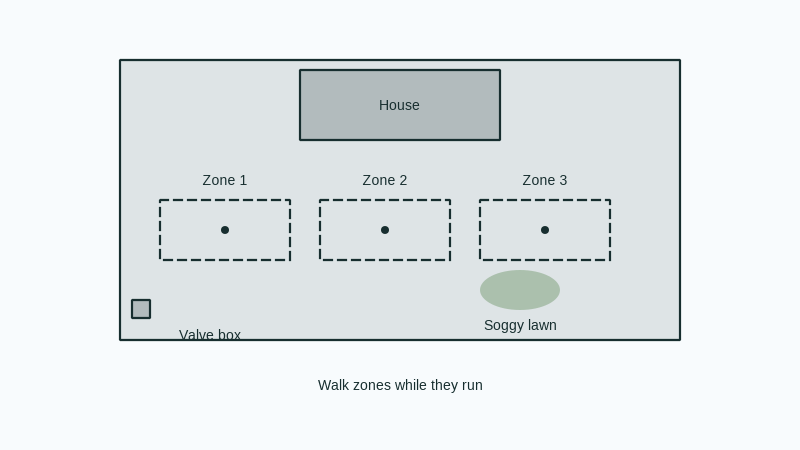
A hose bib that drips is usually a worn washer or a failing stem. For the simple repair, see fixing a leaky outdoor faucet.
Irrigation systems often include a backflow device that stops garden water flowing back into the household supply. Such devices usually need periodic testing, and your supplier can tell you what it requires. The backflow prevention testing page describes the test itself, and who carries out backflow testing names who performs it.
Which rules and permit office apply around the lake?
Two kinds of rules matter here: association rules about the lake and common areas, and public rules for plumbing work. Inside your own lot the public rules apply. A water heater swap needs a permit, a contractor with a California license is required once a job reaches $1,000, and gas piping goes to a contractor.
We have not confirmed which building office covers every Sinaloa Lake address, so we do not claim to know. You can find the City of Simi Valley's Building and Safety Division at 2929 Tapo Canyon Road. Its details may change, so check with the city, and ask the plumber which office applies.
If a job reaches the shoreline or the dam, ask the association. A plumber working on a private house does not normally touch either, but if your job does, say so up front.
Does the lake change what a plumber checks inside a home?
Mostly it changes what you look for outside and below the house. A lakeside lot can have damp soil, so a plumber looks first at hose bibs, irrigation valves, the water meter and any line that runs underground. Inside, the checks are the usual ones: water heater, shut-offs, toilets and under-sink lines.
Start with the meter. Stop every use of water, note the dial reading, wait an hour, and read it again. A reading that has changed means a leak somewhere, and wet soil near the lake can hide it. The usual suspects are listed in order under why a water bill gets high.
Then look at the toilets, the commonest silent leak. Quick checks are in a running toilet and repairing the toilet fill valve. Leaks from a toilet can lose plenty of water, and many causes are fixed with an inexpensive part.
What moves plumber pricing at Sinaloa Lake?
Price follows the job. Lakeside does not add a surcharge by itself, but a sloped lot, a long run to an outdoor tap or an older buried line can mean extra time. No Sinaloa Lake rate is published here, and no honest figure would apply to every home. The quote that arrives in writing is the price.
Ask for it itemized: labor, parts, permit and any disposal. If the plumber suggests a repair that involves digging, ask whether detection first would shorten the dig. See leak detection cost for how that works.
For general ranges, Simi Valley plumber pricing is the broadest guide, and costs when moving into a new house helps if you are moving in.
How do I get a plumber at Sinaloa Lake?
Open the quote form and enter your address, the problem, whether it is inside or outside the house, and anything you have already tried. We forward your request to a local plumbing business; that business pays us a fee for the introduction and then contacts you. Form requests are looked at on weekdays, 9am to 5pm.
When water will not stop, close the main first. If the valve refuses to turn, say so on the form.
The get a quote page has the form. A written price comes before the work starts, and the plumber, not us, names the visit time. We cannot promise a time and do not name one here.
Common questions
Who owns Sinaloa Lake?
The Sinaloa Lake Owners Association has owned the lake since the early 1960s, according to Wikipedia. If a job affects the shoreline, the dam or common areas, contact the association. For plumbing inside your own property, you deal with the plumber and the usual building office.
Does a lakeside home have more plumbing leaks?
Not by default. Leaks come from age, pressure and wear. A lakeside lot can hide an outdoor leak in damp soil, so run a meter check with every tap off. If the dial keeps turning, there is a leak, and a plumber can find where.
Is Sinaloa Lake in the City of Simi Valley for permits?
We cannot say for every address. Residents voted against incorporating in 1966, but we do not know how permit responsibility works today. Ask the plumber which office applies to your lot, and check that office before work starts. Begin with the Building and Safety Division of the city.
Is a pressure regulator worth fitting on a sloped lot?
Often. On a sloped lot, the low end of the house can see higher water pressure, and high pressure wears fittings and hoses. A plumber measures it with a gauge. Where the reading is high, fitting a regulator near the main is a modest job. See water pressure regulator replacement.