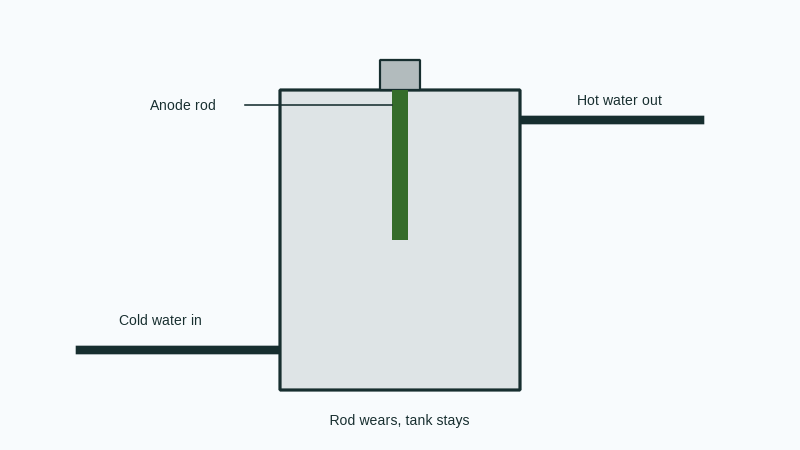
A storage tank water heater has an anode rod hanging inside it, there to rust away so the steel shell stays intact. Once the rod is consumed, the tank starts rusting instead. Swapping the rod is the single cheap maintenance task that can put off a full heater replacement. This page is part of the wider guide on water heaters in Simi Valley, and a request can go through the quote page.
What does an anode rod do inside a heater?
The rod is a metal core, usually made of magnesium, aluminum or a blend of aluminum and zinc, screwed into the top of the tank. Water full of minerals attacks the rod first, since it reacts more readily than the steel liner. The rod sacrifices itself to protect the tank. After it wastes down to a thin wire, the steel is exposed and begins to fail.
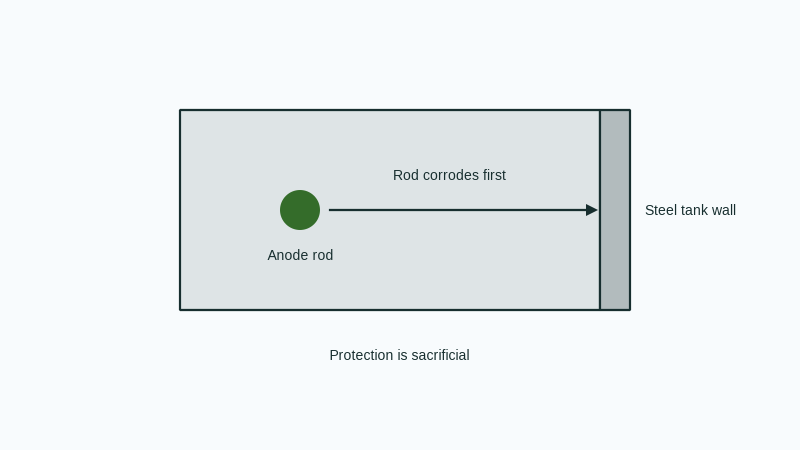
Different metals suit different water. Magnesium rods are common as original equipment, and aluminum blends are often picked for hard water. With some water supplies, magnesium rods produce a sulfur odor, and plumbers sometimes switch to another type to reduce it. Have the plumber match the rod to your water.
Tankless water heaters have no storage tank and so no anode rod. Their upkeep is different, such as scale flushing, which the page about tankless water heater replacement cost covers.
Is changing an anode rod a DIY task?
Many homeowners manage it, though it takes the right socket, a long breaker bar and room above the tank. Turn off the power at the breaker or the gas control, shut the cold water supply, relieve pressure and drain a few gallons to below the rod. Then unscrew the old rod, wrap tape around the new threads and install it.
Rods often stick. The fitting is usually a big hex head, so an impact tool or a long bar is typical. Where headroom above the tank is tight, a segmented flexible rod can be coiled and fed in. Use gloves and eye protection, since the tank water may be scalding. Let the heater cool first.
Gas heaters add risk. Stop and arrange a plumber if you disturb the gas supply, the flue or the controls. Water and electricity together are hazardous, so confirm with a tester that power is off. Never pull a rod that will not loosen with reasonable force, since you can twist and damage the tank.
What else wears out a storage water heater?
Sediment, high water temperature, high pressure and neglected valves wear a heater down alongside a worn rod. Draining a few gallons once or twice yearly clears loose sediment. A moderate thermostat setting reduces scale. A stuck relief valve or a missing expansion tank can strain the tank walls.
Scale builds faster in hard water, and a softener changes how the rod behaves, because softened water can consume a rod faster. If you own one, say so when requesting a quote. The pages on how to prevent hard water scale and replacement heating elements address the electric side of the same problem.
Rust-colored hot water, damp ground beneath the tank, or popping sounds from the heater are warning signs, so read the water heater leak guide.
Why hire a plumber for this job?
Hire one if the rod will not budge, the tank sits in a closet or attic with no headroom, the heater is gas and you are unsure about the controls, or the heater already shows rust or leaks. The plumber can additionally decide if the tank is worth saving.
A local plumbing business receives your request from us, and its plumber comes to your home, inspects the rod, drains the tank as needed and tests it afterward. Often it is a quick visit. The plumber should flush sediment and check the relief valve at the same time. Neighboring parts often checked together are covered under relief valve replacement and replacing an expansion tank.
A whole new heater is a different job from changing a rod, and it generally needs a permit. If the rod swap reveals a failing tank, ask for a replacement quote. The guides to water heater replacement cost and choosing between tank and tankless help you compare.
What is the right schedule for checking or swapping the rod?
Many makers advise inspecting the rod every few years, with a swap once it is mostly gone, though the schedule depends on your heater and water. Your owner's manual carries the maker's advice. Heavy use and water rich in dissolved minerals consume a rod sooner.
Appearance is the best indicator. A rod with plenty of metal left and a pitted coating is doing fine. A rod worn to its steel core, or bent and brittle, is due for replacement. The yearly water quality report from whichever supplier bills you lists hardness for your supply. Do not assume your rod follows a neighbor's schedule.
When the heater is already old, with rust at the base, leaking fittings or years of sediment, a fresh rod will not rescue it. Read up on replacement timing for water heaters before spending anything.
Common questions
How long does an anode rod swap take?
For a plumber, the swap itself is often under an hour once the rod loosens, with extra time to drain and refill the tank. A stuck rod, a cramped closet or a heater needing a flush can stretch it to a couple of hours. Ask for a time window at booking.
What should I ask before hiring someone for this job?
Ask which rod type the plumber recommends for your water and why, whether sediment will be flushed, whether the visit includes a look at the relief valve and fittings, and what happens if the rod refuses to come out. Have the quote put in writing and check the contractor license number.
Do I have to be home during the visit?
Usually, yes, at least to show the heater's location and to restore the water safely afterward. The hot water stays off for part of the visit, so schedule showers around it. If the heater is in a garage, closet or attic, tell the plumber and clear a path to it.
Does my heater warranty cover an anode rod?
Some warranties require maintenance, and others name the rod, so read the paperwork that came with your heater. A worn rod is normally maintenance paid for by the owner. If your tank is still under warranty, ask the manufacturer before you or a plumber open it up.