What is meant by a flexible gas line of half-inch size?
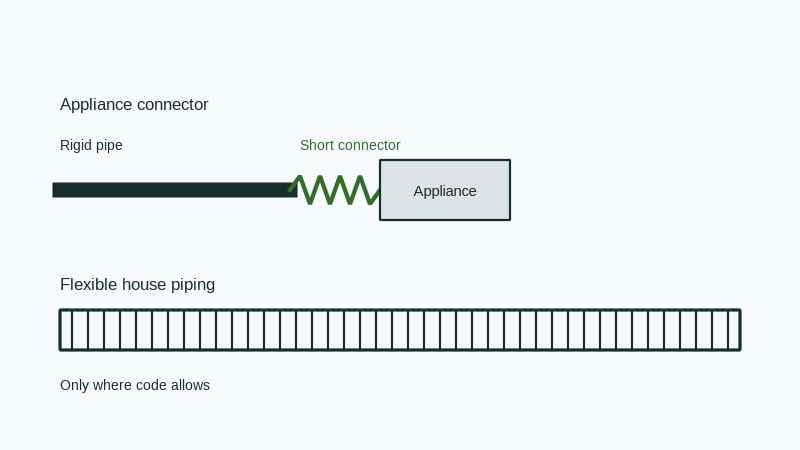
It is a flexible gas pipe or connector with a half-inch nominal size. Two products share the name: a short flexible appliance connector between a rigid gas pipe and an appliance, and corrugated stainless steel tubing used as part of the house piping. They are different products with different rules, so ask which one a seller means. Arroyo Simi Plumbing can arrange a plumber to explain what fits your home.
The size is the nominal diameter, and capacity depends on length, gas pressure and the appliance's input. A half-inch line feeding a range may be fine, but the same line serving a furnace plus a tankless water heater could be too small. Manufacturers publish sizing tables, and a plumber uses them.
Do not buy a flexible gas product from the size alone. It must be listed for natural gas, suited to the appliance, and installed with the fittings made for it.
What does the term exterior gas line code cover?
It covers the rules for gas pipe outside the house: protection from damage, corrosion, support, clearances and where it may enter a building. The local building office applies the adopted plumbing and fuel gas codes, so the answer for your yard comes from them, not from a general website. We do not quote code sections here.
Common questions include whether pipe can run on the surface, how it is protected from sun and impact, whether it can be buried, and how it connects to the meter. The gas utility controls the meter and the pipe up to it. The homeowner's piping starts after the meter, and the plumber deals with that part.
In Moorpark, permits and plan checks go through the city's online portal and its Building and Safety Division, while Simi Valley runs a separate Building and Safety Division of its own. Check those offices' published pages for current rules, or ask the plumber to confirm in writing.
Which materials are used for natural gas piping?
Residential gas piping is usually black steel pipe with threaded fittings, corrugated stainless steel tubing with fittings made for it, or, where local rules allow, other listed materials. Flexible connectors join the rigid line to an appliance. The building office says which materials it accepts, and a plumber follows that list.
Black steel is the traditional choice and is strong, but it takes time to cut and thread. Corrugated stainless tubing is faster to route through framing and needs correct bonding and protection where it passes through walls and floors. Both have installation rules from the manufacturer that must be followed.
Do not use garden hose, water pipe or a connector not rated for gas. Plastic gas pipe exists for buried lines in some jurisdictions, and is not a general indoor material. Ask the building office before you assume what is accepted.
What are the strengths and limits of a flexible appliance connector?
Picture a flexible appliance connector as a short run of stainless or coated brass, fitted at both ends, that links the gas supply pipe to a stove, a dryer, a water heater or another appliance that may be moved for cleaning or service. It does not replace house piping, and it should remain in sight rather than pass through walls or floors.
Connectors have a rated size and length, and the maker lists the appliances and capacity. Never reuse an old connector when you move an appliance, since the fittings and seals can wear. Fit a new one made for the job.
If you notice a gas smell near any connector, leave the building and use the gas utility's emergency number once you are outside. If you feel in danger, reach 911 as well. Never try to tighten a fitting while gas is escaping.
What is the procedure for requesting a gas line quote?
Use the quote form to list the appliances and where they sit, the pipe type you can see, any mobile home or outdoor route, and add photos. Your request is forwarded to a local plumbing business; those that accept requests pay us a fee. Form requests are read on weekdays between 9am and 5pm. When you are set to go, request a quote.
Have every quote name the pipe size and material, the length, the fittings, the permit, the pressure test and the patching of any holes. Another safety item many homeowners ask about appears on the earthquake gas shut-off valve page.
Can a homeowner handle gas line work?
Not for most people. Gas piping carries fire, explosion and carbon monoxide risk, and a small error may not show until much later. Permit rules and pressure testing apply. Hire a plumber for it, and check with the building office on its requirements, so the work is inspected.
You can do useful preparation: note each appliance's input rating from its label, photograph the existing pipe and the meter, and measure how far the new location is from the meter. That gives a plumber what is needed to size the line.
Should you ever notice gas, leave at once, use the gas utility's emergency number from a safe spot outdoors, and contact 911 if there is danger to anyone. Do not use switches, electronic devices or flames inside.
In what way does a mobile home gas line differ?
Manufactured and mobile homes have a gas connection and a regulator at a specific point, and the pipe often runs under the floor in the belly. The piping, the shut-off and the connection to the utility's supply have to meet rules for manufactured homes and the local office decides what is allowed.
Under-floor gas pipe needs support and protection from damage, and the flexible connector at the home's inlet must be one made for that use. Movement of the home can stress joints, so inspect them for corrosion and leaks.
The page on plumbing under a mobile home explains the other lines in the belly. Do not mix water and gas work in the same space without knowing which pipe is which.
What burial depth applies to a home gas line?
The required depth turns on the pipe material, the location and the code in force, and the building office decides what applies. We have not verified a depth figure for Simi Valley or Moorpark, so none is printed here. Do not dig near a buried gas line without knowing where it is.
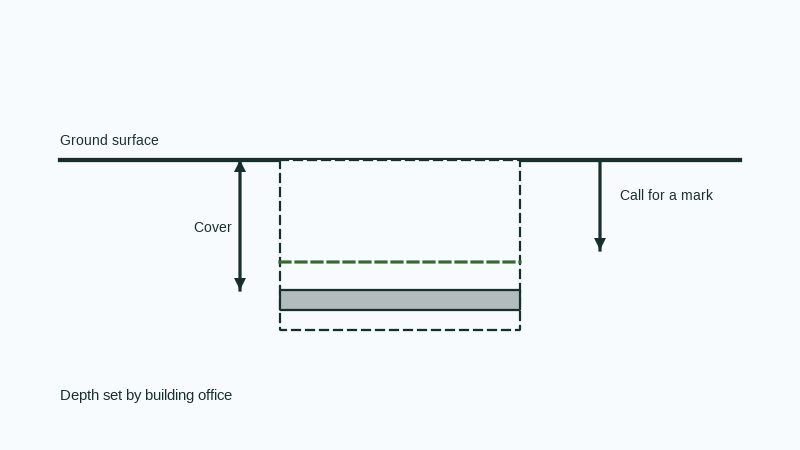
A plumber knows how to locate and mark existing lines, and an underground utility locating service normally exists for this purpose. Ask the plumber or the building office how to request a mark before any digging. A mark protects you and the utility.
If you are planning a new line to a pool heater, outdoor kitchen or fire feature, the permit usually covers the route and depth. The gas line costs page covers what makes one run cost more than another.
Common questions
Can a half-inch flexible line feed a tankless water heater?
Usually not on its own. A tankless heater has a high gas input, so the pipe must deliver enough for it and for whatever else shares the line. A plumber sizes it from the manual and the length. Do not guess, since an undersized line causes faults and is unsafe.
Am I allowed to swap a flexible gas connector myself?
Check with the building office first, and where gas is involved, leave the job to a plumber. A mismatched fitting, a tired seal or a joint that is not tight can leak. If you do replace one, use a new connector made for the appliance, and test every joint for leaks with a proper solution.
How long does gas line work usually take?
Connecting an appliance is an hour or two of work. A new run through a wall or across a yard needs a day or more, with the inspection scheduled separately. Expect a schedule from the plumber with the quote, spelling out when the gas is off, when the pressure test happens and when the inspection is expected.
Which questions go to a gas plumber before hiring?
Find out which pipe material and size will be used, whether the quote includes the permit and pressure test, how patching is handled, and what warranty applies. Verify the contractor license number with the state board, and get every answer in writing before work begins.