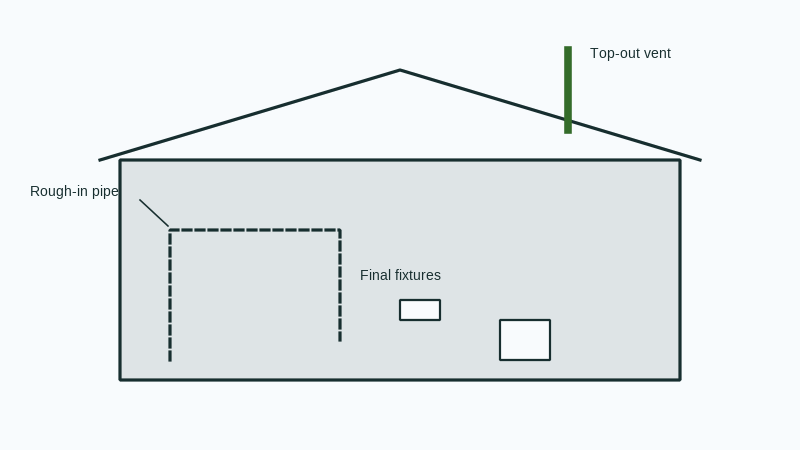
The bill for a newly built or newly bought home depends on which of the two it is. New construction plumbing is priced by fixture count, floor plan and phases. Work on a newly bought house is priced by what the inspection finds. We leave out any dollar figure we have not sourced, so use this page to read quotes. If you are still choosing a plumber, begin at the home page.
What does plumbing cost during construction?
For a new build, plumbing is priced as one contract covering the whole system, usually divided into three phases, starting with rough-in, then top-out, then final. The total rises with the count of bathrooms, kitchens, laundry areas and hose bibs, with the kind of water heater, and with how long the supply and drain runs are. A single number quoted without those details is a guess.
Rough-in means the pipework buried in walls and beneath the slab or floor, installed ahead of drywall. Top-out is the vent and any stack work through the roof framing. Final is setting fixtures, faucets, the water heater and trim, and the inspection. A general contractor often bundles plumbing with the rest of the build, so ask what is inside the plumbing allowance and what counts as an upgrade. Fixture grade is the biggest swing factor.
What should you prepare before requesting a quote?
Have the plans or a floor plan for a build, with fixture counts and the location of the water heater and gas. For a purchase, have the inspection report and photos of the problem. Say how soon the work is needed and what the budget limits are.
Add the address area, the foundation type, and whether gas is available on the street. If you are buying, tell the plumber about the closing date. Put the details into the quote form. We forward them to a local plumbing business that pays us a fee when it accepts a request, and that business prepares the quote. A clear request gets a clearer quote. Include an email address you can check during the day. The benefits of detail are fewer surprises and quotes you can compare.
How should quotes for a new house be compared?
Compare scope first: fixtures counted, material, gas work, permit, inspection, water heater, warranty on labor and payment schedule. Two totals only match if the scope matches. Request the same list from each plumber and see which line differs. A missing line, such as the permit or the water heater, usually explains why one total is lower than the rest.
For a build, have the plumber list the fixture allowances, which shows what you are choosing and what each upgrade adds. Ask where the work is staged, since house location, lot access and slope affect labor. For a purchase, have each repair priced on its own so you can do some now and some later. The difference between hourly and fixed quotes is explained by the general pricing guide and the page on plumbers' hourly rates.
Who is allowed to do the work, and who pulls permits?
Under California rules, a contractor license is generally needed when labor and materials reach $1,000, and also whenever the work needs a permit, whatever the amount. Permits cover new construction plumbing, gas piping and the replacement of a water heater, so a plumbing contractor performs the work and pulls them. Choose one with the right license.
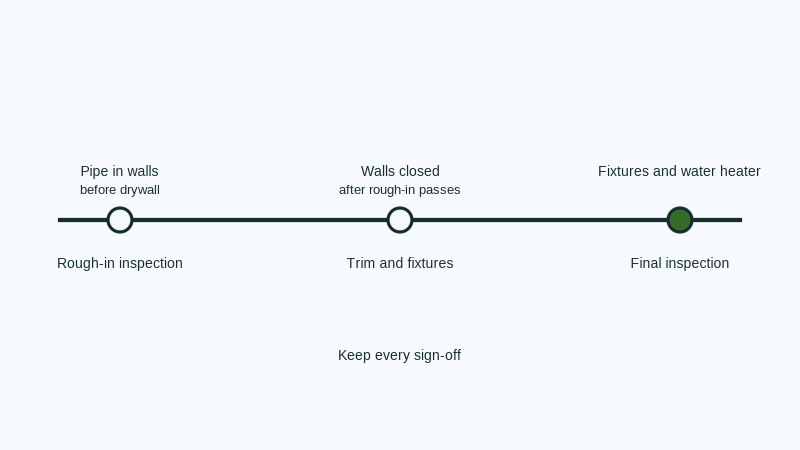
In Simi Valley, applications go through the City of Simi Valley Building and Safety Division. In Moorpark, the City of Moorpark Building and Safety office issues permits through an online portal. Inspections come at rough-in and again at the final stage. Ask the plumber for the permit and the inspection sign-offs, and keep copies. Look up the contractor's license number on the state licensing board website, and before work starts, find out if the business carries insurance.
What drives the price in new construction?
Fixture count, house layout, foundation type, pipe material, gas needs and fixture quality drive the price. A compact two-bath plan costs less than a spread-out plan with four baths and a laundry on the far side. Slab foundations need pipe placed before concrete, and mistakes there are expensive.
Gas adds cost for the range, dryer, water heater and any fireplace or outdoor line, and a permitted contractor has to do the gas piping; the gas line cost page has the detail. Water heater choice matters: a tank is cheaper than a tankless unit with its gas sizing and venting. Fixture choice is the other swing: builder-grade toilets and faucets cost far less than designer lines. Ask for an itemized bid with allowances.
What will a plumber charge after you buy a newer house?
Costs depend on what the inspection and your own checks find. A newer house often needs little: a plumber may adjust pressure, replace a few fixtures, add a water softener or check the water heater. An older house you just bought may need more, and the quote follows the findings.
Begin with a plumbing inspection before closing or soon after it. It should cover water pressure, the supply lines and drains, the water heater's age and, when you want it, a camera inspection of the main sewer line. The inspection pricing page explains the options. In Simi Valley, newer homes in Wood Ranch have different plumbing from 1960s to 1990s tract homes, so see the Wood Ranch area page for local context.
What deposit is normal?
According to California's contractor licensing board, a deposit on a home improvement contract may not exceed $1,000 or 10 percent of the contract price, whichever is lower. New construction contracts with a builder follow different arrangements, so ask your builder how plumbing is paid.
For a home improvement job, a plumber asking for a bigger deposit is departing from the standard, and you can ask why. Agree a payment schedule tied to progress, such as rough-in done and passed, then final. Ask to see the written contract before you pay anything. Get warranty terms in writing instead of relying on slogans, and keep a copy of every document. The board's consumer pages explain the rules.
Common questions
How long does plumbing a new house take?
Rough-in for an average house is usually a matter of days to a couple of weeks, depending on size, and the final phase follows after drywall and fixtures. Inspections and the builder's schedule decide the calendar. The plumber gives a schedule with the contract, and the schedule should say which phases wait on other trades and which depend on city inspections.
What should I ask a plumber about new construction work?
Request an itemized bid showing fixture allowances, the permit and inspections, the gas work, the water heater and the labor warranty. Collect the contractor license number and verify it with the state licensing board. Also learn whether the business is insured and how change orders are priced.
Should I be present on site while a new house is being plumbed?
Not all the time, but plan to be available at key points: the pre-construction walk to agree fixture locations, a rough-in check before the walls close, and the final walk. For a purchased house, be there to give access and approve changes. Any change to fixture locations after the walls close is harder to make, so decide early and put each decision in writing.
Is it cheaper to hire the plumber directly or through the builder?
It depends on the builder's arrangement. Builders often have plumbers they work with and bundle the cost, which can be convenient. Hiring directly gives you control over fixtures and the contract. Get both prices for an identical scope, and find out who is responsible for permits and warranty.
Is a plumbing inspection necessary for a new house?
A new build gets city inspections at two points, rough-in and final. A house you buy, even a newer one, benefits from a plumber's check of pressure, the water heater and visible lines, and a camera look at the main drain if the house is older. It costs little compared with a hidden fault.