Putting new pipe beneath a manufactured home belongs with a plumber, since it touches water supply, drains and often gas in a crawl space barely wide enough to move in. The sections ahead cover how the lines are laid out, what protects them, what the rules require and how to check a quote. If a leak is all you need fixed, begin at the Arroyo Simi Plumbing home page or submit a request. The request goes to a local plumbing business, and the businesses that accept requests pay us a fee.
What is the layout of plumbing beneath a mobile home?
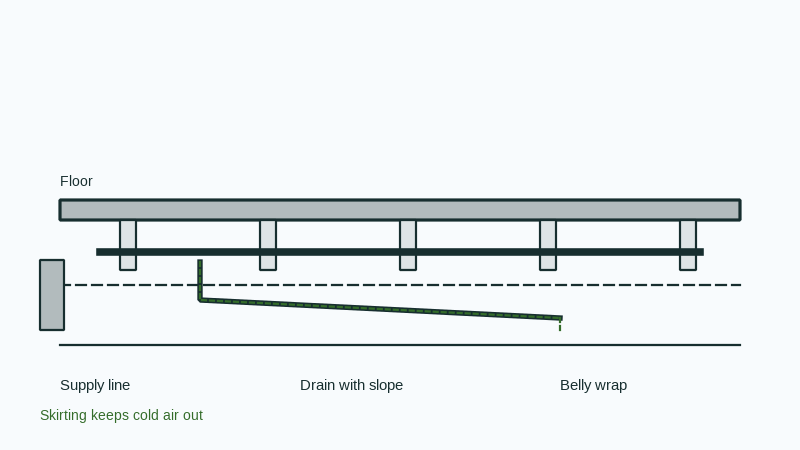
Water lines and drains run beneath the floor in the belly space, between the joists and under a thin cover called the belly wrap. The supply lines usually enter at one point, the drains collect at another and connect to a sewer or septic line at the edge of the home, and the water heater and bathrooms sit close together.
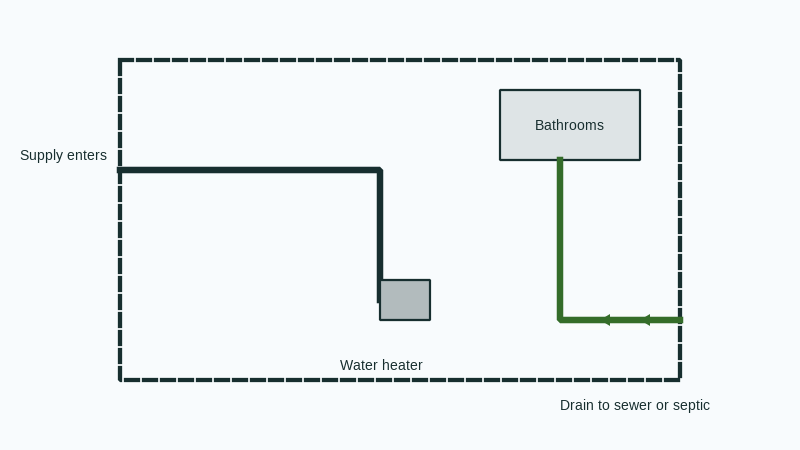
Many manufactured homes use flexible plastic supply lines and plastic drains. Space is tight: a plumber works lying down with limited room to turn tools. Hangers hold drains on a downhill slope, and any sag traps water and solids. That is why a slow drain in a mobile home is often a sagging pipe, not a clog. Our page on PEX vs copper explains the supply materials that are most often used.
Is it realistic to do the underfloor plumbing myself?
You can, within limits, if you are the owner and the rules allow it, but for most people it is not wise. The work needs the right pipe, correct slope, secure supports, tested joints and often a permit and inspection. Leave gas piping to a plumber who works on it daily.
In California, a contractor license becomes necessary once combined labor and materials hit $1,000, and a permitted job needs one whatever its size, so plumbing beyond a minor fix is normally contractor work. Manufactured homes may fall under different rules than site-built houses, possibly involving the park, the city and the state, so ask the building office. Simi Valley's building office is its Building and Safety Division; Moorpark's is its Building and Safety office. Never touch gas lines yourself.
What work does a plumber carry out on a manufactured home?
A plumber inspects the supply and drain lines, finds leaks and sags, cuts out damaged sections, fits new pipe with the right fittings, supports it properly, tests it under pressure, and restores the insulation and belly wrap. For a full replumb, the plumber works from one end of the home to the other.
Find out if the plumber has experience with manufactured homes, as the access, materials and rules differ from a slab house. Ask how the belly wrap will be closed back up, whether the lines will be insulated against cold and whether the drain slope will be checked. A water leak beneath the home can stay hidden for months, and the EPA puts the typical household's yearly leakage at over 9,300 gallons.
How do I protect pipes under a mobile home from cold and damage?
Insulate exposed lines, keep the belly wrap closed, seal gaps where rodents and cold air enter, and use heat tape only if it is rated for the pipe type and installed as directed. Frosts are not common on the valley floor, but canyon and hillside lots can be colder, and an exposed line fails first.
Skirting matters too: a damaged skirt lets in cold air and animals. Check the shutoff valve and know where it is. In winter, let a faucet drip on very cold nights only if the plumber suggests it. Sunlight damages many plastics, so keep exposed pipe covered. If you are near Tapo Canyon or Santa Susana Knolls, where nights run colder, ask the plumber about extra insulation.
What if my mobile home has a septic tank or well?
Some canyon and rural lots near Tapo Canyon and Santa Susana Knolls may have wells or septic, but that depends on the property, so check your own records. A septic system changes the drain plan and has its own rules, and a well changes the water supply. Both call for a plumber with the right experience.
Ask your county or city office what permits apply to your lot, and ask your water supplier whether you are connected to its system. Most of Simi Valley is on Ventura County Waterworks District No. 8, the eastern end on Golden State Water, and Moorpark on District No. 1; the bill will name yours, if you have one.
How can I tell when a quote is inflated?
Gather at least two written quotes for identical work, then compare them. Look for a clear list of work, parts, labor, permit and cleanup. Be wary of a very high price with no breakdown, a demand for a big deposit, pressure to decide immediately or a quote that shifts once work begins.
California limits a deposit to the lesser of $1,000 or 10 percent of the contract price. Request the contractor license number and check it on the state licensing board's site. Our guide to hourly plumber rates explains the pricing models, which helps you read the figures on a quote. We go through form submissions on weekdays, 9am to 5pm.
What makes a plumber a good one?
A good plumber presents a current contractor license, describes the problem in plain terms, commits the scope and price to paper, states the permit plan, and takes questions without pressure. They should be willing to show you the problem, and to say how they would handle a second one if it turned up.
We cannot vouch for any individual business, so do the checks yourself. Look up the license, read the contract before signing and find out how extra damage uncovered during the work would be handled. For a leak under the home, see leaking water pipe repair and signs of an underground pipe burst.
Common questions
Which pipe do manufactured homes use beneath the floor?
Many manufactured homes use flexible plastic water supply lines and plastic drain pipe. PEX supply lines are common, but older homes may have different materials. Identify yours before buying parts, since mixing materials needs the right fittings. A plumber can recognize the pipe and advise on replacement.
Why does my mobile home plumbing freeze?
Pipes under the floor are exposed to outside air if the belly wrap is torn, the skirting is damaged or insulation is missing. Frosts are less common in the valley but can happen on cold nights, particularly on canyon lots. Repair the wrap, insulate the pipes and keep the skirting closed.
Is a permit needed to replumb a manufactured home?
Generally, for anything beyond a small repair. Manufactured home rules vary and can involve several agencies, so ask the city's building office before work begins. A contractor license goes with every permitted job, and work done without a permit can create problems at the time you sell or insure the home.
How long does replumbing a mobile home take?
Often one day or several, depending on the layout, how reachable the pipes are and the condition of the lines. A small leak repair takes far less. Have the plumber give you a written schedule, including time without water and the plan if damage is found under the floor.