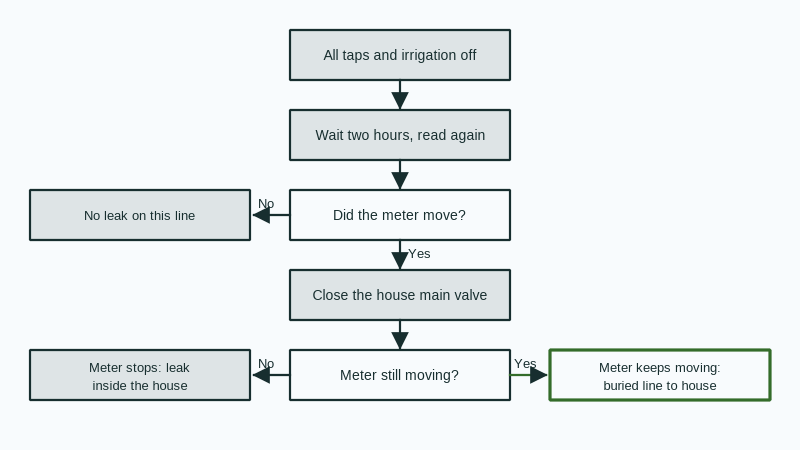
Closing every tap and watching the water meter is the most dependable check for a buried break: a dial that keeps moving means water is leaking beyond the meter, whether outdoors or inside the house. Boggy soil, a bill that suddenly climbs and weaker pressure are the usual hints. Each is explained below, followed by the steps to take. For an overview of services, see our home page.
Which clues suggest a pipe has split under the soil?
Watch for soil that is soggy or has sunk in one spot with no help from rain or sprinklers, a strip of grass that is oddly green or lush, a bill that jumps, falling pressure, running water you can hear with all fixtures shut, and a water meter that turns even though every fixture is closed.
Buried leaks can also crack or lift paving, leave a damp spot at the foundation, or send muddy water to the low point of the yard. Indoors, a slab leak may appear as flooring that feels warm in one patch, damp boards or a mildew smell. No single clue proves a burst, but two or three together build a strong case. Signs inside walls and ceilings are covered on our page about recognizing a burst pipe.
Who does the repair, and which permits apply?
A plumbing contractor does the repair. As a rule the owner holds the pipe between the meter and the home, while the meter and the street-side main belong to the water supplier, though you should confirm the boundary with your supplier. Your bill shows whether the supplier is Ventura County Waterworks District No. 8 or Golden State Water.
In Moorpark the supplier is Ventura County Waterworks District No. 1, not the city. Work worth $1,000 or more generally calls for a California contractor license, and so does any job that needs a permit. Replacing a long run of supply line commonly needs a permit from the city building office, so find out from the plumber who files it. If the break is on the supplier's side of the meter, tell the supplier first. Fill in the quote form with your situation; we pass it to a local plumbing business, and businesses that accept requests pay us a fee.
What are the first moves if you suspect a burst?
Close the main water valve, keep people and pets off any soaked or sinking ground, and photograph the area and the meter. Near flooded electrical equipment, stay clear and switch off power only when dry ground makes that safe. After that, ask for a plumber to quote.
Move fast, because a line left leaking damages the foundation, landscaping and paving and leads to a bigger repair later. Do not dig the yard up yourself. Buried water lines run close to gas and electric lines, and cutting one is dangerous. Dig only after the lines have been located; in California the call-before-you-dig number is 811. Should you smell gas, leave the building and reach your gas utility or 911 from outside. When water is actively flooding, the first steps are on the burst pipe emergency plumber.
Is it a split pipe or a leaking sprinkler line?
Start with the irrigation. Close the irrigation supply valve and run the meter test again. When the meter stops, the sprinkler system is leaking, which is a separate repair and often cheaper than the house supply line. If the meter still moves, the leak lies on the house or main line.
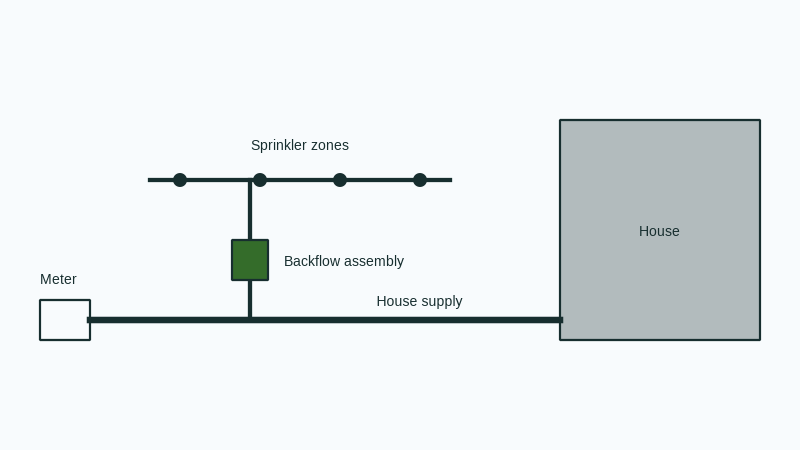
Sprinkler leaks tend to appear as geysers during a cycle or soggy ground in a single zone. Leaks on the house supply run day and night. Pool fill lines and drip systems follow the same logic. If you cannot tell which line you have, a plumber can trace the pipe run before any digging. Other hidden causes, including toilets and irrigation, appear in the write-up on a high water bill with no visible leak.
By what methods does a plumber find a buried leak?
To confirm a leak on a stretch of line, the plumber applies a pressure test, then uses listening gear, acoustic ground microphones, tracer gas or thermal cameras to pinpoint it. The aim is to mark the exact spot so the repair opens a small patch rather than a long trench.
Detection normally comes before any digging and takes less time than digging blind. With the break found, the plumber picks between a spot repair, replacing the damaged section or rerouting the line. On old galvanized steel or polybutylene, a section repair may merely postpone the next failure. For lines under concrete the same methods apply, as the page on [finding and fixing slab leaks] describes(/slab-leak-detection-and-repair-simi-valley/), and quote structure is on the page about leak detection cost.
Will the water meter show a leak under the ground?
Shut off all taps, appliances and the irrigation timer, write down the meter reading, leave the water unused for at least two hours, then read it again. According to the EPA, any change at all probably means a leak. The test works for any line beyond the meter.
Plenty of meters carry a small leak indicator, either a triangle or a dial, that moves whenever water flows. If it moves with everything off, water is on the run. Next, shut the main valve where it enters the house and look again. A meter that halts points to a leak indoors; one that keeps going points to the buried line between meter and house. Record both readings and the times, since the plumber will want them.
What causes buried pipes to fail?
Typical causes include corrosion on aging metal pipe, soil movement, tree roots pressing on lines, excessive pressure, poor original joints and damage from digging. Pipes in older neighborhoods are more likely to be metal that has aged, and pressure spikes add stress.
In older Simi Valley and Moorpark neighborhoods, service lines may have sat in the ground for decades, and the plumber can name the material and condition. Hillside and canyon lots near Tapo Canyon or Santa Susana Knolls have uneven ground that can shift. High supply pressure is worth testing at the hose bib, and a failed regulator can strain every pipe in the house. More detail is on our page covering the reasons pipes burst.
Common questions
What is the usual time needed to locate and repair a buried leak?
Detection gear often locates the leak within a single visit, and a spot repair on an accessible line may run from a few hours to a day. Longer runs, concrete, landscaping and permits add time. The plumber states a schedule in the written quote, and weather and inspections can shift it.
Which questions belong on my list when hiring for an underground leak?
Find out whether leak detection is included or priced apart, what the written quote covers, how much yard or paving will be opened, who restores it and who pulls any permit. Check the contractor license number against the state board website. Ask for a clear warranty on the repair.
Must someone be home when the plumber searches for the leak?
Yes. Have an adult present at arrival to show the meter, shutoff valve and wet-looking areas, and back at the finish to hear what was found. Keep gate and meter access clear. Mention sprinklers and any pets in the yard to the plumber.
Is a sinkhole possible from a burst buried pipe?
A leak that runs for a long time can wash soil from around the pipe and under paving, leaving voids that sag or collapse. This is uncommon, but sunken ground along a pipe run is a reason to stop walking there and ask for help.
How much water might a small buried leak waste?
More than people tend to assume. By the EPA's estimate, leaks cost an average household more than 9,300 gallons of water per year, and because an underground leak is hidden, it can run for weeks. Look at the bill, run the meter test and act on what it shows.