A pipe has failed if water shows up where it should not, you hear flow with every tap shut, or the meter keeps turning once everything is off. Behind drywall or beneath concrete the clues are subtler: a warm floor, a stain that keeps growing, or sudden weak flow. First close the main valve, and only afterward track down the source of the water.
Treat this page and Arroyo Simi Plumbing as a quick triage guide. If water is pouring out, jump to the first section and stop it before doing anything else.
What is the first move when a pipe may have burst?
Locate the main shutoff, which sits by the meter box, in the garage or on the front wall of the house, and turn it clockwise as far as it goes. Next, open the lowest tap so the remaining water drains out. Stay away from any outlet or appliance that the water has touched.
Mixing water with electricity is dangerous. If water has gotten near outlets, the panel, or a light fixture holding water, turn the power off at the breaker, provided you can reach the panel while keeping your feet dry. If not, keep out and ask the electric utility or emergency services for help.
Then, in this order:
- Turn off the main water supply.
- Open the lowest tap and a hose bib to relieve pressure.
- Move your belongings away from the soaked area.
- Take photos for insurance before you start cleaning.
- Send a request to a plumber through the quote form, or see emergency help with a burst pipe.
If the main valve will not turn or is missing, the utility valve at the meter could be your only shut-off. The customer office of your water provider can tell you who may operate it. Most of Simi Valley is on Ventura County Waterworks District No. 8, the eastern end is on Golden State Water, and Moorpark is on Ventura County Waterworks District No. 1. The supplier that serves you is named on your bill.
What are the clues to a burst pipe behind a wall?
Watch for damp, stained or bubbling patches on a wall or ceiling, a musty smell, the noise of flowing water while all taps are shut, and a sudden pressure drop. Walls over a leak often feel cool and clammy. If a patch of floor is warm, a hot water pipe underneath may be leaking.
More clues around the house:
- Sound. A hiss or trickle inside a wall at night, once the house is quiet.
- Stains. Brown rings on a ceiling that widen over several days.
- Peeling paint or swollen baseboards.
- Weaker flow at several fixtures, rather than just one.
- A bigger bill even though usage is the same. See high water bill, no visible leak.
- A moldy odor in a closet or cabinet.
Stains on a ceiling may instead come from the roof, the condensate line of an AC unit, or a bathroom upstairs. Our ceiling leak guide shows how to distinguish these.
Can the water meter show a leak I cannot see?
Shut off every tap and appliance and record the meter reading. Leave the water unused for a minimum of two hours, then check the number again. A changed number means a leak exists somewhere, and the EPA recommends this very test for hidden household leaks. A moving dial, or a leak indicator that spins straight away, points to a large leak.
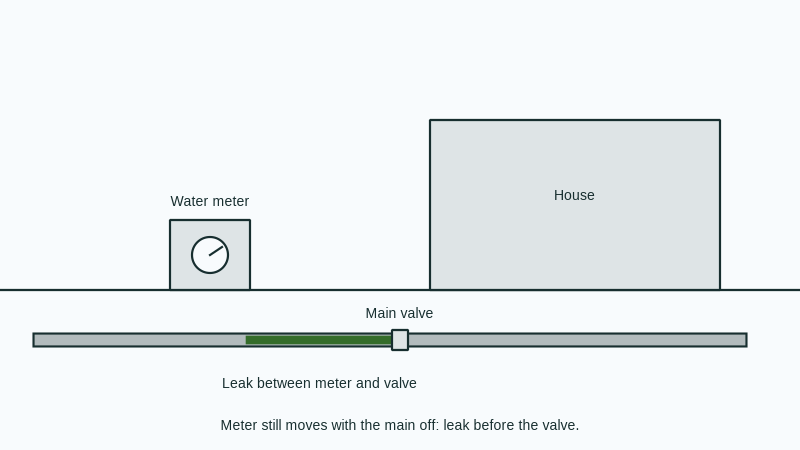
To locate it, turn off the house's main valve and keep an eye on the meter. A stopped dial puts the leak indoors. A dial still spinning means the supply pipe between the meter and the main valve is losing water, often underground.
Inspect the toilets too. The EPA suggests adding a few drops of food coloring to the tank, then waiting roughly ten minutes with no flushing. If dye appears in the bowl, that toilet leaks, which could explain a small meter movement. Fixing a toilet leak is cheap, unlike a burst pipe.
Could the break be buried or beneath the slab?
Typical signs: a wet or sunken patch in the yard, a puddle with no rain or sprinkler, a muddy line following the pipe's route, a meter that moves while the main is off at the house, or a warm floor in a slab-on-grade home. Slab leaks often start with a hot water line, which warms the floor underfoot.
Many Simi Valley houses put up from the 1960s to the 1990s sit on concrete slabs, and some have pipes embedded in or under them. Before anyone cuts concrete over a suspected slab leak, a leak detection visit is normally needed. For more, read guidance on spotting a burst pipe below ground, and for the decision that follows, read slab leak repair versus repiping.
On canyon and rural lots near Tapo Canyon or Santa Susana Knolls, a private line may run a long way from the street. The longer the run, the more places it can fail.
How can I hold a leaking pipe in the meantime?
Small leaks can be contained for a while: shut the water, dry the pipe, then wrap self-fusing silicone tape around it, clamp on a repair sleeve or press epoxy putty made for pipes into a pinhole. These are stopgaps, and a plumber should still repair the pipe properly.
Options by pipe type:
- Copper pinhole. Dry it, then fit a pipe clamp with a rubber pad, or apply epoxy putty. The page on pinhole leaks in copper pipe explains the cause.
- Plastic pipe. Cracks in PVC or PEX can sometimes be bridged with a coupling. See leakage from plastic pipe.
- Under the sink. Start with the nuts and compression joints, as shown in the guide to fixing a leak at the sink drain lines.
If the leak is large, keep the main off while you wait. A temporary patch can fail under line pressure.
How can I dry a ceiling that got soaked by a leak?
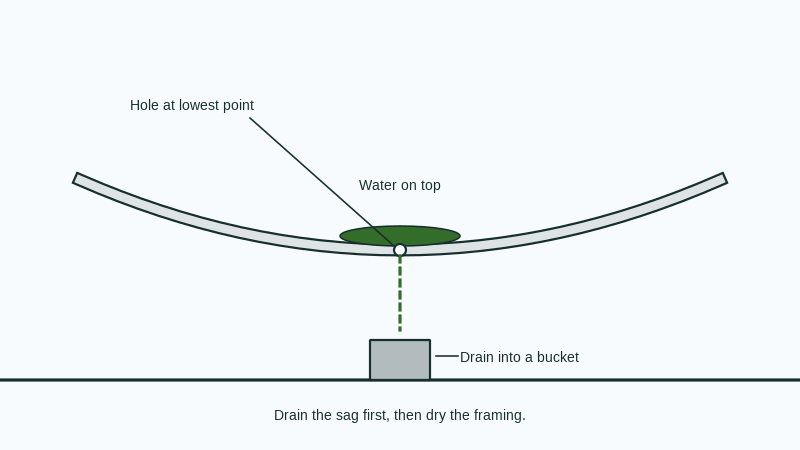
Stop the leak first. When water has pooled and the ceiling bellies downward, put a bucket under the bulge and puncture the lowest spot so it drains. Then open the windows and set up fans and a dehumidifier. Take out soaked insulation and any drywall that stays wet. Damp material can grow mold within a day or two, so move fast.
Steps:
- Turn off the water, and if it is safe, switch off lights and fixtures in the wet area at the breaker.
- Place buckets and plastic sheeting below the sag.
- Drain the ceiling through a small hole.
- Run air movers and a dehumidifier for several days.
- Cut out any drywall that has turned soft or smells musty. Dry the framing.
- Repair and paint only once everything is dry.
If water passed through insulation or a light fixture, have the wiring checked before using it. The insurance page for burst pipes explains what is usually covered and what to document.
What if the break is in an outdoor pipe?
Shut the supply valve to the outdoor line, or the main, then drain it. If the break is on a hose bib line, cut out the cracked section and splice in a new piece with a coupling. A buried main or irrigation line that has burst needs digging and is usually contractor work.
Most paid plumbing jobs past a small dollar threshold fall under California's contractor license rules, and the CSLB website lets you check one. Contact 811 before digging, because working near buried utilities is risky. Photograph the damage and keep receipts for insurance.
Common questions
How much time does a burst pipe repair need?
An easy-to-reach pipe can be fixed within one or two hours. A pipe inside a wall brings drywall work, and a slab or underground line can take a day or more once the leak is found. Drying the building takes several days, however fast the pipe is fixed.
What should I ask the plumber who comes for a burst pipe?
Get the plumber's contractor license number, then verify it through the CSLB website. Check that the quote includes the wall being opened and closed again, drying, and any minimum charge. Also make sure you will receive photos and a written invoice to send your insurer.
Should I move out after a burst pipe?
Usually not, unless water has reached the electrical panel or outlets, the ceiling is sagging, or sewage is involved. Stay out of rooms where water meets electricity, and if you smell gas, leave, then step outside to reach your gas utility, and use 911 should anyone be in danger.
Can high water pressure make a pipe burst?
Yes. Very high pressure strains pipes and fittings, and water hammer from a quick-closing valve adds shocks. A pressure regulator limits the supply pressure to the house. If you hear banging pipes or see fixtures leaking, have the regulator checked.