A leaking pipe repair begins by shutting off the supply and drying the pipe. Next, find the actual leak and decide whether a clamp, a fitting swap or a section replacement suits the damage. Clamps and epoxy putty are stopgaps. A permanent fix cuts out the bad section and joins in new pipe. To have a plumber price the job, the home page lists the services.
What is the first step once a pipe starts leaking?
Shut the closest valve, or the main when none is in sight, and open a low tap so the line drains. Clear belongings away from the area. Then mop up and place a bucket or towel beneath the leak. Acting right away limits damage to drywall, flooring and framing.
For a spray from a burst section, close the main, and if the damage is spreading request a same-day quote from a plumber. Photograph the leak and wet areas before you clean up, in case you claim on insurance. Keep power off near standing water. The urgent case is covered in burst pipe emergencies. The EPA estimates the average household wastes upwards of 9,300 gallons per year through leaks, so even a slow drip deserves attention.
At what point should you stop doing the repair yourself?
Stop at main line work, pipes in closed walls that would need opening, gas lines, anything that needs a permit, and anything you cannot isolate with a shutoff. A contractor license is generally required in California for permitted work and for any job that reaches $1,000.
A small repair on an accessible pipe, like swapping a supply line or compression fitting under a sink, is within reach of many owners. A section replacement in a wall, a main line or a water heater connection is better handled by a contractor. Replacing long runs of supply line typically requires a permit, so ask the plumber to pull it: Simi Valley issues it through the Building and Safety Division, Moorpark through the city's own office. If you smell gas, exit the building first, then call your gas utility, or 911, from outside.
How do you find where a pipe is really leaking?
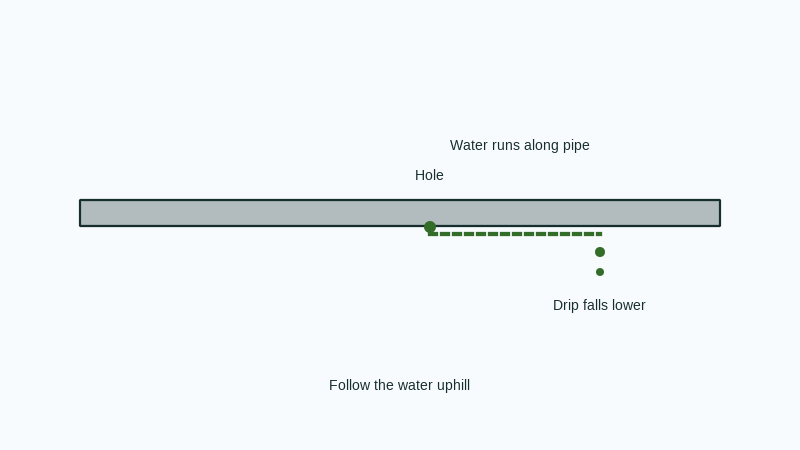
Dry the pipe with a rag, then run a dry paper towel along it and note where it darkens first. Water travels along a pipe and falls from its lowest point, so the wet spot can sit far from the hole. Trace the moisture uphill to where it first appears.
For hidden leaks, use the meter test: shut every tap and record the reading on the meter. Two hours later, read it again. According to the EPA, any movement on the meter probably indicates a leak. Listen for hissing in walls or near floors, and check for warm spots on a slab, which can mean a hot water line leak. A plumber uses listening gear and thermal cameras for hidden leaks; see what leak detection costs.
Which details belong in a repair quote request?
Describe where the leak is, what pipe it is (copper, plastic, galvanized, unknown), how long it has been leaking, whether water is shut off, and what you tried. Add photos of the leak, the wet area and the shutoff. Include the house age and neighborhood if you know them.
Send the quote form and we pass your request to a local plumbing business that will price the job. The businesses that accept requests pay us a fee. For an urgent leak, shut off the water first. Give an email address you check during the day. If there is already visible water damage in drywall or flooring, say so, because the plumber may suggest drying and inspection before closing the wall. Keep any photos for an insurance claim.
How is each pipe type repaired permanently?
A copper fix takes out the damaged length and rejoins the ends with solder or push-fit couplings. PEX takes a crimp or expansion coupling. CPVC and PVC use solvent-welded couplings. Galvanized steel is often replaced in longer lengths because corrosion runs through the whole line.

A pinhole in copper usually means corrosion inside, and others will follow; the page on fixing a copper pinhole leak explains what that means. Plastic pipe has its own causes and fixes, covered in stopping leaks from plastic pipe. Under a sink, leaks are usually at a supply line or trap, and our guide to leaks under the sink shows the fixes.
When does a leaking pipe point to a deeper fault?
Repeat leaks on one line, old galvanized steel or polybutylene, high pressure, or a leak inside a slab all suggest the problem is the system, not the spot. A second or third leak is a reason to consider replacing the line.
Age, corrosion and high pressure are the usual causes. Many tract homes in Simi Valley put up between the 1960s and 1990s have aging supply lines, and around Old Town Simi the plumbing may be older still. Ask the plumber to measure pressure at a hose bib, because pipes and fixtures wear out sooner under excess pressure. For a leak below concrete, the guide to slab leak detection and repair covers that; if repairs keep recurring, consider repiping.
Which quick fixes hold on a leaking pipe?
A pipe clamp, a rubber sleeve held by hose clamps, silicone tape that fuses to itself, or a two-part putty may hold a small leak back for anywhere from hours to weeks, depending on the pipe and pressure. Treat them as a bridge until a proper repair, never a replacement for one, especially on pressurized supply lines.
Match the product to the pipe. Clamps work on round, clean, sound pipe and fail on a pipe that is badly corroded around the hole. Epoxy putty needs a dry, clean surface, which is hard on a pressurized line. A leak at a joint, as opposed to the pipe body, usually means the joint has to be remade. If you patch, write down the date, inspect the patch daily and let the plumber know what you did. Do not hide a patch behind a closed wall.
Common questions
What is the usual duration of a leaking pipe fix?
An easy-to-reach repair, such as replacing a coupling or fitting, typically takes between one and two hours. A section behind a wall adds drywall access, and slab or underground leaks need more time for detection and digging. Expect the plumber's time estimate with the quote; drywall repair tends to be a separate trade.
Which questions should I put to a plumber about a pipe leak?
Learn whether the quote includes locating the leak, the repair itself, opening and closing walls, and any permit. Request the contractor license number and check it on the state licensing board's site. Ask too about warranty coverage, what the plumber believes caused the leak, and whether more are likely.
Must someone stay home during a pipe repair?
Yes, an adult should be there on arrival to show the plumber the leak and the shutoff, and return once the job is finished to inspect the repair and sign off on the work. Keep access to the pipe clear, including under sinks and in closets. Where the leak sits in a locked area, arrange access beforehand.
Will epoxy or tape fix a leaking pipe permanently?
No. Epoxy putty and repair tape may buy you time on a minor leak, but a corroded pipe under pressure will fail again. Use them only as a short-term measure while you arrange a proper repair, and check the patch daily. Never bury a patch behind a wall.
Does homeowners insurance cover a leaking pipe?
Damage from a sudden burst or leak is often covered, but a gradual leak, along with the price of fixing the pipe itself, may be excluded. Read your policy and talk to your insurer before work begins. For the usual distinctions, read how insurance treats burst pipes.