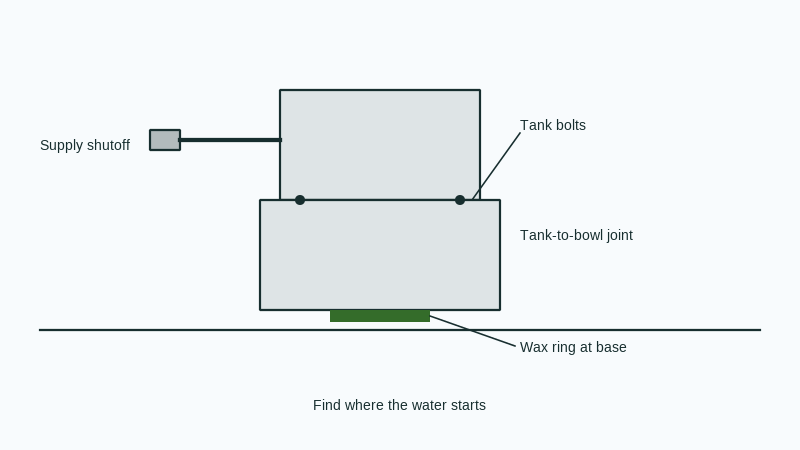
Toilet leaks fall into four types: water on the floor around the base, water from the tank, a fault in the supply line or its valve, or a hidden trickle from the tank down into the bowl. Causes and repairs vary, and only a few need a professional. The sections are arranged by symptom. A neighboring job is covered on the page about toilet flush repair. If a hardware store part will not solve it, Arroyo Simi Plumbing sends your request on to a plumbing business near you in Simi Valley or Moorpark. You get a written quote ahead of the work. We earn a fee from businesses that accept requests.
What makes water collect on the floor beside the toilet?
Most often a worn wax ring or slack closet bolts are to blame, letting water escape at the joint between toilet and drain. Rarer causes include sweat from a chilly tank, a leaking supply line, or a cracked bowl. A new wax ring means the toilet has to come up off the floor, a task many plumbers finish quickly.
Start by drying the floor and the base, then flush and watch. Water that shows only after flushing suggests the seal has failed. A damp base with no flushing means you should inspect the supply line and the shutoff valve behind the bowl. A toilet that rocks or wobbles hints at loose bolts or a damaged flange.
Ignoring a bad wax ring costs more later. Seepage into the subfloor can rot it over a few weeks, and a bathroom on an upper level may stain the ceiling beneath. Close the valve and keep off the toilet until it is repaired. A soft floor or a broken flange is a cue to hire a plumber.
When is it time to hire a plumber?
Hire one when the leak is at the base and the floor feels soft or stained, the toilet rocks, you spot a crack, the shutoff valve will not turn off, water drips through a ceiling underneath, or a previous repair did not hold. Water near electricity is dangerous, so switch off the power if any outlet got wet.
Sewage backing up through the toilet or tub is urgent, so keep off the fixtures. The emergency plumber page covers what to do first. As for permits, replacing a toilet in place usually needs none, but ask Simi Valley Building and Safety or Moorpark Building and Safety if pipes will move.
How do I fix a leaking supply line or shutoff valve?
A drip from the flexible hose or the valve behind the bowl is an easy repair. Turn the shutoff clockwise, unscrew the hose, attach a new braided one in the right length and thread size, and tighten slightly beyond finger-tight with a wrench. If the valve leaks around its stem or will not close, replace it.
If the valve will not close at all, turn off the main water supply to the house to work safely, and go carefully, since aged valves can break while turning. Past that point, stop and hire a plumber, because swapping the valve involves the supply pipe. Our guide to repairing a toilet shutoff valve lists the steps.
Replace any braided hose that looks rusty, swollen or old. Burst supply lines often cause flooding.
What causes a toilet tank to leak?
Tanks drip from their mounting bolts, from the gasket between tank and bowl, from a crack, or where the fill valve attaches. Drops at the joint or around the bolt heads normally point to a tired rubber washer or gasket. Replace the bolt washers, or the full kit when the tank is old.
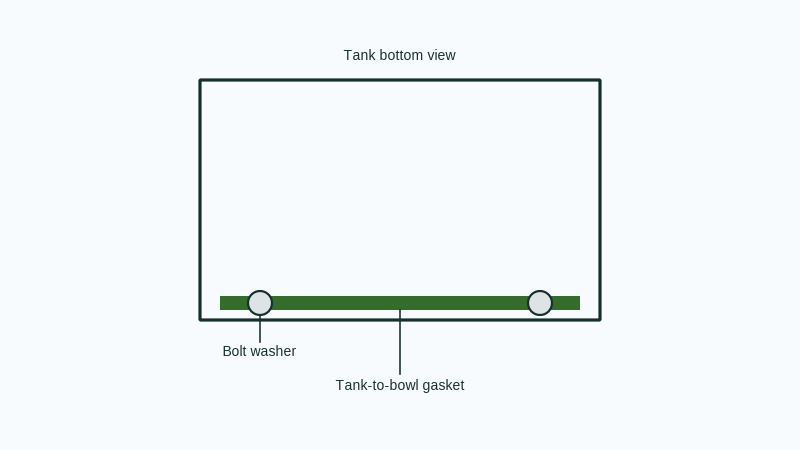
To trace the drip, wipe the outside of the tank dry, squeeze a little food coloring inside, and watch the joints for tinted water. Tighten bolts slowly, switching sides, because overtightened porcelain cracks. A hairline crack in the tank means a new tank or toilet, since patches fail.
Condensation is not a leak. On humid days a cold tank sweats onto the floor. If the water is clear and coats the entire tank surface instead of one joint, either an insulating liner or a mixing valve feeding in warm water may help, though a plumber can confirm the cause.
What does a plumber do about a toilet leak?
The plumber first locates the source and closes the water, then exchanges the failed part: wax ring and bolts, tank gasket and washers, flapper, fill valve or supply line. Flange or floor damage is mended as well. The toilet is tested, the floor checked for rot, and the unit left level and sealed.
You should receive a written quote listing parts and labor. Setting a toilet back down on a fresh wax ring is a modest job, while a cracked bowl, rotted floor or corroded flange is larger. With an older toilet, ask for a repair price and a replacement price next to each other. Our page on toilet replacement cost explains what moves the figure.
California generally requires a contractor license once labor and materials add up to $1,000. A basic toilet repair normally stays below that, but check the license number on the CSLB website, cslb.ca.gov, before work starts, and note that a deposit may not exceed the smaller of $1,000 or 10 percent of the contract price.
How can a toilet leak with no drip in sight?
A hidden leak travels from the tank into the bowl, normally around a worn flapper or through a fill valve that fails to shut off. You might hear the tank top itself up unprompted or notice ripples on the bowl surface. The waste appears on your water bill. The EPA reports that leaks waste more than 9,300 gallons of water annually in the average home.
For a test, add food coloring to the tank, wait fifteen minutes without flushing, then see whether the bowl water has changed color. Color means a new flapper is due. Water that keeps spilling into the overflow tube means adjusting or replacing the fill valve. Each part has its own page: see toilet flapper repair as well as a toilet that won't stop running.
Common questions
How much time does fixing a toilet leak take?
Replacing a flapper, fill valve or supply line often takes under an hour. Setting the toilet on a fresh wax ring takes a similar time once the space is clear. A rotted floor or broken flange adds hours. After the plumber has seen the damage, the quote will carry an estimate.
Which questions should I raise before hiring for a toilet leak?
Request a written quote naming the part and the labor, plus the contractor license number, which you can check on the state board website. Also find out whether floor damage is covered, whether the old wax ring and parts get replaced, and what warranty applies to the work, stated in writing.
Must I be home while the repair happens?
Yes. Have an adult on site so the plumber can enter the bathroom, shut off the water and point out which part failed. Before leaving, the plumber will also want you to confirm the toilet works with no leaking. Tell the business about any access limits in advance.
Can I keep using a toilet that leaks at the base?
Better not. Water beneath the toilet harms the subfloor, and a failed seal may let sewer gas into the room. Close the shutoff valve and arrange the repair. If it is your only toilet, flush sparingly and mop up each time until the fix is done.
Does insurance pay for a leaking toilet?
Sudden damage might be covered, while slow leaks and wear often are not. Policies differ, so ask your insurer where the line sits between sudden damage and wear, and keep photos of the damage and the repair invoice. Also see the page on insurance and burst pipes and the other guides.