How do I replace a toilet flapper, step by step?
Close the supply valve behind the toilet, flush until the tank empties, unhook the old flapper from the pegs on the overflow tube and from the chain, then clip a matching new flapper in place. Leave the chain slightly slack, restore the water and watch the tank refill. Expect ten minutes. If you would rather have a plumber do it, Arroyo Simi Plumbing can forward your job to a nearby plumbing business, which arranges a visit.
Take the old flapper with you to the store. Flappers come in several shapes and sizes, and the wrong one will not seal. A standard two-inch rubber flapper suits many toilets, but newer low-flow models often take a three-inch size, and some brands make a flapper that fits only their own tank.
Wear gloves, because aged rubber is slimy. Wipe the flush valve seat, where the flapper sits, using a rag or a non-scratch pad, since grit on the seat can stop even a new flapper from sealing.
When does the flapper alone fail to solve it?
When a new flapper leaves the leak in place, the seat may be worn, pitted or crusted with mineral deposits, or the overflow tube could be cracked. A rough seat can be sanded lightly or replaced. A cracked tube, or tank bolts weeping at the floor, call for more than a flapper.
Hard water deposits coat the seat and cut the lifespan of rubber parts. Water in Simi Valley and Moorpark comes through the Calleguas wholesale system, and local suppliers publish yearly water quality reports, so read yours if flappers keep failing early. Change the flapper once it feels soft, warped or sticky.
If the fill valve is old, replace it in the same sitting, since the parts are inexpensive and share one shut-off. Pages on the toilet fill valve and the overflow tube describe those jobs. For water leaking from the toilet's base rather than inside the tank, read about toilet leak repair.
What is a running toilet costing me?
A leaking flapper lets water slip through the toilet all day, and it often goes unnoticed because the sound is faint. The EPA says leaks in homes across the country waste close to 1 trillion gallons of water each year, and a silent toilet leak is among the usual sources. At home, the cost lands on the water bill.
The first sign is typically a bill above normal even though nothing in your routine changed. For other causes to check, see the high water bill guide.
A new flapper costs very little. Waiting costs more. If the toilet still runs after the swap, shut the supply valve overnight, read the water meter in the morning, and get help if the meter still moves.
How tight should the flapper chain be?
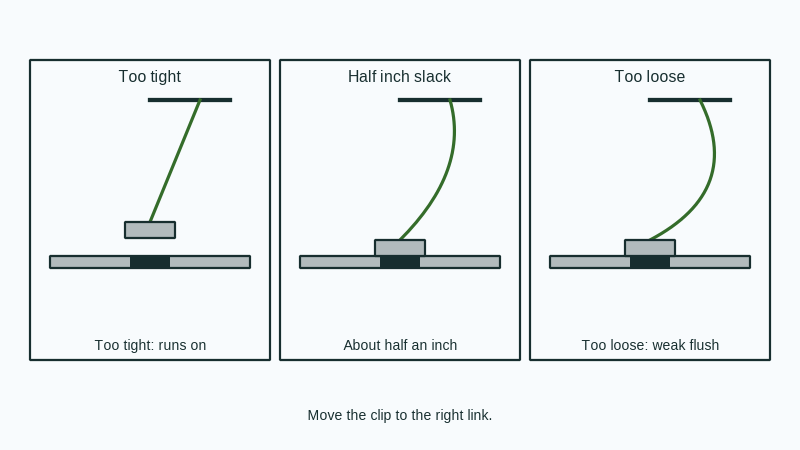
Loose, with roughly half an inch of play. A chain pulled too tight keeps the flapper slightly open, so the toilet runs. A chain too loose lets the handle raise the chain without opening the flapper, which gives a weak flush. Move the clip to the proper link and trim spare chain so it cannot slide under the flapper.
A chain caught beneath the flapper is a surprisingly common source of leaks. After the new flapper goes in, flush several times and watch that the chain falls clear.
If the handle feels stiff or floppy, the handle arm or its nut may be to blame instead of the flapper. The guide to fixing toilet flush problems covers handle and lever faults.
When should I bring in a plumber?
Hire one when the tank is cracked, the shut-off valve refuses to close, the bolts under the tank leak, the toilet rocks, or a new flapper fails to end the leak. A plumber can also replace the whole toilet when it is old and repairs keep piling up.
Complete the quote form with the toilet's brand, what you tried and a picture of the inside of the tank. A nearby plumbing business receives your request through us, and a plumber visits you. Form requests are read from 9am to 5pm, Monday to Friday. Request a quote once you are set. If you are thinking about a swap, the toilet replacement cost page lays out the pricing.
How do I check that the flapper is the culprit?
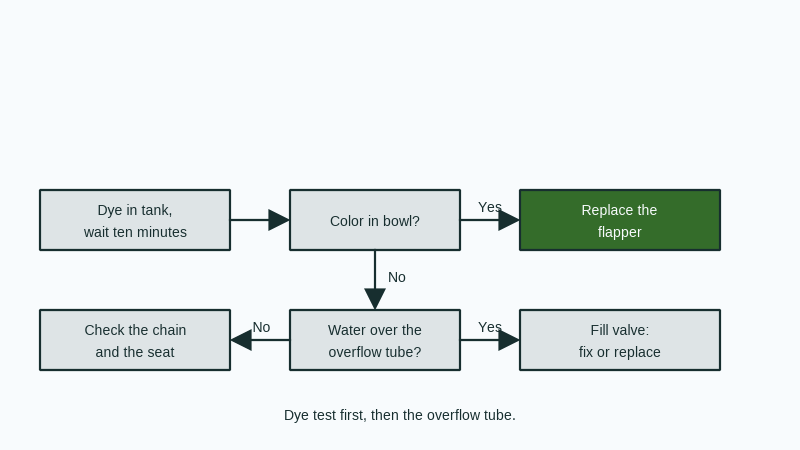
Add a few drops of food coloring to the tank and leave it ten minutes, with no flushing. Color showing up in the bowl means the leak is at the flapper or its seat, which is the EPA's leak test. A toilet that runs for a few seconds now and then, or hisses between flushes, generally has the same fault.
Sound offers another clue. A faint trickle, or a "ghost flush" where the tank refills by itself, is the fill valve topping up water that slipped past the flapper. That water is wasted, and over a month it adds up.
The flapper is not the only reason a toilet runs. A fill valve that refuses to shut off, a float set too high, a cracked overflow tube or an overly tight chain can all cause it. The page on why a toilet keeps running ranks the causes by likelihood.
Which flapper should I buy for my toilet?
Match the brand and model if you can, and failing that the width of the drain opening. Look inside the tank for a model number or the maker's name, check the flush valve opening, and compare the old flapper's shape. Universal flappers with an adjustable collar fit many tanks, but a model-specific part seals best.
With no old flapper to compare, measure the opening. A two-inch flush valve takes a smaller flapper than a three-inch one. Dual-flush toilets have a different valve and a standard flapper will not fix them at all, so check the manual.
For an aging toilet whose parts are hard to find, a full flush valve kit may cost barely more than a flapper and renews the seat in the same step. Ask at a plumbing supply counter, and bring a photo of the inside of the tank.
Common questions
How many years does a flapper last?
Often several years, though hard water, tank cleaner tablets and heat shorten that. Rubber that feels soft, warped, sticky or coated in black residue needs swapping. Change it as soon as the toilet begins to run or hiss, instead of waiting for the bill to warn you.
Can in-tank cleaning tablets damage the flapper?
It is possible, though not every brand has been checked. Chlorine tablets that sit in the tank may degrade rubber parts over time, so flappers swell, soften or leak early. If you use tablets, ask the maker whether they are safe for tank parts, or skip them and scrub the bowl with a brush and cleaner.
Is a toilet flapper repair a DIY job?
For most people, yes. It usually needs no tools and takes a few minutes. Close the water, flush, swap the flapper and test. If the valve is out of reach or leaks, stop there and call in a plumber, because a failing shut-off valve then becomes the real problem to fix.
How do I know it is not the fill valve?
If water keeps running into the tank even though the flapper seals, the fill valve is not shutting off. Watch the water level: if it rises as far as the overflow tube and spills in, suspect the fill valve. A level that sinks slowly and then refills points to the flapper.