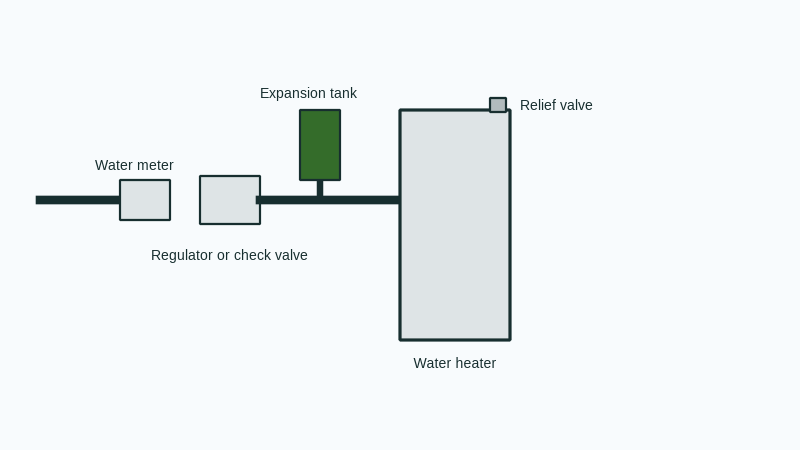
As water is heated it takes up more room, and an expansion tank on the heater soaks up that extra volume so pressure does not spike in a closed plumbing system. Once a tank loses its air charge or its bladder becomes waterlogged, it stops working, and a plumber can test and swap it during one visit. For the broader view, see the water heater repair page.
Why does a water heater need an expansion tank?
Heated water needs somewhere to expand into. Cold water grows in volume as it warms. With a pressure regulator, check valve or backflow device installed on the supply line, the surplus water has no way back into the street main, so pressure climbs unless a small air-cushioned tank takes it up.
For this reason many homes fitted with a regulator or check valve have a small tank, usually blue or gray, plumbed into the cold line close to the heater. It looks like a miniature propane cylinder. Inside, a rubber diaphragm separates the water from a pocket of air. Without it, every heating cycle pushes the relief valve closer to opening and strains fixtures.
How can I tell the expansion tank has gone bad?
Warning signs include a dripping relief valve, pressure that surges each time the heater fires, banging pipes, a leaking fitting at the tank, and a waterlogged sound when you rap on it. A healthy tank rings hollow in its upper half, whereas a failed one sounds solid from top to bottom.
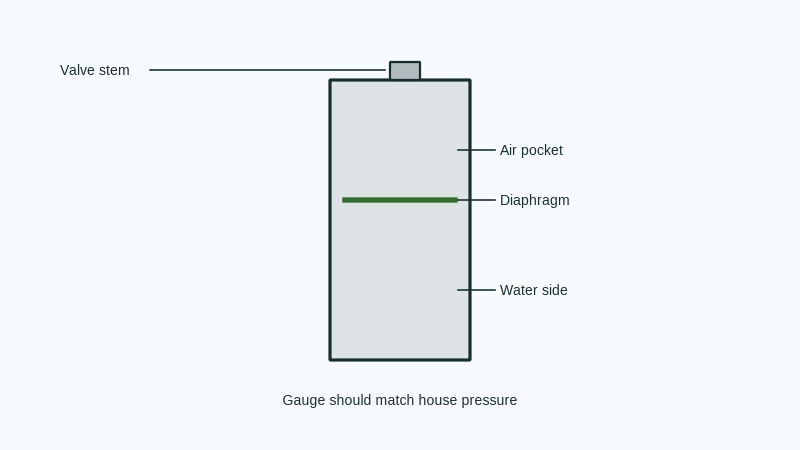
Testing takes two steps. First tap the tank: hollow up high and solid low down is normal. Then, after closing the water and releasing pressure, press the valve stem on the tank with a tire gauge. The reading should equal your house water pressure. Water spurting from the stem signals a burst diaphragm, and the tank needs replacing.
If you are not comfortable, a plumber can test it quickly. Never release pressure from a hot system before shutting down the heater, and never put a hand near the relief valve discharge, which can be scalding.
How do I request a plumber for this job?
Describe what you see in the quote form: a dripping valve, banging, a pressure rise or a leak at the tank. Add the heater type, its age if known, and whether the water is shut. Your request goes to nearby plumbing businesses, and each one that accepts requests pays us a fee; one of them replies with a price and a time.
A person reads form submissions on weekdays from 9am to 5pm. If the relief valve is gushing, first cut the water, and the power or gas, at the heater. When you are choosing a whole new heater, see the price of replacing a hot water heater as well.
Does a replacement need a permit?
Swapping only the expansion tank often does not. Replacing the water heater does, and the inspector may look at the tank, strapping and relief discharge. The city decides. In Simi Valley the Building and Safety Division issues permits, and in Moorpark the Building and Safety office does.
Jobs over the state threshold, and every job that needs a permit, require a California contractor license. Ask if the quote covers the permit fee, and check the plumber's license number on the state CSLB site.
How long does replacement take?
Swapping an expansion tank is generally a short visit. The plumber starts by shutting off the water and draining the line, then changes the tank, sets the air pressure, restores the water and checks the relief valve. Add time if the line needs a new fitting, or if the heater itself needs work.
A visit can stretch if the shutoff valve fails to seal fully, the heater is wedged in a cramped closet, or hard water scale has fused the fittings. Mention any known problems when you submit your request.
Is an expansion tank required?
Often needed, but not always. Whether yours does depends on whether the system is closed, which a plumber can tell by spotting a regulator, check valve or backflow device where the supply enters. We cite no code section here, and the plumber and the city inspector make the call for your house.
Plenty of heater installations come with an expansion tank, and the inspector reviewing the permit may look for it. Ask the plumber if yours has one and whether the new heater needs one. Older homes that once had no closed system may have gained one when a regulator was added.
How is the tank connected to a leaking valve?
A drip from the relief valve (the temperature and pressure kind) is usually the first sign that expansion pressure is going unabsorbed. Swapping the valve alone only treats the symptom, since the replacement begins to weep again while pressure keeps rising. The lasting remedy is to address the pressure itself, by testing the tank, the regulator and the incoming supply together.
For the valve side, read the advice on replacing a heater relief valve. A plumber who finds a dripping valve should check static pressure and the expansion tank before replacing it. High incoming pressure, for which a whole-house regulator may be the answer, can also be the cause.
Can I replace the tank myself?
A confident owner can, since it is a threaded fitting on the cold line. Turn off the water and the power or gas feeding the heater, relieve pressure, unscrew the old tank, thread on the new one with thread sealant, set the air pressure to match the house and check for leaks. Gas work and permits are a separate matter.
Before installing, adjust the new tank's air charge to your static water pressure, since many ship at a default setting. Support the tank. One hanging from the pipe, especially a larger one, strains the fitting and may need a bracket. In earthquake country, secure it the way you would the heater itself.
If the connection is corroded or galvanized, or the plumber would need to cut copper to fit a new tee, hiring someone is worthwhile. A small error can flood a garage.
Common questions
What is the lifespan of an expansion tank?
Water quality, pressure and temperature all play a part, and the answer is typically years rather than decades. A tank that has waterlogged or leaks at the seam needs replacing. A plumber can test it during any water heater visit, and a tire gauge on the valve stem offers a clue.
Which questions come before hiring someone for a tank swap?
Find out if the price covers the tank, labor and pressure testing, if the relief valve and incoming pressure get inspected, if the tank will be supported, and which California contractor license number belongs to the plumber. Request the answers in writing, so the quote shows exactly what the visit covers.
Why is my relief valve dripping?
Likely causes are high pressure from thermal expansion, a failed expansion tank, high street pressure or a worn valve. Have the plumber test pressure and the tank before anything else. A new valve in a high-pressure system will drip again. Never cap the discharge pipe, because the valve exists for safety and must be free to release pressure when needed.
How big an expansion tank is right for me?
Tank size depends on how much water the heater holds, plus your water pressure. The plumber reads the heater size and sets the tank to match the house pressure. Do not guess when buying one. Common household tanks are small, but a larger heater may require a bigger unit.