Will a 3/4 inch gas pipe feed a tankless water heater?
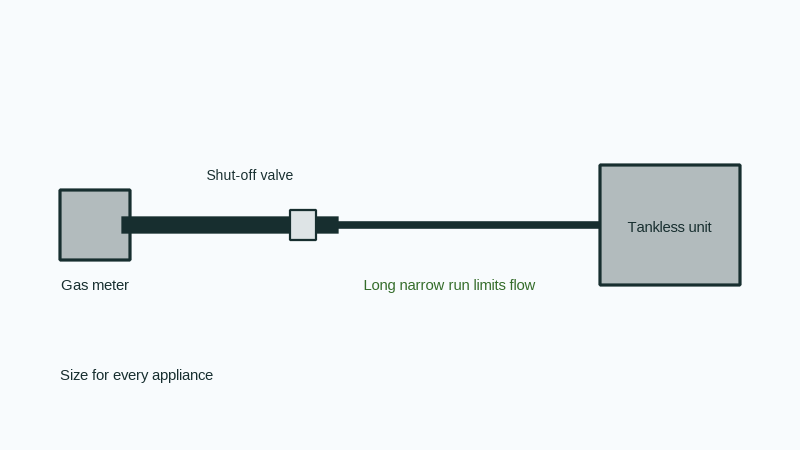
Sometimes. Running flat out, a tankless unit burns a great deal more gas than a tank model, so pipe sized for a tank may come up short. The size needed follows from the unit's maximum input, the length of the run, and what else shares the line. The manufacturer's manual states the requirement. Start from our water heater page.
A plumber sizes the line by adding up the gas load of every appliance fed by that pipe, then checking the total against the pipe size and length. Sizing from the meter outward matters, since a short stretch of large pipe followed by a long stretch of small pipe does not help.
Do not size it yourself from a forum post. Undersized gas piping starves the heater, which causes ignition faults and error codes and can lead to dangerous operation. In California, gas pipe work falls under regulation: find out the requirements from the building office, and hire a plumber to carry it out.
Besides the heater, what else does a gas tankless install include?
Five more jobs surround the heater: the gas supply, the exhaust vent, a drain for condensate, electrical power, and water connections fitted with isolation valves. Each can change both the price and the schedule, and each is subject to its own rules. A quote that names only the heater leaves most of the job out.
The gas side may call for a larger pipe, a new shut-off valve and a sediment trap. The manufacturer sets the vent material and diameter, and the vent exits through the wall or the roof, keeping clear of windows and openings. High-efficiency units make acidic condensate, which must be drained somewhere suitable, at times through a neutralizer.
Power is usually a standard outlet, since the unit runs controls and a fan, but the outlet must be close and grounded. On the water side, ask for isolation valves on both the hot and cold lines, so the unit can be flushed; it is the most useful single fitting you can request.
Which locations suit a gas tankless heater?
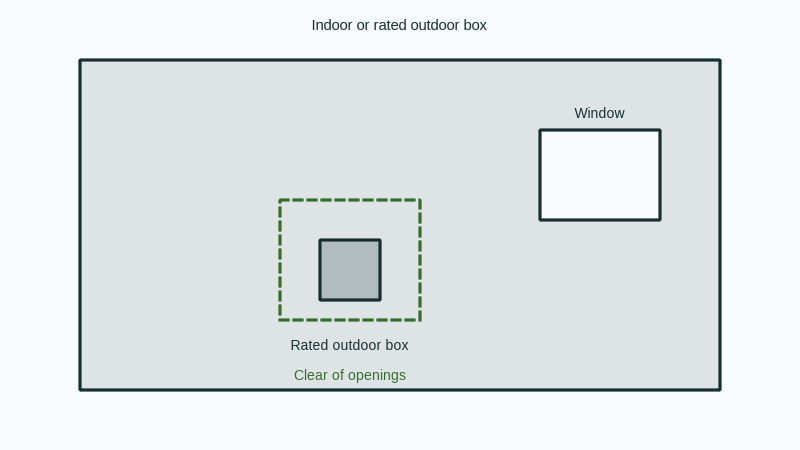
Indoors, on an outside wall or outdoors in a rated enclosure, depending on the model. Indoor units need a vent path to the outside and enough combustion air. Outdoor units need no vent run but must be rated for outdoor use and sit clear of windows, vents and combustible surfaces.
In many Simi Valley and Moorpark homes the old tank is tucked into the garage or a hall closet. The new unit usually mounts on a wall and the old floor space becomes free. Moving the unit to an exterior wall is possible but can add work: a longer water line, a new gas run and a patched wall.
Consider where the heater sits relative to the bathrooms. Long pipe runs mean a longer wait for hot water, and a tankless heater does not remove that wait. A small point-of-use unit or a recirculation pump may help, and the plumber can advise which fits your plan.
Which permits and inspections come into play?
A gas appliance installation normally falls under the building office's plumbing and fuel-gas rules, and that office decides if a permit and inspection are required. In Moorpark, the Building and Safety Division handles this and accepts permit applications through its online portal. In Simi Valley, the question goes to the Building and Safety Division of the city. Get the office's answer, and have the plumber confirm it in writing.
Inspectors typically look at gas piping, the vent, the condensate drain, clearances and shut-off valves. A passed inspection protects you if you ever sell the home or file an insurance claim connected to the work.
If someone offers to skip the permit, ask them to explain why in writing. A rushed install with no inspection can leave an undersized gas line or an unsafe vent unnoticed.
Can a homeowner do the installation?
No, not the gas, vent and permit parts. You can learn a lot about how the unit works, and some owners fit service valves or flush the unit themselves, but running gas pipe and venting is regulated work that carries fire and carbon monoxide risk. Hand that part to a plumber who can pull the permit and test the line.
If you want to save money without taking risks, do the preparation: clear the space, choose the model after reading the manual and getting a sizing opinion, and fetch the water quality report. Preparation lowers time on site, and it makes the quote more accurate.
If gas is ever noticeable after an install, get out of the building, use the gas utility's emergency number from outside, and reach 911 if you feel in danger. Leave the unit off.
What is the way to obtain quotes for a gas tankless install?
Use the quote form to share where the current heater is, its fuel and size, how many bathrooms you have, any brand you prefer, and photos of the vent path, the gas meter and the heater. Your request is forwarded by us to a nearby plumbing business, and those that accept requests pay us a fee. We go through form submissions on weekdays, 9am to 5pm.
Have every quote itemize the heater, the work on the gas line, the vent run, the condensate drain, the permit, taking out the old heater, and the warranty. For the price side, see our tankless installation cost page. When you are set to go, request a quote, or return to Arroyo Simi Plumbing to browse the other guides.
How do hard water and water quality affect a tankless heater?
Hard water leaves scale on the heat exchanger, and a tankless unit copes with it worse than a tank does because the water flows through thin passages. Scale reduces output and can trigger error codes. Many installers fit service valves and plan a periodic flush, and some add a scale inhibitor or softener ahead of the heater.
Most of Simi Valley is served by Ventura County Waterworks District No. 8 and the eastern end by Golden State Water Company, according to Calleguas Municipal Water District. Moorpark is on Ventura County Waterworks District No. 1. Your bill names your supplier, and every one of them issues a water quality report each year listing hardness. We do not quote a local figure here.
If the report shows hard water, ask the installer how they will protect the heater. Our water softener installation page explains the option, and our scale prevention guide covers the rest.
Common questions
How long does fitting a gas tankless unit usually take?
If the existing gas line and vent route already suit the unit, a simple swap often fills most of a day. If the job needs new gas piping, a different vent route or wall repairs, expect longer, and the inspection is scheduled separately. Expect the plumber to state a timeline in the quote.
Will a tankless heater still work during a blackout?
The fan, the controls and the ignition on most gas tankless units run on electricity, so in a blackout they stay cold unless a battery backup or a generator input has been added. Ask the installer which backup the model supports, and what you would need to keep it running.
What should I ask an installer before hiring?
Find out how the gas line was sized, which vent material is planned, who removes the old tank, and what the warranty covers. Confirm the quote also includes the permit and the inspection. Check the contractor license number with the state licensing board, and have each answer in writing before work begins.
Do I need to stay home during the installation?
Yes. Be present at the start and again at the end. The plumber has to shut off the water and the gas, and you should watch the unit run and the leak test before sign-off. The water stays off for a few hours, so plan ahead and fill a few containers.