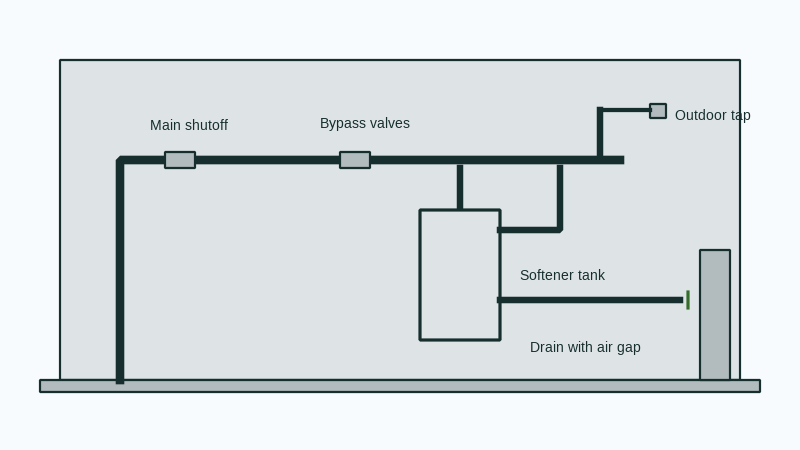
The plumber installing a softener mounts the tank on your main water line, runs a drain that includes an air gap, connects the control head to power and programs it. A standard visit takes part of a day. Use the quote form on our home page and we pass your request to a local plumbing business, which then visits you; we earn a fee from the businesses that accept requests.
What does a softener installation include?
A normal service covers a site check, closing and draining the water, cutting into the main or using an existing loop, fitting bypass valves, connecting the softener, running a drain line that has an air gap, plugging in power, filling and flushing the unit, programming it and showing you how to add salt.
A good plumber also checks incoming pressure, the age of the main shutoff and where the water goes to the heater and outside taps. Many owners prefer that outdoor taps and the irrigation line bypass the softener, so lawn water does not use softened water. Ask for that plan in advance.
How do I arrange an installation?
On the quote form, give your address, the planned spot for the unit, whether you already own a softener, and whether the house has a loop. We forward the request to local plumbing businesses, and one replies with a price and a time. Form requests are read by us from 9am to 5pm, Monday through Friday.
Prepare by clearing the area, having the softener on site if you bought it yourself, and knowing where the main shutoff and a floor drain are. If you are weighing brands or sizes, ask the plumber to explain capacity and salt use.
Is a permit necessary?
That depends on the work. A softener on an existing loop may need none, while new drain connections, new piping or gas or electric work may. Your city decides. Permits in Simi Valley are issued by its Building and Safety Division, and in Moorpark by its Building and Safety office.
California requires a contractor license when a job passes the state threshold, and for every job that calls for a permit. Verify the plumber's license number on the CSLB website, and get the permit situation written into the quote. The factors behind the price are covered in water softener installation cost.
What are the installation steps in order?
The plumber closes the main, empties the line, fits a bypass, ties the inlet and outlet into the loop or main, positions the drain with an air gap, loads salt, fills the tank, sets hardness and regeneration, flushes through, and looks for leaks.
In sequence: confirm location and hardness; shut off water; cut in or use the loop; fit the bypass; connect copper, PEX or a flexible line using the right fittings; route the drain hose into a standpipe, floor drain or laundry line; leave a gap in the air at the drain so wastewater cannot siphon back; plug in; add salt; start a first regeneration; test water at a tap; show you the bypass lever.
Why does a softener need an air gap?
An air gap is an open space between the end of the softener's drain line and the drain itself. It stops dirty water from running backward into the softener and your drinking water. Plumbing rules call for one, and a proper installation includes it as standard.
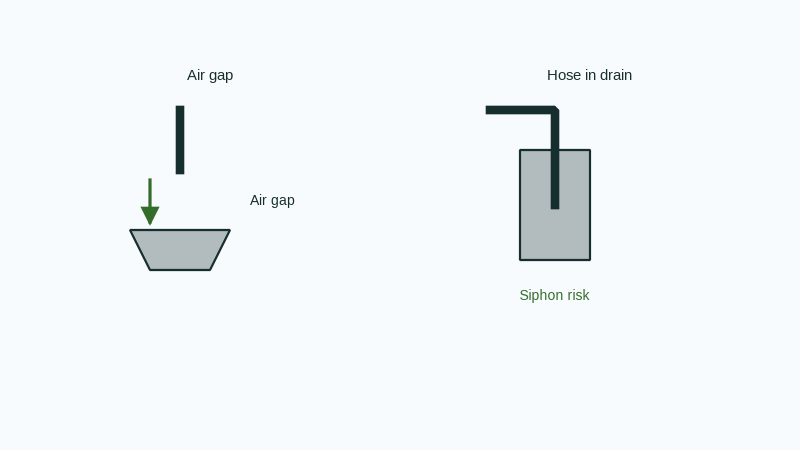
Brine and rinse water travel from the softener head to a drain. A tube pushed deep into a standpipe, or glued into a drain with no gap, can siphon back. Ask the plumber how the gap will be provided, and confirm the drain can handle the flow. Our guide on how to install a softener covers the DIY view, and the plumber should follow the plumbing code.
How can I tell if I need a softener?
Look for white crust on faucets, spotty glass, dry skin after showering, a heater that rumbles, and a short life for appliances. Test the water. Your provider's yearly water quality report gives hardness. Most of Simi Valley is on Ventura County Waterworks District No. 8, with the eastern end on Golden State Water, and Moorpark is on Ventura County Waterworks District No. 1. Calleguas supplies them wholesale.
We have no confirmed hardness number to quote for those areas. A plumber can test a sample from your tap. Our pages on removing hard water scale and hard water scale prevention help you weigh the signs, and one worth reading is whether a softener can raise your water bill.
Is a softener possible with a private well?
Sometimes, but well water brings extra issues: iron, sulfur, sand, and a pump system that may need filters before the softener. A water test comes first. Wells and septic systems can exist on canyon and rural lots near Tapo Canyon and Santa Susana Knolls, so mention one if you have it.
Septic systems are a separate concern, because brine discharge may affect them. Ask a plumber and your septic provider before connecting a softener drain to a septic system. We have no confirmed list of who has wells or septic in each neighborhood, so check your own property records.
Where in a Simi Valley house is the softener installed?
Typically in the garage, on the wall by the main shutoff, with space for a salt tank, a drain close by and an outlet. Tract homes dating from the 1980s and 1990s often have a capped loop in that spot already. Older small-lot homes may need more piping and a place found for the unit.
Measure the space before buying: height for lifting salt bags, clearance for the lid, a floor drain or standpipe in reach, a level floor and an outlet. A softener is heavy once filled, so a solid floor matters. Canyon and rural lots may have different supply arrangements, so mention anything unusual with your request.
Common questions
How many hours should a softener installation take?
With an existing loop and a drain nearby, a standard install is often a few hours. A new loop, a long drain run or an added outlet stretches that. Once the layout is known, the plumber can give a time window, and should say whether the water will be off for long.
What questions should I ask before a softener is installed?
Ask whether the price covers the unit or just labor, whether a permit is included, how the air gap and drain will be done, whether outdoor taps will bypass the softener, who services it later, and their California contractor license number to check on the CSLB site.
Is installing a softener myself realistic?
Many owners manage the simple connections. The risks are leaks, a missing air gap, wrong bypass valves and warranty problems. If it involves cutting main lines, new drain work, a permit or electrical work, hire a contractor, since a fitting that fails on the main line can flood the garage.
Do I need to be home during the installation?
Plan to be present at the start and the end, to show access, approve any change and learn the bypass and salt routine. If that cannot happen, a trusted adult can let the plumber in, provided that person knows where the main shutoff and the floor drain are.