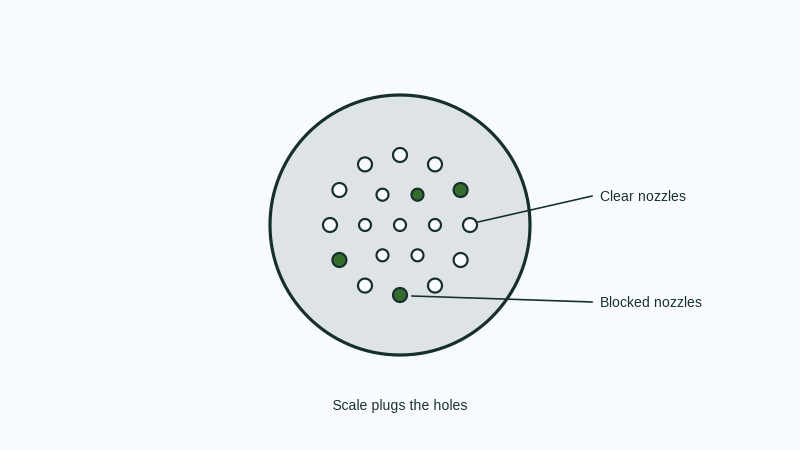
Calcium and magnesium stay behind as scale once hard water evaporates or heats up. White vinegar, which is a mild acid, or a descaler made for the surface, dissolves most of it. Stronger acids can damage fixtures and are unsafe in confined spaces. For a lasting answer, treating the water counts for more than scrubbing. If you want a local plumbing business to examine the system, use the request form on our home page. We pass your request to that business, and the businesses that accept requests pay us a fee.
What exactly is hard water scale, and how does it form?
Scale is a hard mineral deposit, mainly calcium carbonate, that forms when dissolved minerals come out of water as it dries or heats. It builds on faucets, showerheads, glass, kettles and inside water heaters and pipes, and gets worse where water is hot or sits.
It is not a sign of dirty water. Hard water is normal in many parts of Southern California, which gets much of its supply from imported sources. Most of Simi Valley is on Ventura County Waterworks District No. 8 and the eastern end on Golden State Water, with Calleguas Municipal Water District supplying both wholesale. Moorpark is on Ventura County Waterworks District No. 1. We have no confirmed hardness number, so read your provider's yearly water quality report.
Does scale raise my bills or damage the plumbing?
Scale in a water heater cuts efficiency, so it can push up energy use, and heaters and appliances that heat water wear out sooner. Scale in fixtures and aerators lowers flow. It has no effect on the water bill from your provider, which is based on volume used.
A neglected heater may show sediment in the base of the tank, a rumble and shrinking hot water output. An aged, heavily scaled heater may be better replaced than flushed. For lifespans, read when a water heater should be replaced.
What keeps scale from coming back?
The way to cut it back is treating the water, not just cleaning the surface. A water softener swaps hardness minerals for sodium or potassium, a scale-reduction device is a different technology with mixed results, and a lower water heater temperature slows deposits. Regular wiping helps too.
A softener serves the whole house and protects the heater, fixtures and appliances. Ask the plumber about capacity, regeneration and where the drain goes. See water softener installation service and cost of installation, and note that hard water scale prevention lays out the options side by side.
How do I remove scale from faucets and showerheads?
Soak a cloth or bag in white vinegar and wrap it around the fixture for an hour, then wipe and rinse. For showerheads, unscrew and soak in a bowl, or hold a bag of vinegar over the head with a rubber band. Brush the nozzles with a soft toothbrush and rinse well.
Reserve vinegar for suitable finishes. Acid can damage natural stone, some coated finishes and brass-plated fixtures, so check the maker's guidance. Never mix vinegar with bleach or chlorine-based cleaners, because that can release harmful gas. Rinse with water after each soak, and dry the fixture to slow the return of spots.
How do I get scale out of a kettle or coffee machine?
Fill it halfway with water and halfway with white vinegar, heat it, let it stand thirty minutes, then flush with clean water until the smell is gone. For coffee makers, run a cycle of vinegar and water, then two or three cycles of clean water. Consult the maker's manual first.
A mild citric acid solution works the same way with less odor. For stubborn buildup, repeat the soak instead of scraping, because scratches give scale a rougher surface to grip. Descalers for machines are sold for this and have their own directions.
When should a plumber take over scale removal?
Book one if the heater is noisy, valves or fixtures are fused with scale, flow is down throughout the house, or you want a softener. Work near gas lines or pressurized fittings is not a good use of a weekend.
Send the quote form describing what you see, where the scale is, and the heater's age. Your request reaches local plumbing businesses, and one replies with a price and time. Form requests are read on weekdays, 9am to 5pm.
What about scale in a water heater?
In a tank water heater scale settles along the bottom, and in tankless units it coats the heating elements and heat exchanger. It keeps heat from getting to the water, which makes the heater work harder, pop or rumble, and perhaps wear out early. Draining and flushing helps, and a plumber can do a thorough job.
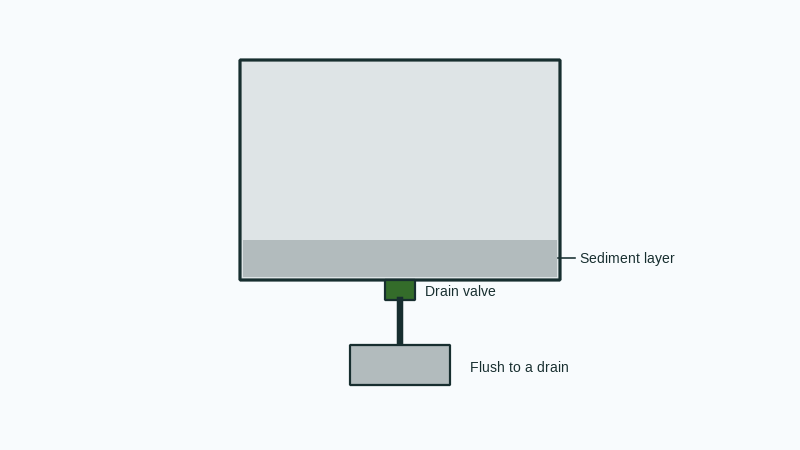
For a tank, switch off the electricity or gas, shut the cold inlet, attach a hose at the drain valve and flush until the water runs clear. Old drain valves can seize or leak afterward, so a plumber may be safer. For tankless units, the maker's manual describes a flush with a pump and a descaling fluid. See Rheem tankless repair and anode rod replacement.
Can I remove scale inside the pipes?
Not easily. Light buildup in a few fittings can be flushed out, but heavy scale inside old pipes cannot be removed by home methods. If flow has dropped across the house, the pipe itself may be narrowed, and replacement of the affected section is the lasting fix.
Treat with suspicion any product promising to dissolve pipe scale in one go. It can release debris that clogs aerators or valves, and strong acids may harm joints. If weak pressure is the complaint, the pages on low hot water pressure and a plumber for weak pressure cover causes besides scale.
Common questions
Can I use vinegar on scale without harm?
Mostly, on chrome, glass, ceramic and stainless steel, provided you rinse afterward. Keep it off natural stone, unsealed grout and any finish the manufacturer cautions about. Do not mix it with bleach. If unsure, test a hidden spot first or read the product guide.
How many hours does scale removal take?
A light film on a faucet clears after an hour of soaking. A kettle needs roughly thirty minutes. A water heater flush runs a few hours with a plumber. Heavy buildup may need repeated soaks, so do not expect one treatment to clear years of crust.
Which questions suit a plumber visit about scale?
Ask what they will test, if they will flush the heater, whether a softener suits your home, what the price covers, and for their California contractor license number, which the state CSLB site lets you check before they start. Have the answers on paper, so the quote shows what the visit covers.
Will a softener remove scale that was there before?
Softened water prevents fresh scale. With time, soft water can slowly loosen some old deposits, though it is not a cleaner. Clean the existing buildup by soaking or flushing, then use the softener to stop it coming back. Fixtures and kettles still need an occasional wipe, because a softener reduces scale but may not remove every trace of it.