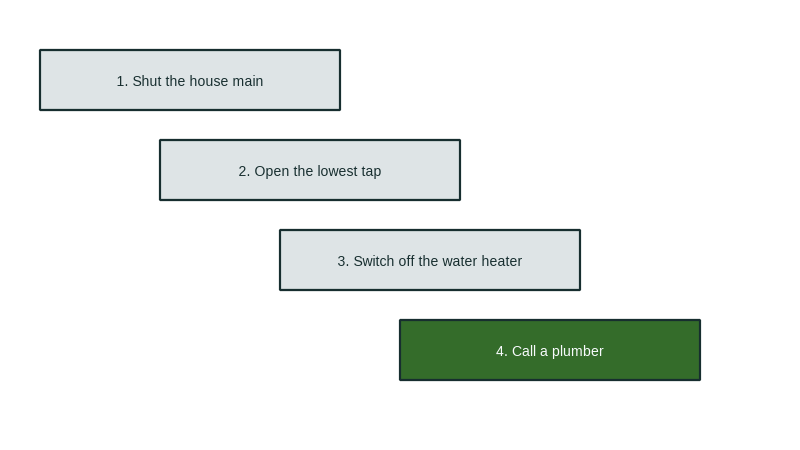
A burst pipe is a race against water. Stop the supply first, make the area safe second, and only then think about repairs. The steps appear in plain order below. This site has no emergency or after-hours line, and we read the form only on weekdays, 9am to 5pm, so when water is flooding in, stop it yourself first. With the water off, the home page shows the repair jobs we pass to local plumbing businesses in Simi Valley and Moorpark.
What comes first when a water main bursts?
Past your property line, a ruptured main usually belongs to the water utility, so tell the company that sends your bill and stay clear of the flow. A break past the meter, on the home's side, is your responsibility: close the house main valve, then arrange a plumber. If the water is deep, fast or near electrics, call 911.
Simi Valley has two water suppliers, Ventura County Waterworks District No. 8 for most of the city and Golden State Water Company for the eastern end. Moorpark is served by Ventura County Waterworks District No. 1. Your bill names yours, so keep the supplier's contact details where you can find them fast.
Not sure whether the break is yours or the utility's? Watch the meter. If its dial moves while every tap is off, water is escaping somewhere on the house side. A wet patch in the street or yard near the meter box, with nothing changing inside, suggests the utility's pipe. When in doubt, close your house main and report it.
How can I tell which pipe burst and where?
A burst shows as visible water, a sudden pressure loss, a meter that runs while everything is shut, or damp walls and ceilings with no spill. Look beneath sinks, beside the water heater, along the garage wall and at the meter. A burst under a concrete floor or in the yard is harder to see and may need leak detection.
The EPA notes that a family of four using more than 12,000 gallons in a single colder month may have serious leaks, so a jumped bill is a clue even before water shows. A burst under the slab is a slab leak, and the choices are explained in slab leak repair versus a repipe.
Pipes fail for reasons: corrosion, age, pressure, a hard knock or a joint that lets go. The reasons are examined in why pipes burst, and burst pipe prevention covers lowering the odds next time.
What does a plumber do at a burst pipe call?
On arrival, the plumber first makes sure the water is off, then locates the failed section and either repairs it or recommends replacing more pipe. Questions about pipe material and age are normal, since a burst in old galvanized or polybutylene can mean more breaks to come. Larger work may need a permit from the Building and Safety office of your city. A written quote reaches you ahead of any work.
Ask whether the plumber will also test the rest of the system, and whether the fix is temporary or permanent. A clamp or patched section may hold, but with an old pipe a longer-term plan such as repiping a house is worth pricing.
The page on fast repair visits for a burst pipe explains how an urgent repair gets arranged. Fill in the quote form giving the address, the pipe that burst and the state of the water supply (off or still running), and a local plumber visits.
How can I keep the house safe while water runs?
Treat the wet area as live until proven otherwise. Stay out of standing water near outlets, appliances or a panel, and leave every switch alone if your feet are wet. If water is close to the electrical panel or lights are flickering, get out and call 911. Lift valuables to higher ground and photograph the damage before cleanup.
Hot water adds a scald risk. A burst on a hot line can release water hot enough to burn. Keep kids and animals back until the flow stops and the water cools. Wear shoes with grip, because wet tile and wood floors are slippery.
Photos and video matter for insurance. Shoot them before moving things, and hold on to damaged items until your insurer says otherwise. We give no insurance advice, and policies differ, so read the overview on insurance coverage for a burst pipe and then speak to your insurer.
How is the water supply shut off at home?
Find the house main shut-off valve, usually on the wall where the supply enters, in the garage, or near the street edge of the lot, and turn it fully off. A wheel handle closes clockwise, while a lever closes with a quarter turn crosswise to the pipe. Then open the lowest and highest faucets so the lines drain.
Learn the valve's location before an emergency, and test that it turns. A valve untouched for years can seize, and forcing it can snap the stem. If the house valve will not close, the meter box often holds a utility valve you can turn with a wrench, but ask your supplier before using it.
Shut down the water heater too. For an electric one, switch off its breaker so the elements do not run dry. For gas, set the control to pilot or off as the label directs. A heater that drains while supply is cut can be damaged if it keeps heating.
It matters whether you face a burst or a slow leak. One page lists the warning signs of a ruptured pipe, and another deals with a break below the yard.
How quickly must the house be dried after a burst?
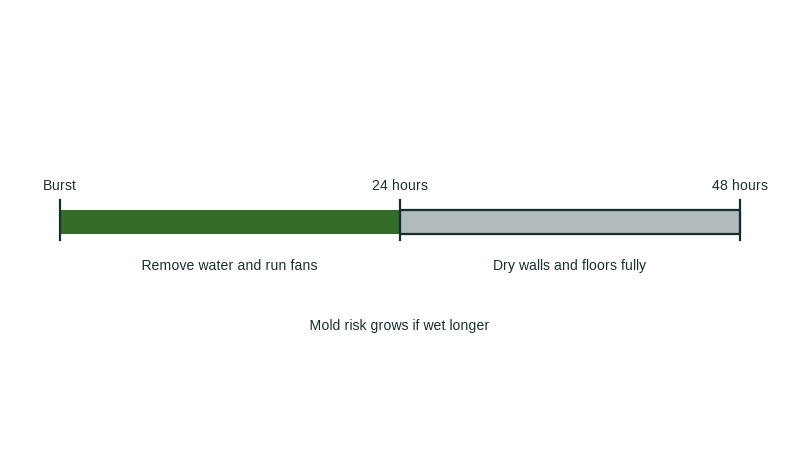
Begin drying within a day. The EPA says wet materials dried inside 24 to 48 hours usually do not grow mold, and that mold can grow in hidden places such as behind drywall and inside walls around leaking pipes. Clear standing water, run fans and a dehumidifier, and pull up wet carpet pads. Fix the water source first, or the problem returns.
Swing open the cabinets beneath sinks, raise carpet edges where possible, and pull furniture away from wet walls. Drywall that is soaked through or sagging often has to come out, because it holds moisture. A moisture meter, which a plumber or restoration contractor may bring, shows whether a wall is still wet behind the paint.
Water damage left undried tends to surface weeks later as stains, a musty smell or peeling paint. For dark patches on a ceiling, see the guides on ceiling stains that signal a leak and a ceiling water leak, which say what to check.
Common questions
How much time should I allow for a burst pipe repair?
Fixing an exposed pipe can be fast. A pipe inside a wall or beneath a slab takes longer, because access must be opened and then closed again. The plumber gives a time guide once the damage has been seen. The form makes no promise on response times.
Which questions come first when hiring for a burst pipe?
Find out if the quote includes opening and closing walls, if drying and drywall repair are bundled or billed separately, what material the repair uses, and whether a permit is needed. Get the price in writing, and verify the contractor's license on the California Contractors State License Board website.
Must a person be present during the pipe repair?
Yes. Someone should be on hand when work begins, so the plumber can locate the shut-off valve, view the damage and agree the plan. Unable to be there? Set up access with the plumber in writing beforehand. Keep animals out of the work area.
Should I switch off the power after a burst pipe?
Only when you can get to the panel while staying out of the water and the floor around it is dry. When water is near electrics, exit the house and contact 911 instead of touching anything. Never use electrical items in standing water, and have an electrician check anything that got wet before use.