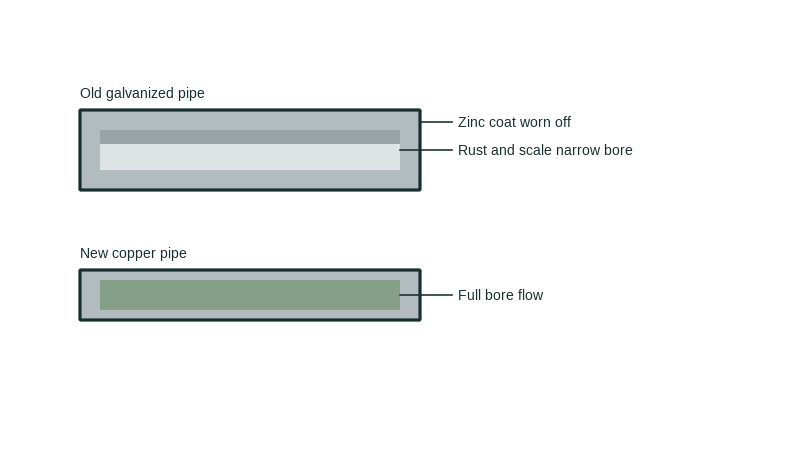
Galvanized pipe is steel wearing a zinc coating. As the years pass the coating wears off, the steel rusts, and mineral scale narrows the bore until water barely trickles. In a Simi Valley house with dull gray threaded pipe, replacement is a question of when, not if. It is one branch of our repiping and pipe replacement service, and the quote form is where you request a plan.
How do I know whether my home has galvanized pipe?
Inspect exposed supply pipe in the garage, beneath sinks, beside the water heater and wherever the main comes into the house. Galvanized pipe is dull gray, threaded at the joints and attracts a magnet. Copper is orange-brown, and PEX is flexible plastic, usually red, blue or white. Scratch steel pipe and silver shows under the rust.
Houses built before the 1970s on the Simi Valley floor are the likeliest to have it, along with older small lots near Old Town Simi and Strathearn where plumbing may have been repaired in stages. Tract homes from the 1960s often mix galvanized with later copper patches. Never trust one visible length, because a house can have different pipe in different walls.
A plumber can confirm the material, test flow and pressure at several fixtures and examine a cut section. If you are unsure, photograph the pipe clearly at the main, by the heater and under the kitchen sink, and attach the pictures to your request.
Does a spot repair do the job, or should all of it go?
Swapping out a leaking section can buy a few years, but galvanized pipe corrodes everywhere at about the same rate, so a repair beside old pipe often leads to the next leak nearby. A full repipe makes sense once several leaks, rusty water and poor pressure appear together. A short run of old pipe at the meter may justify a partial job.
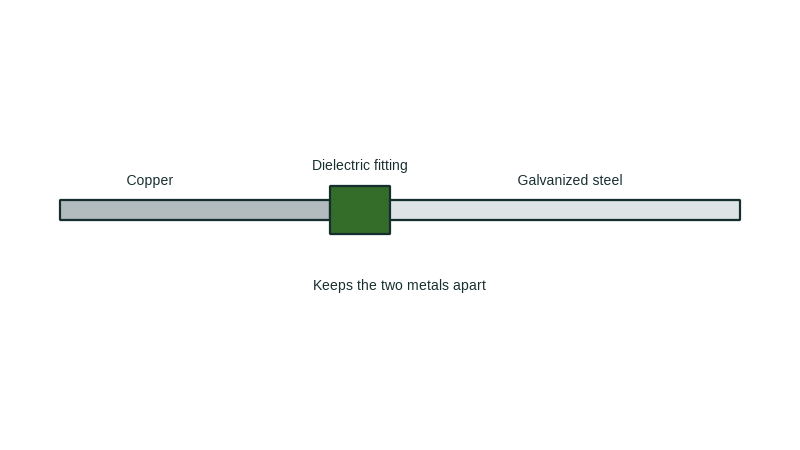
Mixed metals are a concern. Joining copper straight to galvanized without the proper dielectric fitting speeds corrosion at the joint. A plumber should explain how each connection is made. Warning signs are described in our guide to why people repipe a house, and the page on repipe timing for a house gives the wider picture.
With only one failing spot in view, compare repair and replacement in writing. A full job offers one permit, one disruption and consistent pipe. Partial work offers a lower upfront cost and less wall patching.
How long does repiping a whole house take?
An ordinary single-story home is often finished within a few working days, while a larger or slab-built home takes longer. Expect the water to be off for part of every day. The schedule depends on the number of fixtures, how easy the attic or crawl space is to reach and whether wall patching and paint are in the same quote.
Replacing galvanized pipe can go slower than replacing a newer type because old pipe may resist removal, and plaster or tile walls need more care. Get the daily timetable from the plumber in writing, along with an explanation of how the household gets water meanwhile. Many offer a temporary water point, but ask. For a walk through the stages, see how a repipe is done.
Is a permit needed to repipe my house?
A whole house repipe in most California cities requires a permit plus an inspection, and the contractor normally applies for the permit. Simi Valley's Building & Safety Division and Moorpark's Building & Safety are the offices to ask, because rules and fees are set locally. Confirm for your address before work starts.
Homeowners are sometimes allowed to pull permits for their own home, yet the work must still pass inspection and be done properly inside walls where mistakes hide. Gas piping and work on the water main are usually left to a contractor, so ask the building office. Have a plumber name who pulls the permit and put inspection dates in the schedule. A bid with no permit line is a warning.
What does replacing galvanized pipe cost, and how do materials compare?
Price follows fixtures, access, pipe material and wall repair rather than square footage alone, and we do not quote a figure that we could not check. Two written quotes with the same scope are the best guide. The factors behind the price are listed in our repipe cost guide, and the PEX versus copper comparison helps you choose.
PEX installs faster and flexes around corners, which lowers labor. Copper lasts long and handles heat well. Ask each plumber why they favor one, and check your district's water quality report for hardness, since your water affects what lasts. If you are unsure which provider serves your home, your bill names Ventura County Waterworks District No. 8 or Golden State Water in Simi Valley. Whichever you choose, consider asking for a new pressure reducing valve.
Replacing galvanized pipe also means making sure the water heater connections, shutoffs and hose bibs are renewed, so ask for them in the scope. Fixing only the visible leaks tends to leave new pipe beside old pipe.
Does a replacement program exist for polybutylene pipe?
We know of no current program that applies to Simi Valley homes, so none is promised. Polybutylene is a different problem from galvanized steel. It is gray plastic used in some homes from the late 1970s to the mid 1990s and can fail at fittings. Our guide to polybutylene pipe replacement shows how to identify it.
If polybutylene is in your home, ask a plumber about options and ask your insurer what it says about the material. Do not rely on anything you read online about a replacement program without checking who runs it and whether it is still open.
Common questions
How many days does swapping galvanized pipe take?
A whole house usually takes a few days, and a single leaking section can be done in a day. Slab homes, two stories and plaster walls take longer. Ask for the plumber's written schedule including the permit inspection and any drywall repair, since these affect when the job is truly finished.
What should I ask a plumber before this work?
Get the contractor license number and check it with the state, then ask what pipe they will use and why, how many wall openings to expect, who pulls the permit, how patching and paint are handled and what the water-off schedule is. Request a written quote that lists each of those items.
Do I need to be home while the pipes are replaced?
Yes, someone should be home at the start and end of each day to give access and confirm shutoffs. The plumber needs to reach closets, the spaces under sinks, and the attic or crawl space. Shift furniture off walls that will be opened and keep pets out of the work areas.
Is it acceptable to keep galvanized pipe if the water looks clear?
It can, for a while, but clear water at the tap tells you little about the inside of the pipe. Falling pressure, rusty water after a stretch of no use and repeated leaks are better signs. If you plan to sell, a buyer's inspector will likely flag it, so plan for that.