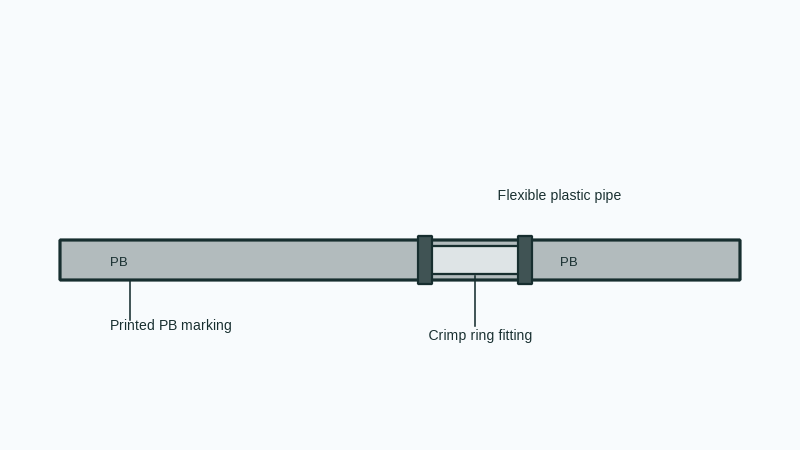
What is polybutylene pipe and why is it a problem?
Polybutylene, often sold as Poly-B, is a flexible plastic used for water supply lines; several million houses across North America received it between about 1978 and 1997. The trouble is that chlorine and chloramine in city water attack both the pipe and its fittings from within, producing leaks and bursts with little notice. A whole-house repipe is the usual remedy.
The damage is hard to see. From outside, the pipe may seem sound even as its inside deteriorates. Failures concentrate at fittings, sharp bends and kinks, where stress speeds the reaction. Some homes see leaks within years; others last decades, which is why owners are tempted to wait.
The lasting fix, according to the source we checked, is to replace the plumbing through the building rather than repair single leaks. A large class action over polybutylene was settled, but we have not checked whether any claim route is still open, so do not plan on compensation for a replacement.
Is there polybutylene plumbing in my house?
Check houses built or repiped between roughly 1978 and 1997, a span that covers many Simi Valley and Moorpark tract homes. Look at visible supply lines next to the water heater, under sinks and where the main enters. Polybutylene is flexible plastic, usually printed along its length, often with the letters PB. Ask a plumber to confirm.
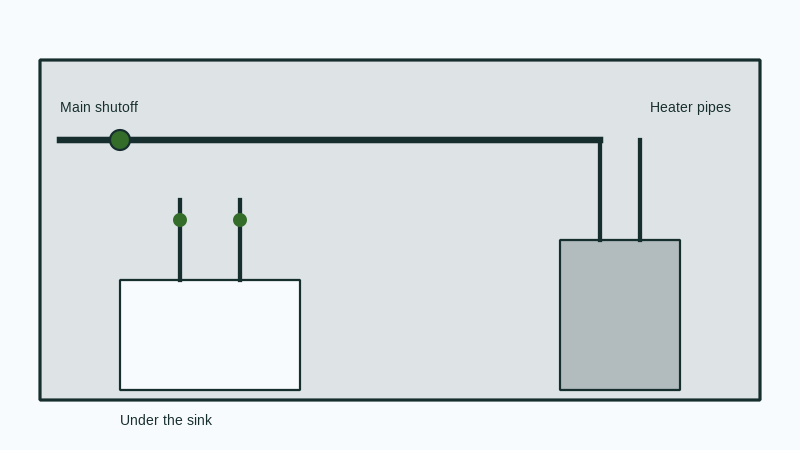
Where to look:
- The lines running into the water heater, where both the hot and cold sides show.
- Under kitchen and bathroom sinks, behind the shut-off valves.
- Near the main shutoff or pressure regulator.
- In a garage or utility room where lines run along walls.
Fittings can also be a clue: polybutylene often joins with crimped metal rings or plastic fittings rather than soldered joints. Not every house from those years has it, and some have been repiped since. A plumber can confirm by reading the markings. Do not guess from the age of the home alone.
What are the signs polybutylene is failing?
Warning signs include wet spots on walls or ceilings, a rising water bill despite no extra use, a drop in pressure, stains, or a leak at a fitting. Many failures have no warning, which is why a house with confirmed polybutylene is treated as a risk even when everything looks normal.
Spot a stain? Turn every tap off and check the meter; if the reading changes, water is escaping. Guides on ceiling leaks and bills that rise with no visible leak cover how to track one down. If a pipe does burst, shut the main valve immediately and only afterward look for help; see burst pipe help.
Keep the main shutoff within easy reach, and tell everyone in the household where it is. That alone limits damage if a fitting lets go.
What does the replacement process involve?
A plumber swaps the supply lines for a modern material, usually PEX or copper, running new lines through walls, attic or crawl space and reconnecting every fixture. Walls are opened at intervals along the route and patched afterward. Expect a permit, an inspection, and water shut off during some hours of each work day.
Material choice involves trade-offs, set out on the PEX versus copper page. Have the plumber walk you through the route of each line, how the old pipe is disposed of, and how drywall repair and paint are handled. The job is bigger than a one-off repair, so the plumber quotes after seeing the whole house.
This work needs permits. Simi Valley handles them through its Building and Safety Division, and Moorpark through its own, separate Building and Safety office. A job that requires a permit also requires a California contractor license, so verify the number before agreeing.
Is replacing polybutylene worth the cost?
Price depends on the house size, number of bathrooms, pipe material, access and how much drywall repair is included. We don't state dollar figures, since none are verified for this page. The case for replacing is the pros: no more risk of sudden leaks, steadier pressure and a documented system when you sell.
Against that are the cost, disruption and wall patches. If you have already had leaks, the case is strong. If none yet, many owners still plan it for a time they choose rather than waiting for a flood. Ask for a written quote with materials, drywall repair, permit and timeline each listed separately, and set at least two quotes next to each other.
To weigh the decision and see what moves the price, read the reasons owners repipe along with the repipe cost guide. In California, a contractor license is generally expected once a job's labor and materials reach $1,000.
Think your house has polybutylene? Request an inspection and a quote. Include the year the house was built and what pipe is visible. We hand your request to a plumbing company in the area, and every company that accepts requests pays us a fee. Requests are read Monday to Friday, 9am to 5pm. The Arroyo Simi Plumbing home page sets out how the service works.
Common questions
How do I check for polybutylene in my home?
Examine visible supply lines next to the water heater and under sinks for flexible plastic pipe with printed markings, frequently including PB. Houses dating from roughly 1978 to 1997 are the likeliest. A plumber can confirm quickly. Do not rely on the house age alone, since some homes were repiped.
Is polybutylene pipe illegal?
We have not verified any rule that bans leaving it in place. What is clear is that it is no longer used for new work and is linked to failures. Ask the plumber and your insurer about options, and check the permit office for current requirements before any work.
Can polybutylene be repaired instead of replaced?
Individual leaks can be patched, but the source we checked says the only long-term solution is replacing the plumbing throughout the building, because the damage is inside the pipe and hard to assess. Repairs may only move the problem to the next fitting.
Will my insurer care about polybutylene?
Some insurers ask about pipe material or set conditions on a policy, but we cannot say what yours does. Ask your agent before you decide on timing, and keep the invoices and permits for any replacement, since they document the new system for later.
How long does replacement take?
Timing depends on the size of the house and on how accessible the pipes are. Many repipes run several days, and the water stays off for part of each workday while lines are swapped. Request a written schedule from the plumber, and find out how drywall repair is handled afterward.