How do I get a sluggish basin draining fast?
Lift out the stopper and pull away the hair around it, then clean the overflow opening, empty the trap under the basin and rinse the pipe with hot water. Stick to that order, since each step needs more effort than the last. Step one or two cures most slow basins. For other fixtures, see our drain and clog hub.
Gather rubber gloves, an old towel, a bucket, a flashlight, pliers, a small flathead screwdriver and either a bent wire or a plastic drain strip. A coat hanger you can straighten means nothing needs buying.
Before you begin, run the tap and take note of how sluggishly the water leaves. Repeat the same test later to see what changed.
Step two: how do you clean the overflow opening?
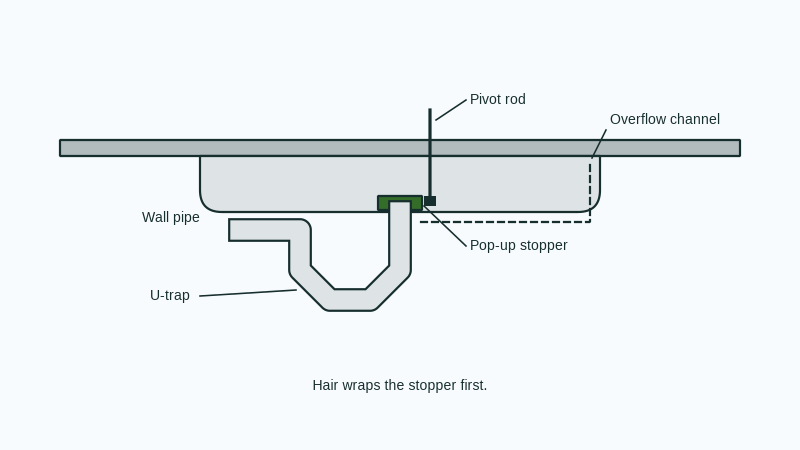
Pour hot water with a touch of dish soap into the overflow hole high on the basin wall, then push a bottle brush or pipe cleaner down it. The overflow channel runs behind the basin and meets the drain under the stopper. Soap and slime collect inside and produce odor.
If the sink still smells after the drain is clear, that channel is the usual source. Use a slim brush, rinse with hot water and wipe the opening. A teaspoon of baking soda followed by vinegar fizzes and loosens grime, but rinse thoroughly afterward.
The overflow seldom causes slow drainage, although it can narrow the flow and hold smells. It takes two minutes and is worth cleaning while the stopper is out.
Which mistakes should you avoid with a slow sink?
Avoid chemical drain cleaners, mixing products, boiling water on plastic and probing with a sharp tool where you cannot see. Cleaners can harm older metal pipes, burn skin and leave a plumber working in hazardous standing water if the clog stays put. Pulling the blockage out by hand is safer and works better on hair.
Never tip grease or coffee grounds into any drain. In a bathroom the rule is hair and toothpaste: place a small strainer over the opening and empty it weekly.
Do not ignore a slow drain accompanied by gurgling, a smell or a backup. These signs point to a vent or line problem that calls for a plumber's equipment.
At what point should you stop and bring in help?
Stop when every step is finished and the basin is still slow, when other fixtures are sluggish as well, when the trap is corroded or will not separate, or when you notice water under the cabinet you cannot trace. Those jobs belong to a plumber, and a camera or machine does better than another try.
Send the quote form with what you attempted, which fixtures are affected and any sound or smell. We pass it to a nearby plumbing company, and companies that accept requests pay us a fee. Requests are read on weekdays between 9am and 5pm. Request a quote at Arroyo Simi Plumbing, and check the sink unclogging price guide for typical costs.
How can you stop the basin from slowing down again?
Fit a hair catcher, wipe toothpaste and shaving residue away rather than rinsing it down, and give the stopper a clean about once a month. Rinse with hot water weekly. Most repeat slowdowns come from the same hair trap that took weeks to form, so small habits count for more than any product.
If the basin slows again within a few weeks, inspect the vent or the line. Hard water also leaves mineral deposits that can narrow pipes over time. Your supplier's annual water quality report states hardness. Remedies are explained in our scale prevention guide.
If the faucet itself drips inside the cabinet, repair that too, because the EPA says one drip per second can waste upwards of 3,000 gallons annually.
Step three: how do you empty and clean the trap?
Slide a bucket under the U-shaped trap, unscrew the slip nuts by hand, lower the trap and empty it. Rinse it in a different sink, work your fingers or a brush through it and check the pipe arm that runs into the wall. Reassemble with the washers sitting flat and the nuts snug by hand, then turn the tap on and watch for drips.
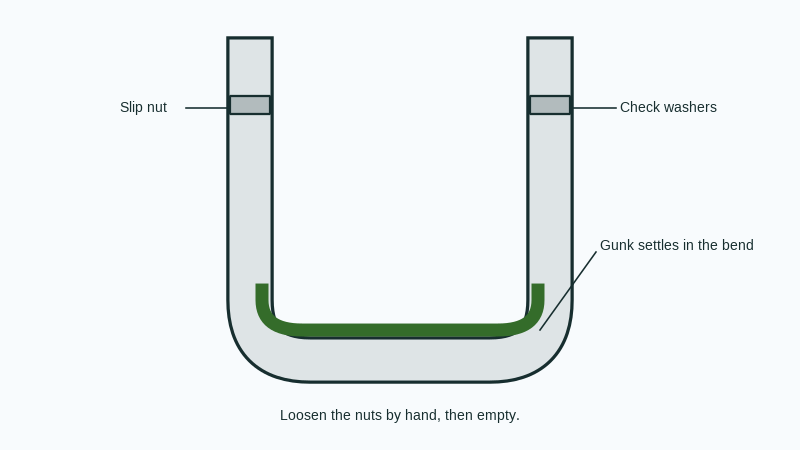
Cleaning the trap removes the thick mass that forms in the bend, where hair and soap settle. Wear gloves, since the job is unpleasant. Look over the washers inside the nuts and swap any that are squashed or split.
If the nuts resist your hands, do not force pliers onto plastic. Cracked slip nuts leak. Spray a little lubricant, or leave the job to a plumber. A longer list of options is on our page about unclogging a bathroom sink.
Step one: how do you clean the pop-up stopper?
Lift the stopper if it comes out, or turn it to unscrew. On many basins, a pivot rod behind the faucet connects to a clevis strap beneath the sink. Loosen the nut on that rod, slide it out and the stopper drops free. Wipe it clean and clear the hair and slime from the drain opening below.
This step solves more slow basins than any other. Hair winds around the stopper's crosspiece and builds a mat that water has to push through. A bent wire or a barbed plastic strip reaches a few inches down and drags out the remainder.
Put the stopper back with the rod passing through the right hole in the clevis. If the stopper then fails to seal, slide the clevis along the rod until it shuts firmly, and test it.
Step four: how do you flush the line past the trap?
Let hot tap water run into the drain for about a minute, then feed a drain strip or small hand auger through the trap arm to break up buildup farther along. Hot water softens soap. A hand auger reaches several feet into the wall pipe and often clears what a strip cannot.
Do not pour boiling water into plastic pipes or porcelain basins, because it can soften joints and crack the finish. Hot water from the tap does the job.
If the basin is still slow after a clean trap and a rinsed line, the obstruction lies further on, in the branch line or the vent. A plunger on the basin can help, with a wet cloth plugging the overflow. If that fails, stop there.
Common questions
How long does a slow bathroom sink repair take?
The stopper needs around five minutes. Emptying the trap adds ten to fifteen more. A cable in a branch line takes longer. Budget half an hour for every step together, and more if the nuts are stuck or the parts have corroded.
Why is my bathroom sink still slow when the trap is clean?
The obstruction is probably deeper, in the branch line or the vent. A blocked vent stops air from following the water, so the sink drains slowly and gurgles. Hair inside the wall pipe is also common. A hand auger reaches a few feet, and a plumber's machine goes further.
Can I clean the drain with baking soda and vinegar?
Yes. It refreshes the pipe and loosens a light soap film, but a firm mat of hair will not budge. Treat it as a gentle maintenance rinse, followed by hot water. For a genuine clog, take it out manually with a strip, a trap cleaning or a plunger.
Which questions help when hiring someone to clear a basin?
Ask what the visit fee covers, whether a camera inspection is part of it, how many fixtures or lines the price covers, and what the arrangement is if the sink slows once more. Verify the contractor license number with the state board, and get the price written down.