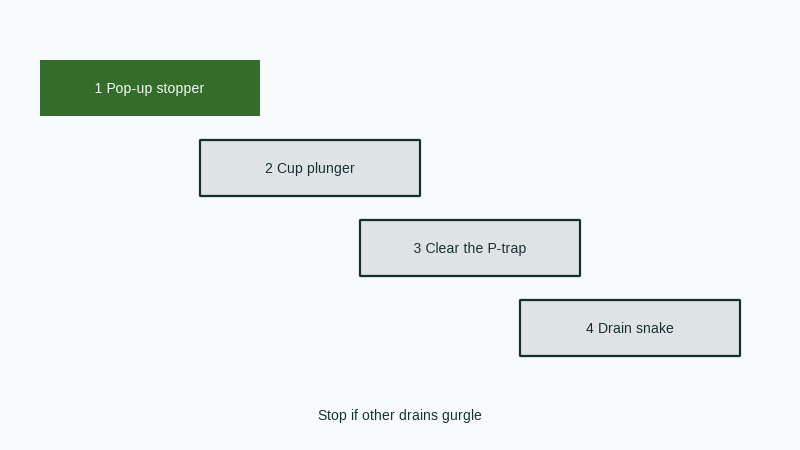
Start at the pop-up stopper, since hair wraps around it and causes most bathroom blockages. If that does nothing, try a plunger, then open the P-trap, then a small drain snake. Give up once you meet a sign that the problem sits farther down the line. This is one of our guides on drain cleaning and clogs, and a quote request is available anytime you prefer to hand it to a plumber.
Which step comes first for a blocked bathroom basin?
Lift out the pop-up stopper, wipe away the hair and gunk, and run the hot tap. Most stoppers pull out or unscrew once you loosen the nut on the pipe behind the drain under the sink. Remove the hair mat you find, rinse the stopper and drop it back in. Many slow bathroom basins clear right here with only a rag.
Put a bucket under the sink before reaching behind the drain, and keep a flashlight handy. A bent plastic hair tool, stocked by most hardware stores, hooks strands the stopper left behind. Avoid jabbing a coat hanger deep, since it can scratch the pipe and shove the clog further. After that, pour in a kettle of hot, not boiling, water, especially with plastic pipes.
Newer homes in Wood Ranch often have plastic drain lines, and older houses around Old Town Simi may still have metal ones, but a hair clog behaves the same in both.
When is a clogged basin too much for DIY?
Hire a plumber when the stopper, plunger and trap have all failed and the basin stays full, when more than one fixture backs up, when water rises in a tub or toilet, when sewer gas smells appear or when the trap is corroded and crumbling. Such signs suggest a main branch line or sewer fault rather than a hair clog.
Backups in multiple fixtures can mean a blocked sewer line, which needs a camera and a power auger instead of household tools. If the basin is full, stop sending more water down, and keep off fixtures downstream. Most drain cleaning visits are quick, and the plumber can clear the line and check how it flows afterward. For a sense of pricing, see what unclogging a sink costs. A blocked toilet on the same line is covered in clearing a clogged toilet.
How do I clean out a blocked P-trap?
Set a bucket under the curved pipe, loosen the slip nuts with your fingers or pliers, and take the trap off. Tip it out, rinse it and look for obstructions in the pipe running into the wall. Refit it with the washers lying flat, snug up the nuts and run water to look for leaks.
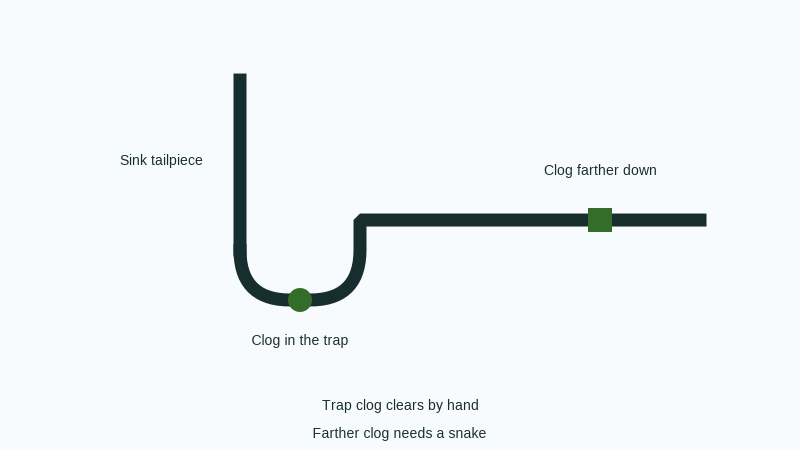
Note the order of the washers and the direction they face. Many P-trap blockages are a blend of soap scum, hair and small objects such as a dropped ring or cap. Feed a bent wire or small snake a short way into the wall pipe. If that pipe is open and water still backs up, the obstruction lies further along. Do not force a plastic trap nut, as it can split and leak.
For partial blockages that drain slowly, read our guide to slow bathroom sink drains and why a sink drains slowly.
Can a plunger work on a bathroom sink?
Plug the overflow hole with a wet rag, pour a few inches of water into the basin and set a cup plunger over the drain. Pump steadily for roughly 20 seconds, then lift away. A good seal counts for more than force. If the water goes down, let the tap run for a minute to wash out the loosened debris.
Pick a small cup plunger rather than the flange type made for toilets. Never plunge once chemical drain cleaner has gone in, because the liquid in the basin can splash and burn skin and eyes. If the sink has a stopper that stays put, remove it first. Bubbles or gurgling in another fixture while you plunge hint that the shared branch line is the culprit.
Is a drain snake or drain cleaner worth trying?
A hand snake, pushed into the drain and cranked, will catch or break up a blockage beyond the trap. Advance gently, turn the handle and pull out whatever comes along. Leave chemical drain cleaners on the shelf. They can harm skin, eyes and some pipes, they are dangerous if mixed, and they leave a plumber working in caustic water.
If you use a chemical product anyway, follow the label to the letter, never combine products, ventilate the room and tell the plumber afterward if the clog remains, so they can protect themselves. Enzyme cleaners are milder but slow, and fit prevention better than a hard blockage. For the full range of ways to clear drains, see the page on clearing a clogged drain. If the kitchen is the trouble spot, the method differs: see unclogging a kitchen sink.
Common questions
How long does it take to clear a bathroom sink clog?
Cleaning the stopper takes about ten minutes, with a plunger or trap adding another 15 to 30. A snake needs a little longer. A plumber on a standard drain job often wraps up within an hour, though a backed-up main line or heavy roots can take more time.
What should I ask a drain cleaning business?
Find out if the quote is a flat visit charge or hourly, which tools they bring, if a camera inspection is included when the blockage returns, and if they back the work for a set period. Check the contractor license number with the state, and have the price in writing ahead of the work.
Must someone be home for a drain cleaning visit?
Generally yes, so the sink can be shown and the plumber let in. The plumber will want access to the cabinet under the basin and possibly a cleanout outdoors. Clear the cabinet of cleaning products ahead of time and mention what you have already attempted.
What makes a bathroom sink clog again and again?
Hair, toothpaste, soap scum and mineral scale from hard water accumulate on the stopper and pipe walls, so the blockage comes back. A stopper catcher, a monthly cleaning and hot water rinses help. If it returns within weeks, the pipe may have a sag or rough joint that catches debris.