What do I do first when a toilet blocks?
Stop flushing, because a second flush into a full bowl can overflow onto the floor. If water keeps rising, close the stop valve at the wall behind the toilet, or lift the tank lid and press the flapper shut so no more water reaches the bowl. Spread towels, then start with a plunger. The clogged toilet hub covers the wider picture.
Skip chemical drain cleaners in a toilet: the liquid can sit in the bowl, splash back at you and, if it fails, leave a plumber facing a caustic pool. If the bowl is nearly full but the level is dropping, give it a few minutes and see if it clears by itself before plunging.
Put on gloves and old clothes, since splashes happen. Open a window if the smell is strong, and keep kids and pets out of the bathroom.
When should I hand a blocked toilet to a plumber?
Hire a plumber if several honest tries with a plunger and auger get nowhere, a foreign object may be involved, the blockage returns within days, several drains are affected, or the fixture must come up off the floor to reach the clog. Pulling a toilet carries its own risks.
Send the quote form with what you tried, whether other drains are slow and a note on any object that might have gone down. We pass your request to a local plumbing business, and the businesses accepting requests pay us a fee. We read the form Monday to Friday, 9am to 5pm. Request a quote through Arroyo Simi Plumbing, and the unclog toilet cost page explains the price.
What is a toilet auger, and how is it used?
A toilet auger, sometimes sold as a closet auger, pairs a short cable with a rigid shaft and a protective sleeve for porcelain. You feed the cable into the bowl, crank the handle to snag or break the blockage, and pull it out or push it through. It reaches farther than a plunger without scratching the bowl.
Insert the curved end into the drain, push gently while cranking clockwise, and stop when you feel resistance. Crank a few more turns, then pull back slowly. Many augers pull out toilet paper or a wipe. Clean the tool afterward with hot water and disinfectant.
Do not force it. If the cable meets firm resistance you cannot get past, the blockage may lie past the toilet's trap, or an object may be wedged and need a plumber to retrieve it. A bent or kinked cable usually means you have hit something solid.
What makes a toilet block again and again?
Typical causes are excess paper, wipes labeled flushable, feminine products, a weak-flushing low-flow toilet, a partly blocked drain, a half-closed fill valve, or tree roots in the sewer line. One blockage is a nuisance; a repeating one points to a cause that needs fixing.
Wipes are the leading offender because they fail to break apart as paper does. Place a bathroom bin within reach, and let everyone in the household know that only toilet paper and waste go down. Older toilets with weak flushes may need a flush valve repair or a replacement; see toilet flush repair.
When other drains in the home are slow or gurgling at the same moment, the fault lies lower in the system. Reading about clearing a drain helps you tell a toilet fault from a line fault.
Will hot water and dish soap clear a blockage?
Sometimes. A squirt of dish soap lubricates the pipe, and hot tap water from a bucket, tipped in from about waist height, adds weight. Leave it 10 to 15 minutes, then try again. This works best on soft blockages such as too much toilet paper. Never use boiling water, because it can crack the porcelain.
Pour from about waist height and steadily, not all at once. The force of the water, together with the soap, can move a soft clog along. If the bowl level drops slowly, let it finish, then plunge to push the rest through.
This method does little against a hard object. A toy, a bar of soap or a wipe will not dissolve, and it needs mechanical removal.
How do I plunge a toilet properly?
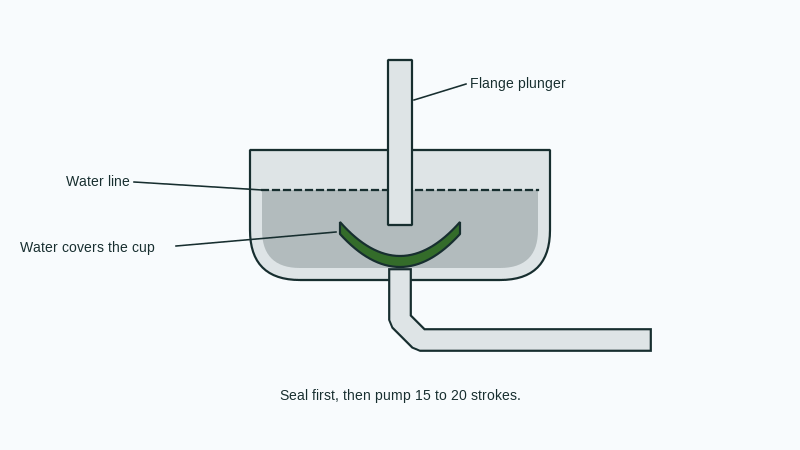
Choose a flange plunger, the kind with a rubber flap extending below the cup, rather than the flat sink plunger. Seat it over the drain opening so it seals, push down softly to force the air out, then pump firmly and steadily for 15 to 20 strokes. Pull up sharply on the last stroke. Repeat if the water drains slowly.
The seal matters more than the force. If the bowl has too little water, add some so the plunger cup is covered, since you push water, not air. If it has too much, bail some into a bucket first.
Hard thrusts can splash. Start gently. If the water drains in a rush after a few pumps, the blockage has moved. Flush once to confirm, and tip a bucketful into the bowl if you are unsure.
When does a blocked toilet signal a sewer line problem?
Several fixtures backing up together, a shower or floor drain gurgling on each flush, or a tub filling while the washing machine runs all suggest the main drain is blocked, not the toilet. Stop using water and have the line checked.
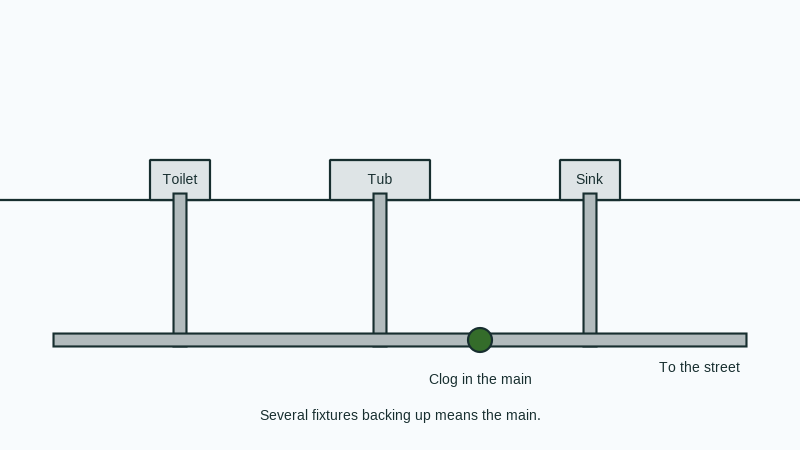
Older Simi Valley and Moorpark homes may have aging sewer laterals, and tree roots are a common cause of main line trouble. A camera inspection shows what is there. Do not keep flushing a toilet and hoping, since you can push sewage into the lowest fixture in the house.
If sewage is on the floor, treat it as a health hazard: keep people out, wear gloves, ventilate, and arrange cleanup. The emergency plumber page lists what to ask for.
Common questions
How long does clearing a blocked toilet take?
Plunging usually runs from a few minutes up to half an hour, and an auger often adds ten more. A clog in the main drain calls for a machine or camera from a plumber and takes longer. Retrieving an object by pulling the toilet adds further time.
Can a blocked toilet fix itself?
A soft blockage sometimes drains slowly on its own over an hour or two, especially after soap and hot water. A blockage that has not moved after that will not fix itself. Do not flush again and hope. Try the plunger and auger, and ask for help if they fail.
Does a clogged toilet waste water or damage the toilet?
Repeated flushing of a blocked toilet overflows the bowl, which is waste and mess. A running toilet that keeps refilling also wastes water, and the EPA points out how leaks add up. Keep the valve behind the toilet closed while you work, and the damage stays limited.
What should I ask a plumber before booking?
Find out what the visit fee includes, whether a camera inspection is part of it if the problem is in the drain, how the price changes if the toilet needs lifting, and what the plan is if the blockage returns. Get the price in writing, and check the contractor license with the state board.