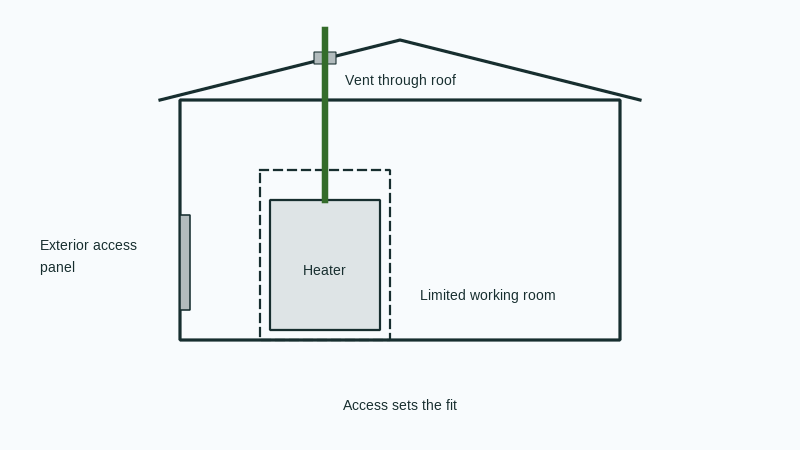
Putting in a new heater in a mobile or manufactured home is not always the same task as in a house. The unit sits in tighter quarters, its venting leaves through a roof jack or wall, and federal rules shape the equipment. No price specific to mobile homes that we trust has been published, so this page is candid about what is known. The main page on heater work is the water heater page. Back on the home page are the other jobs we pass to local plumbers in Simi Valley and Moorpark.
What is the price of a new heater for a manufactured home?
We found no published price for mobile home heaters from a trusted source, so none is quoted here. Bob Vila's national guide for any water heater gives $874 to $1,765, averaging $1,293, from data charted in October 2023. Since a manufactured home carries extra requirements, the only number to rely on is a local plumber's written quote.
Use the national range as a starting point, not a forecast. Prices have moved since 2023, and the guide describes standard houses. A manufactured home may land within the range or above it, depending on the unit, the vent, and how awkward the compartment is to work in.
For a breakdown of a typical bill, see the page on what a hot water heater replacement costs, which lists the lines, and the broader water heater replacement cost guide, which explains the factors. Use them to read a manufactured home quote, then place two or three written quotes side by side.
Why might a heater for a manufactured home be different?
A federal HUD code governs how manufactured homes are built, and it can limit which heater fits. Section 3280.707 of 24 CFR states that heat-producing appliances, together with the vents, roof jacks and chimneys they need, must carry a listing from a nationally recognized testing agency for residential use, and that fuel-burning appliances must vent outdoors.
Efficiency limits for storage heaters come from that same section. For automatic electric storage heaters it caps standby loss at 43 watts per square meter of tank surface, and gas and oil units must meet minimums for recovery efficiency and standby loss when tested to a named standard. You do not need to check these numbers yourself, but they show why the choice of unit is narrower than at a hardware store.
The rule names vents and roof jacks too. A replacement might need a vent kit suited to your home's roof or wall, adding parts and labor. A plumber can inspect the existing vent and say whether it can be reused or must be replaced.
Is an ordinary tank heater allowed in a manufactured home?
Ask before buying. The rule above was written for heaters installed by the home's manufacturer, and replacement units are a question for the plumber, the unit's manual and its maker. Check the label and the manual for wording saying the heater suits manufactured home installation, and have the plumber confirm it in writing before the old one comes out.
A heater that fits the space may still be disallowed in a manufactured home. Do not trust a store clerk or a friend: the manual and the manufacturer's support line are the authorities, and a plumber who has done the job before knows which models they use.
If tankless appeals to you, ask the plumber whether a tankless unit is allowed and practical in your home. Tankless units need venting, a gas supply and sometimes larger pipe, and they behave differently in a small home. The pages on tank versus tankless explain the trade-offs, and plumbing under a mobile home covers the supply lines feeding the heater.
Which other factors move the price in a mobile home?
Price follows fuel, tank size, access, venting and the condition of the old connections. Gas units need a vent path through the roof or wall and a sound gas connection, electric units need the right circuit, and a cramped closet can add labor. A drain pan, new shut-off valves and flexible connectors are common extras to ask about.
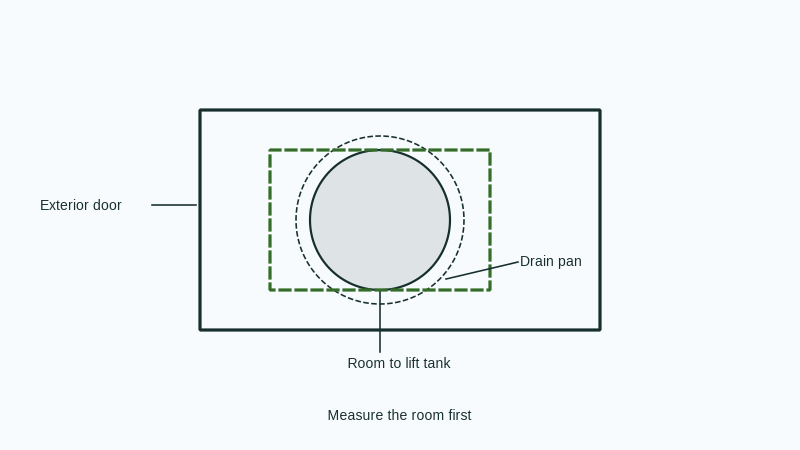
Access matters a great deal in manufactured homes. A few heaters sit in a closet with an outside door, while others are inside a hall or utility space with little room to work. The plumber may need to maneuver the old unit out through a small opening, which takes time.
Old connections count too. Should a shut-off valve refuse to close, or the supply lines show corrosion, or the gas flex look worn, replacing them while the heater is out costs less than coming back later. Have the plumber list each part in the quote. Choosing a tank bigger or smaller than the old one can change the work as well, so pick a capacity that suits how many people use hot water.
Does this kind of swap require a permit or park approval?
Ask both the city and your park or landlord. Swapping a water heater typically calls for a permit from the Building and Safety office of the city, though manufactured homes in parks can follow different rules, and park management may add requirements of its own. A plumber who knows the area can explain what applies to your space before work starts.
Simi Valley permits go through the Building and Safety Division of the City of Simi Valley, and Moorpark permits through the Building and Safety office of the City of Moorpark. Confirm which one covers your address, and see each city's website for current hours before visiting. Permit fees have not been confirmed, which means the plumber is the one to ask about the figure and about who pulls the permit.
If you rent, put the problem in writing to the owner or the park, because who arranges and pays for a replacement depends on your lease and on the owner. We give no legal advice. What we do is forward your request to a nearby plumbing business that can quote the job.
What do I do to get an accurate price for my home?
Send what a plumber needs: the brand, model number, fuel and gallons from the old heater's label, plus photos of the heater, its compartment and the vent. State whether you own or rent the home and whether it is in a park. Given those details, a nearby plumber can write a quote that names the unit, parts, permit and haul-away.
Describe the home, the heater and the symptom in the quote form. We pass your request to a local plumbing business, and its plumber visits and gives you a written quote ahead of the work. Requests are read on weekdays from 9am to 5pm, and nothing is promised about how fast a reply comes.
If the heater still works but is old, the guide to how long heaters last can help you decide when to act. If you want a professional for the whole swap, see choosing a plumber for heater replacement.
Common questions
What is the typical duration of a swap in a manufactured home?
Exchanging one tank for another often takes a few hours, though access, the vent and needed repairs can stretch it. After seeing the compartment, the plumber gives a time guide. Hot water stays off until the job finishes. Requests sent through the form carry no promised response time.
Which questions suit an installer who works on manufactured homes?
Ask which models they use and whether each suits a manufactured home, what the warranty includes, and whether the permit, vent parts, a drain pan and haul-away are part of the quote. Have the price put in writing, and verify the contractor's license on the website of the California Contractors State License Board.
Do manufactured homes pay more than houses for a new heater?
Possibly, but no trustworthy published figure says by how much. The listing rules, the vent parts and tight access can all add to the cost. Collect a few written quotes for your own home (two or three is enough), and ask each plumber to itemize the unit, parts and labor.
Does anyone have to be home during the heater swap?
Yes. An adult should be present when the work begins, to point out the heater and agree the plan, and again at the finish to watch it run. If you rent, let the owner or park know about the visit. Keep the area around the heater free so the plumber can work.