Rinnai is only one of several tankless brands on sale in California, and the installation questions barely change with the brand: Can the gas line carry the load, where does the exhaust leave, is there a power outlet and a drain for the condensate, and will the permit office approve? Settle those before picking a model. The hub on repairing or replacing a water heater covers the wider options. Your request goes from us to a plumbing business near you in Simi Valley or Moorpark, you compare written quotes before buying anything, and we earn a fee from the businesses that accept requests.
What does a Rinnai tankless installation involve?
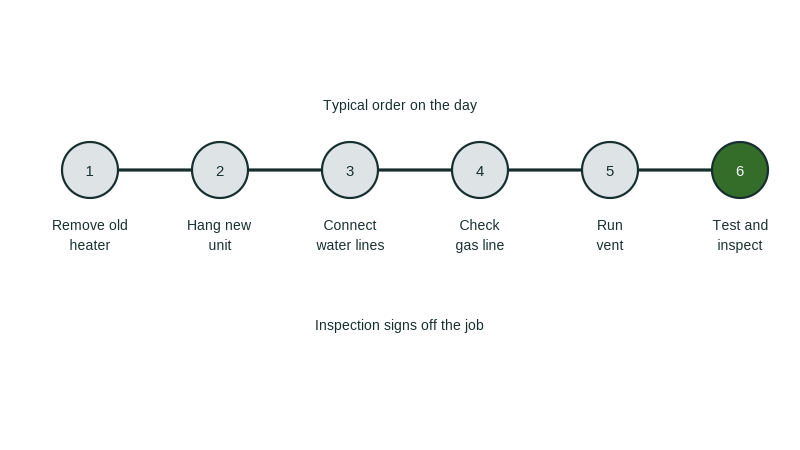
Once the old tank is out, the plumber mounts the new unit on the wall and connects the water lines through isolation valves. Next come the gas hookup, the venting, the power connection, plus a condensate drain if the unit is a condensing model. Leak and combustion checks follow, and the plumber arranges the inspection. A permit covers the job.
Here is how the day goes:
- The old heater is emptied, disconnected and carried away.
- The unit goes on a wall, often outdoors or in a garage, with clearances set by the manufacturer.
- Water connections get service valves, which allow flushing the unit later.
- The gas line is inspected and often enlarged, because a tankless unit pulls a large amount of gas at once.
- Venting is run in the pipe the manufacturer specifies, then sealed.
- The unit is tested, the settings programmed, and the homeowner is shown the display and controls.
Details vary with the model and with indoor or outdoor mounting. The manufacturer's installation manual has the last word, along with the plumber's reading of it, so ask to see the manual for the model and the clearances.
Can my existing gas line supply a tankless heater?
Frequently not, unless changes are made. A tankless heater firing at full power can draw several times the gas of the tank it replaces, so the line, meter and regulator must all be able to supply it. A plumber measures the pipe run and totals the gas appliances. A larger line is a common extra on the quote.
California regulates gas piping. It takes a contractor and generally a permit, so DIY ends here. If you smell gas, leave the building first and report it from outdoors: SoCalGas takes the report at 1-800-427-2200, and 911 handles any threat to a person. SoCalGas serves many Simi Valley and Moorpark addresses, but your own bill will show whether gas service reaches your street. Service by address has not been verified here.
Request the gas load calculation in writing. It protects you from a unit that cannot reach full output, and from other appliances running short when the water heater fires.
How does Simi Valley water affect a tankless heater?
Inside the heat exchanger, mineral scale accumulates and shortens the life of a tankless unit, and it is the usual cause of error codes. Hard water worsens it. No hardness figure has been verified for any Simi Valley or Moorpark supplier, so read the yearly quality report from your supplier and discuss a flush plan with the plumber.
Ventura County Waterworks District No. 8 serves most of Simi Valley, Golden State Water serves the eastern end, and Ventura County Waterworks District No. 1 serves Moorpark; your bill shows yours. Isolation valves make a yearly vinegar or descaling flush possible, and a softener or scale filter may merit discussion. You can read about the choices in keeping hard water scale under control.
Read the manufacturer's warranty conditions on water quality and maintenance, and keep them in writing. Some manufacturers make coverage depend on upkeep and on installation by a contractor holding a California license.
Is a permit required, and who is allowed to do the work?
Yes. Replacing a water heater in California takes a permit, and a permit brings a contractor license requirement. Jobs where labor and materials add up to $1,000 or more generally need a license too, as does any permitted job. Before work starts, verify the number on the licensing board's site, cslb.ca.gov.
Simi Valley addresses go through Simi Valley Building and Safety on Tapo Canyon Road, and Moorpark addresses through the Building and Safety counter at City Hall on Science Drive. Confirm hours before going. A reputable plumber takes out the permit and books the inspection; ask who will, and get that stated in the quote.
Strapping the tank is among the rules for a tank replacement, and the plumber will cover the requirements. California caps deposits at the lesser of $1,000 or 10 percent of the contract price, so turn down a large deposit.
When should a plumber get involved, and when is a tank the better pick?
Bring one in the moment you decide to switch, because gas and vent checks decide whether tankless is practical. A tank may suit better if the gas line cannot be enlarged sensibly, the venting route is awkward, or the household uses modest hot water. The guide to tank versus tankless compares them honestly.
A tankless unit will not save money in every home. Savings figures have not been verified, so have the plumber lay out their assumptions, and read the energy label.
What do venting, power and the condensate drain add?
Exhaust from a tankless unit has to be vented outdoors in approved pipe, and the vent type depends on the model. Most units also need a power outlet to run the controls, and condensing models need a drain to carry off their acidic condensate. Each adds work, and each is a spot where a cheap quote can hide extra cost.
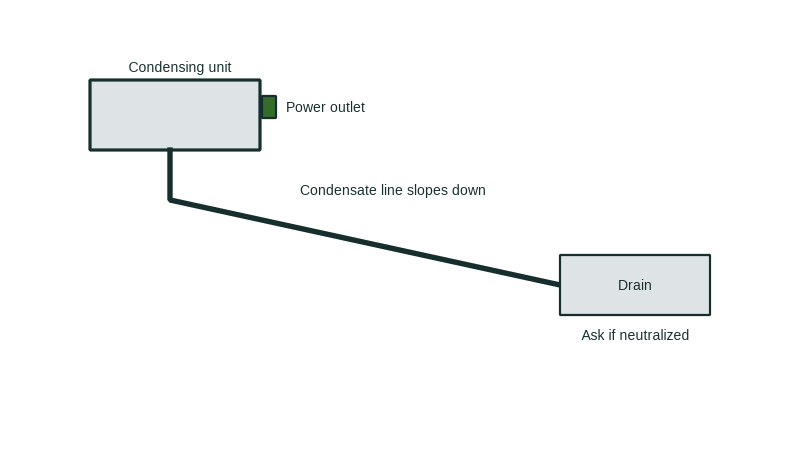
Raise these points with the plumber: where will the vent end, and does it clear windows and doors by the required distance? Where does the condensate go, and is it neutralized? Is an outlet nearby, or must an electrician add one? Outdoor models skip some indoor venting work but need weather protection and, in colder spells, freeze protection.
Permits and inspections cover all of these items, which is a reason to insist on one. The cost article on fitting a tankless water heater shows how the pieces add up, and the page on Navien installation helps if you are comparing brands.
Common questions
How long is a Rinnai installation?
A straightforward replacement often fills a full day, and more when the gas line, venting or electrical work needs changes. The inspection comes afterward. The plumber supplies a schedule with the written quote, and the hot water will likely stay off for several hours.
Which questions go to a Rinnai installer before I choose one?
Get the contractor license number so you can verify it with the state licensing board, a paper quote that names the model and each extra, the gas line sizing, who pulls the permit, how venting and condensate get handled, and both the manufacturer and labor warranties in writing.
Does someone over 18 need to be home while a tankless unit goes in?
Yes. Someone over 18 should be present when work begins to approve the location and at the finish to see the unit run, learn the controls and sign off. If access to the garage or yard needs arranging, tell the plumber when they reach out about timing.
Is a self-installed tankless water heater a good idea?
We advise against it. Gas line, venting and permit make it regulated work, and errors can cause carbon monoxide or gas leaks. A contractor is required in California for any job needing a permit. Prepare the area and leave the install to a plumber. See the guides.
Does a tankless heater need regular upkeep?
Yes. A yearly descaling flush is the usual task, plus cleaning the inlet filter, and the manufacturer's manual lists the rest. Hard water raises the importance. Have the plumber show you the isolation valves and the flush steps, and keep the paperwork.