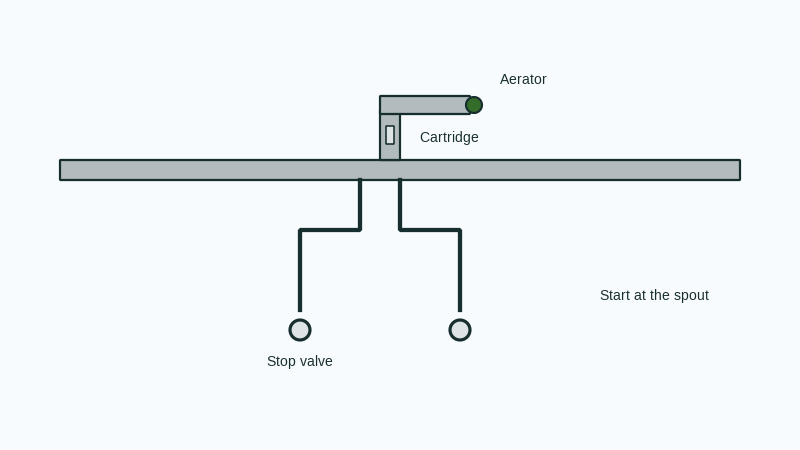
If the kitchen faucet dribbles while the bathrooms and outside taps run strong, the trouble is nearby: a half-closed shutoff, a pinched supply line, a worn cartridge or an aerator choked with scale. Start at the spout and move backward. Weakness at every tap suggests a house-wide cause, which fits the sink, shower and disposal overview or the pressure guides further down.
Why does only the kitchen sink lose pressure?
Something on the sink's own route is restricted. Likely candidates are mineral buildup in the aerator, debris inside the cartridge, kinked or half-shut supply lines, or an angle stop below the counter that has not been turned all the way open. Each is cheap to check, and most need no plumber.
Test hot and cold separately. If only hot is weak, inspect the hot supply line and angle stop, then the water heater side. When both are weak, the spout screen or the cartridge is the more likely culprit. A pull-down sprayer hose can also kink under the sink and cut the flow. Comparing against other taps in the house shows whether to stay at the sink or look wider.
Does a disposal or dishwasher affect pressure at the sink?
Not normally, although a disposal or dishwasher connection with a half-closed shutoff, a kinked supply or a failing air gap can make water drain or fill slowly. A weak dishwasher fill is a separate issue from the faucet.
Water coming up into the sink while the dishwasher runs means the drain line or disposal is clogged. That is a drain problem rather than a pressure problem. If you are shopping for a disposal, see garbage disposal installation. Appliances seldom change pressure at the sink alone, so run through the faucet checks first.
What if the hot water is the only weak one?
When only the hot side runs weak, suspect the hot supply line, the angle stop, or the water heater: an outlet valve on the heater that is partly closed, scale inside the heater, or a failing dip tube sending debris into the line. A faulty mixing cartridge can also restrict one side.
Try hot water at other taps. If it is weak everywhere, the heater or its valves are the likely cause. The checks are laid out in the low hot water pressure guide. Safety note: hot water can scald, so take care before opening the heater's relief valve or draining hot water. When a gas appliance gives off a gas smell, get out of the building first, then reach your gas utility or 911 from outside. To get a plumber's quote, fill in the quote form with the details, and visit the home page for the services.
How do I know if the faucet cartridge has worn out?
If the flow is still weak with the aerator off and the stops fully open, grit or scale may be blocking the cartridge or the spout's inner passages. Debris often enters after work on the water main or heater. Remove the handle and cartridge and check for grit.
Shut the water first, then take off the handle, cartridge and spout parts as the manual shows, rinse the cartridge and housing, and put it all back together. A scaled or damaged cartridge should be replaced with the identical model. Many single-handle models are repaired the same way as in the walkthrough for a leaky sink faucet. If you open the wall or replace the whole faucet, what a new faucet costs explains the factors.
What is the way to descale a blocked faucet aerator?
Unscrew the aerator from the end of the spout by hand, or with a cloth and pliers, and take it apart. Rinse every piece, leave them in white vinegar to dissolve scale, scrub gently with an old toothbrush, rinse again and thread it back on. Before refitting, run the water briefly with the spout bare to flush out debris.
Note the order of the washer, screen and housing as you take it apart. If the flow is strong without the aerator and weak with it, the aerator was the problem. If the scale is severe, buying a new one can cost less than cleaning the old one. Mineral-heavy water speeds this up. Water here comes through Calleguas Municipal Water District, so check the hardness figures in the water quality report your supplier publishes rather than guessing.
When is weak pressure at the kitchen a sign of a house-wide fault?
If bathroom taps, showers and outside bibs are weak too, the cause lies upstream of the house plumbing. Possible causes are a main valve left partway shut, a leak, a blocked pipe, a failing regulator, or trouble at the water supplier. Open two or three taps together and watch whether the flow drops further.
A pressure gauge attached to a hose bib shows the static pressure within seconds. For house-wide causes, read about hiring a plumber for low water pressure; sudden low pressure explains a change that appeared overnight, and finding the pressure regulator points out where to search. A meter that keeps moving while everything is off may mean a leak. Per the EPA, leaks in a typical household can waste upward of 9,300 gallons of water a year.
Could the supply lines or shutoff valves be the cause?
Yes. Look inside the sink cabinet and follow the two flexible supply lines from the angle stops up to the faucet. A kink, a crushed section or a stop that is only partway open reduces flow. Turn each stop fully open, counterclockwise, and run the water.
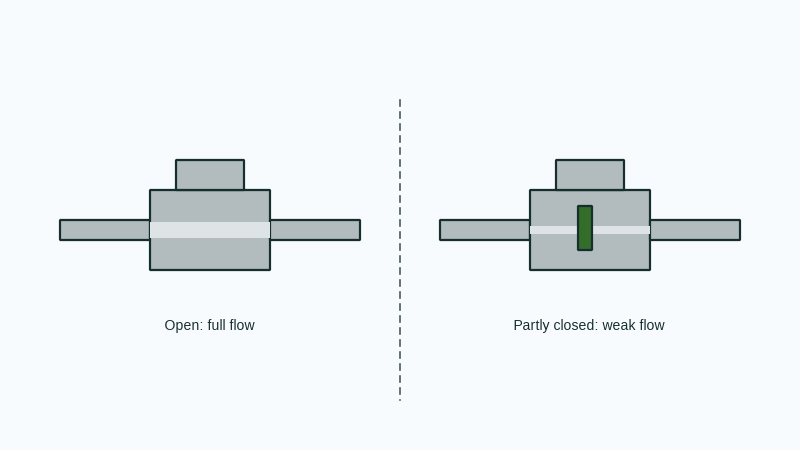
Older stops can also be half-seized, or have a failed washer inside that chokes flow even when open. If flow improves when you wiggle the handle, replace the stop. Braided supply lines can burst, so swap aged ones while you are in there. Never force a stuck stop: if it will not turn or it leaks when moved, close the main water valve and ask a plumber to replace it.
Common questions
How much time does a weak kitchen faucet repair need?
Cleaning an aerator takes about ten minutes. Replacing a supply line, stop valve or cartridge takes an hour or so. A house-wide pressure problem takes longer to diagnose. A time estimate comes with the written quote from the plumber, and parts availability can add time.
Which questions should I raise with a plumber over kitchen sink pressure?
Find out if the visit fee pays for both diagnosis and repair, what the written quote contains, and which warranty applies to parts and labor. Ask for the plumber's contractor license number, then check it on the state board website. Have the plumber explain what was found and what was replaced.
Do I need to be at home during the repair?
Have an adult there when the work begins, to show the problem and approve the quote, and again at the finish to check the flow. Clear out the sink cabinet to give the plumber room to reach the stops and lines. Mention any pets.
Can vinegar harm a faucet aerator?
White vinegar is safe for most chrome and stainless aerators during a short soak, such as thirty minutes. Read the faucet maker's care instructions, since acids can damage some finishes, such as brass or oil-rubbed bronze. Rinse thoroughly afterward.
Why is my kitchen faucet weaker since the plumbing work?
Work on the water supply often shakes debris loose inside the pipes, and it collects in the aerator or cartridge. Remove the aerator, run the water for a minute to flush, and clean the screen. If the weakness continues, inspect the stops and the cartridge.