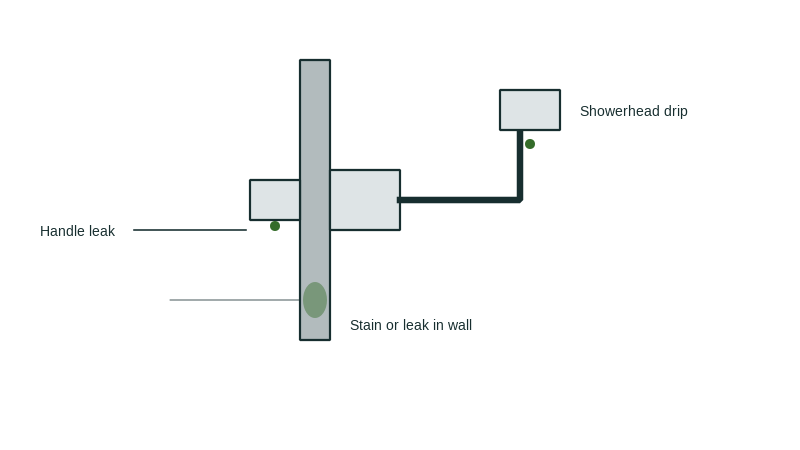
A dripping shower is a small leak that adds up, because it runs around the clock. Nearly always the fault is inside the valve behind the handle; the remedy is a new cartridge or fresh seals, not a new shower. Work out which of three drips you have before taking anything apart, since each repair differs. Related jobs sit together on the disposal, faucet, sink and shower page. When a wall has to be opened, a plumbing business serving Simi Valley or Moorpark receives your request from us.
Where exactly is my shower leaking?
Pin down the location first: the showerhead, the tub spout, around the handle, or inside the wall. Dripping from the head or spout after shutoff means the valve cartridge or seat is worn. Water at the handle means worn O-rings. Stains on a wall or ceiling suggest a leak behind the wall.
Try a quick test: with the shower off, dry the head and spout and watch for drops over an hour. With a tub, see whether the leak comes from the spout or the shower arm when the diverter is up. A diverter that does not seal fully sends water to the showerhead while the tub runs, which resembles a leak but is a worn diverter.
Water through a ceiling below, or a bathroom wall that is warm, soft or discolored, is a plumber's problem, not a cartridge problem. See our page on shower leak plumbers for guidance while you wait.
How do I replace a shower cartridge?
Stop the water and run a nearby faucet to release pressure. Take off the handle and the trim plate, undo whichever clip or nut secures the cartridge, and draw the old cartridge straight out (a puller helps if it sticks). Seat its replacement facing the same way, put everything back together, then turn the supply on slowly while watching for drips.
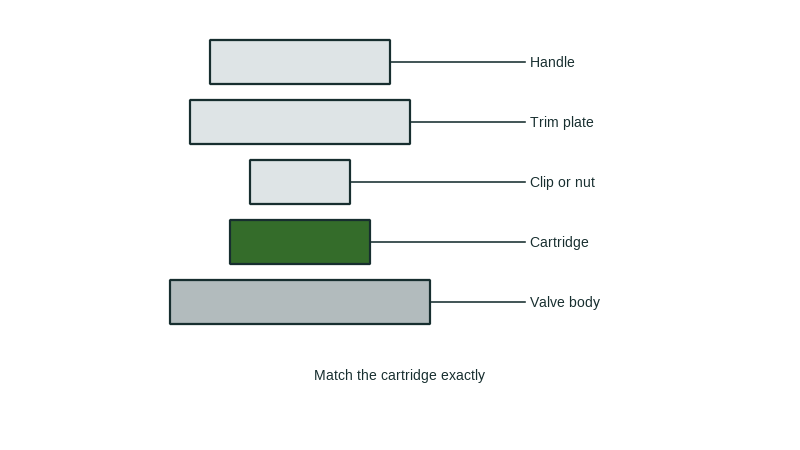
The sequence:
- Turn off the supply. Use the shower's own stop valves if it has them, otherwise the main or the water heater supply line, and test by opening the shower.
- Block the drain and put a towel in the tub as protection.
- Remove the handle. Look for a set screw under a cap, or a screw behind a decorative button.
- Remove the trim plate (escutcheon) to expose the valve body.
- Undo the fastener, a clip or a nut, that holds the cartridge in place. Photograph it first.
- Pull the cartridge, noting its orientation, which is usually marked with a notch or an arrow facing up.
- Clean the valve body with a rag, look for scale or grit, then smear plumber's grease on the O-rings and fit the new cartridge.
- Reassemble and test by opening the water slowly.
If the cartridge will not budge, never lever it with a screwdriver, which can crack the valve body. A plumber carries pullers and can replace a damaged valve body. Leaks waste upwards of 9,300 gallons of water per year in a typical household, according to the EPA, so a repaired valve pays back in water.
Do I have a one-handle or two-handle shower?
A single handle that rotates for temperature and slides in or out for flow indicates a cartridge, often a pressure-balancing type. Two or three handles mean separate valves with stems, washers or cartridges. Pressure-balancing and thermostatic valves also shield you from sudden temperature swings, so stay with the same type when you replace parts.
Valve type decides the parts. For a single-handle shower, look for the brand on the trim plate or handle; Moen, Delta and others publish part numbers for their cartridges. Carry the worn cartridge into a shop, or write down the model, and buy an exact match. One that fits roughly but not exactly can leak or give uneven temperature.
Test the water temperature after any repair. Scalding is a real hazard in a shower, and many homes set the water heater hot enough to burn. If the mix changes after a cartridge swap, stop using the shower until the valve is checked.
When does a plumber become the better choice?
Call in a plumber if there is no access panel and the wall must be opened, a shutoff refuses to close, the valve body is corroded, a cartridge is stuck, the leak shows in a ceiling or wall, or a repair has not stopped the drip. Replacing the valve body is plumber work too, involving soldering or fittings behind the wall.
A contractor license is generally required in California when labor and materials on a job total $1,000 or more. A cartridge swap is small, but a valve replacement behind tile can run larger. Check the license number with the state board at cslb.ca.gov, and ask for a written quote. Deposits cannot exceed $1,000 or 10 percent of the contract amount, whichever is less.
Ask who repairs the tile or drywall afterward, since many plumbers do not. Kitchen and bathroom sinks are handled in the guide to fixing a leaky faucet.
What is the fix for a two-handle shower that drips?
Close the water supply, take off the leaking handle, unscrew the stem or cartridge with a deep socket or stem wrench, replace the rubber washer or the cartridge, inspect the valve seat for pits, and reassemble. Most drips come from the hot or cold side that stays warm or cool to the touch after you turn it off.
To tell which side leaks, note the drip's temperature: warm means the hot side, cool means the cold side. Replace the parts on that side, and on an old faucet consider doing both sides together so the other does not fail next month. Light pitting on a brass seat can be ground smooth with a dressing tool, and a badly damaged seat comes out with a seat wrench.
Hard water scale on old stems can make them seize. We have not verified a hardness figure for any Simi Valley supplier, so check your yearly water district report. To slow scale buildup, see hard water scale prevention.
Common questions
What is the typical time for a shower valve repair?
For a plumber, a cartridge swap usually runs 30 minutes to an hour. A two-handle repair or a stuck cartridge takes longer, and replacing a valve behind a wall takes much longer, with wall repair separate. The plumber should state a time estimate alongside the quote.
Which questions should I put to a shower plumber?
Request a written quote that lists parts and labor separately, plus the contractor license number, which you can verify on the state board's website. Also learn whether wall or tile repair is included in the price, whether a leak behind the wall will be tested, and which warranty covers the work. Get every answer on paper.
Must an adult be at home during the repair?
Yes. Someone over 18 should let the plumber into the bathroom, point out the water shutoff, and confirm afterward that the shower runs and the drip has ended. When you cannot be there, say so when the plumber contacts you about timing.
Does a dripping shower raise my water bill?
It does, because it never stops. Over a month a steady drip accumulates, and drips from the hot side waste the energy spent heating that water as well. Repair is usually inexpensive. Should the bill climb with no visible drip, see the page explaining a high water bill.
What causes wrong temperatures after a cartridge swap?
A cartridge fitted upside down, or one of a different type from the original, could be the cause, as could a worn pressure-balancing part. Turn the shower off, check the orientation, and use the exact cartridge for your brand. If the problem persists, stop using it and look through our guides or arrange a plumber.