A brown or yellow ring on the ceiling makes most owners think of a burst pipe, yet many stains have no active plumbing leak behind them. A few simple checks, plus the moisture sources the US EPA lists, will tell you which kind you have. Should the checks point to a pipe, you can submit the quote form. We forward it to a local plumbing company, and companies accepting requests pay us a fee. Other jobs we cover in Simi Valley and Moorpark are on the home page.
Can a ceiling stain appear with no leak at all?
Yes. A stain can stay long after the water that caused it has gone, and not every wet ceiling is a plumbing leak. Old leaks that dried, roof water that stopped with the rain, a blocked AC drain, and condensation on cold surfaces can all leave spots. Whether yours is still active is the question that decides the next step.
Ceiling paint and drywall hold a record of every wetting. A single event can leave a ring that stays visible for years, and painting over it without a stain-blocking primer lets it come back through. That is why a stain with no drip, no smell and no growth is often history, not a current leak.
Even so, never assume. A slow plumbing leak can wet a ceiling in small amounts, with no drip at all, until the drywall sags. The checks below separate the cases.
How do I tell a dried stain from a live one?
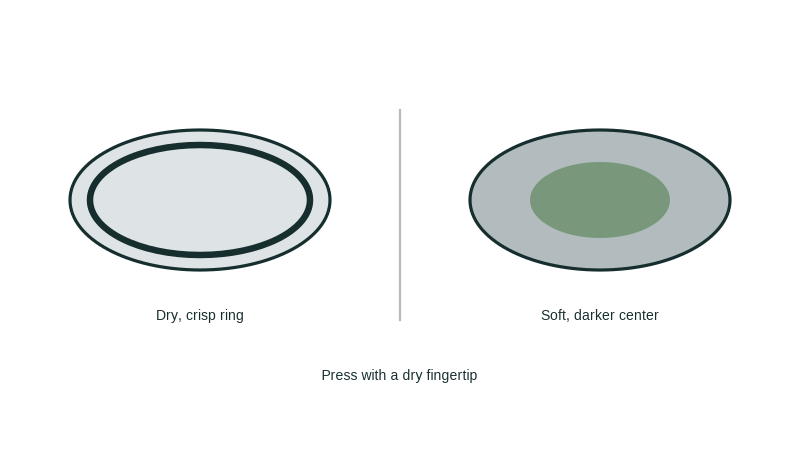
Press the stain with a dry fingertip and look at its edge. A soft, cool or darker patch is probably wet now, while a dry, crisp, brownish ring is likely old. Draw a pencil line around the edge and photograph it with a date, then check again after rain, after a shower or after the AC runs. If the ring grows, water is still arriving.
Look for the signs of a fresh problem: a sagging or bubbling section, flaking paint, a musty smell, a darker center than edge, or a spot that changes shade between morning and evening. A moisture meter, which a plumber or restoration contractor can bring, tells you if the material is wet behind a dry surface.
Check above and beside the stain too. Look in the attic if it is safe to get to, beneath the bathroom above, and around light fittings. Never poke a wet, sagging ceiling with your hand or stand beneath it, because it can give way suddenly. A bulging ceiling means stay clear and handle it as an emergency; the electrical risk is covered under leaks around a ceiling fixture.
Which signs point to a plumbing leak instead?
Plumbing is the likely source if the spot lies under a bathroom, kitchen or laundry, grows after a fixture is used, coincides with a meter running while all water is off, or comes with dripping sounds in a wall. A stain that shows up in dry weather with the AC off points away from the roof and toward a supply or drain line.
A meter test is easy. Turn off all taps and appliances, write down the meter's leak indicator or reading, then wait two hours and look once more. Any movement means water is going somewhere. The EPA notes a family of four using more than 12,000 gallons in one colder month may have serious leaks, so compare your bill with normal use.
A stain below a bathroom or upstairs laundry can come from a failed shower pan, a worn drain, a loose tub overflow or a leaking supply fitting. Guides on ceiling leak signs, a ceiling water leak and bills that jump with nothing visible go further. If a pipe has truly failed, a burst water pipe lists the first steps.
Which trade should I book: plumber, roofer or AC technician?
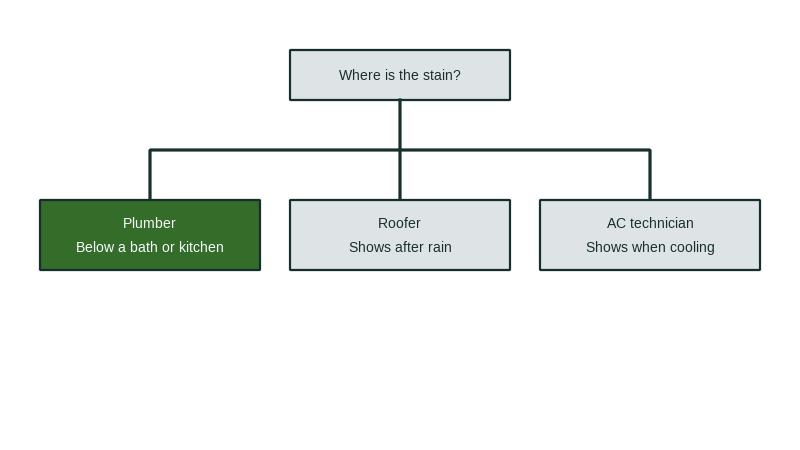
Book a plumber when the stain sits below a bathroom, kitchen, laundry or water heater, when it grows, or when the meter moves with everything off. Book a roofer when it follows rain, and an AC technician when it follows cooling. A plumber can do leak detection with a moisture meter and pressure test, which tells you whether to look at the roof.
If you are unsure, start with the plumber: a pressure test rules plumbing in or out. What it involves is explained under leak detection cost, and leaking water pipe repair covers the next stage if a pipe is found.
On the quote form, give the stain's location and size, whether it has grown, and what you have checked. We pass the request to a local plumbing business, which sends a written quote ahead of any work. We read requests on weekdays, 9am to 5pm. When water is actively flooding in, close the main first.
What can stain a ceiling without a plumbing leak?
EPA lists several moisture sources besides a burst pipe: roof leaks, clogged gutters, air conditioner drip pans and drain lines that are dirty or blocked, and condensation. Condensation on cold surfaces appears when indoor humidity is high, which showers, cooking and clothes dryers can raise. Insufficient insulation can also let moisture collect in roof materials.
Think through your house. When a bathroom fan exhausts into the attic rather than outdoors, it can drop moisture onto the ceiling beneath. An AC drain line that has clogged can overflow the pan and soak the ceiling below the unit. Cold ducts or pipes in the attic can sweat in warm weather, and the water can drip onto drywall.
Roof water is the other classic. A stain that shows after rain and then stops often means a roof or flashing problem, which calls for a roofer rather than a plumber. Note when the stain changes: after a storm, after cooling, after showers, or in no pattern at all. The pattern points to the source. Insulating a cold pipe in the attic can stop it from sweating onto the drywall.
How should the ceiling be dried to prevent mold?
Aim to have the area dried out within a day or two (24 to 48 hours). The EPA says that mold usually does not grow when wet materials dry in that window, and that mold can grow behind drywall or inside walls around leaking pipes. Fix the water source, not just the stain, run fans, and keep indoor humidity below 60 percent, ideally 30 to 50 percent.
Soft or sagging drywall may have to be removed, since it retains moisture. Dark spots that return after cleaning, a musty smell with no visible source, or health complaints in the household are reasons to take the problem seriously. EPA says mold may be hidden inside walls, so the smell is a clue even when you see nothing.
Run bathroom fans while you shower and for a while after, vent dryers outside, and use a dehumidifier in damp rooms. Hold off on repainting until the area has dried and the cause is repaired. After that, coat the spot with primer made to block stains, so the old ring cannot bleed through and confuse the next check.
Common questions
How long does tracing a ceiling stain take?
A moisture reading and a look can settle the first question in a short visit, while a pressure test or opening the ceiling takes longer. The plumber offers a time guide. If the culprit is the roof or the AC, another trade finishes the job. Our form makes no promise about response times.
What should I ask before hiring someone for a ceiling stain?
Find out whether the visit covers moisture meter readings along with pressure testing, what happens if plumbing is not the cause, and if the quote includes opening the ceiling. Have the price written down, and verify the contractor's license on the California Contractors State License Board website.
Does a brown ceiling ring always mean mold?
No. A brown ring is usually a water stain, and it may be old. Mold appears as fuzzy or spotty growth, often with a musty smell, and needs moisture to grow. According to the EPA, materials that dry out inside 24 to 48 hours usually stay mold-free. If you see growth, repair the water source first.