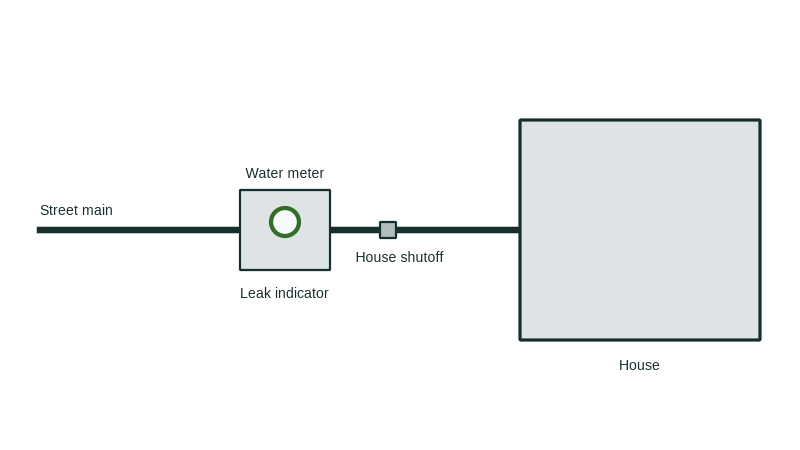
Four causes account for most high bills: a hidden leak, a toilet that refills endlessly, sprinklers that ran longer than planned, or extra people in the house. The least costly test is ten minutes at your meter. The plumbing jobs we arrange in Simi Valley and Moorpark are listed on the Arroyo Simi Plumbing home page. Below is the order we would check things, how to read the bill, and when a plumber visit pays for itself.
What pushed my water bill up this month?
A bill rises when more water is used, when the billing period was longer, or when rates changed. Find the usage figure on the bill and set it beside the figure for this month a year ago. If usage jumped, something is running, leaking or being watered; if usage is flat, the rate or the number of billing days changed.
Study the bill before searching for leaks. Check the billing period dates, the units used (often hundred cubic feet, or CCF, where one CCF is about 748 gallons), the change from the previous period, and any tiered rates that charge more per unit past a threshold. A household that creeps into a higher tier by a small margin may see a bigger bill than the water alone suggests.
The sender of the bill matters. Most of Simi Valley gets service from Ventura County Waterworks District No. 8, and the eastern end from Golden State Water. Moorpark is served by Ventura County Waterworks District No. 1. Both retail suppliers buy water through the Calleguas Municipal Water District. The name printed on your statement tells you which applies, and its customer service can confirm the meter read and explain the tiers.
When is a plumber worth the cost?
Book a visit when the meter test shows a leak you cannot locate, when water is escaping within a wall or beneath the slab, when a toilet or valve keeps failing, or when pressure seems too high. A plumber can test the lines under pressure and listen for leaks without cutting into walls.
Gather these first: the bill, the meter reading and your meter test result, where you hear or see water, and how old the house is. A plumber can price detection first and repair second, so you decide in stages. Repairing a supply line that leaks inside a wall typically calls for both a permit and a contractor license: in California, a license is required once work totals $1,000 or more, and for any job needing a permit. See our leak detection cost guide.
Also ask your water supplier whether it offers a one-time credit for a repaired leak. Policies differ, and we have checked none of them, so ask before assuming.
Could a toilet be behind a big water bill?
Very often. A toilet with a worn flapper, or a fill valve that fails to seal completely, can leak steadily into the bowl day and night. Stir food coloring into the tank, leave it roughly 10 minutes without flushing, and if the bowl turns colored the flapper leaks. A new flapper is an inexpensive, fast fix.
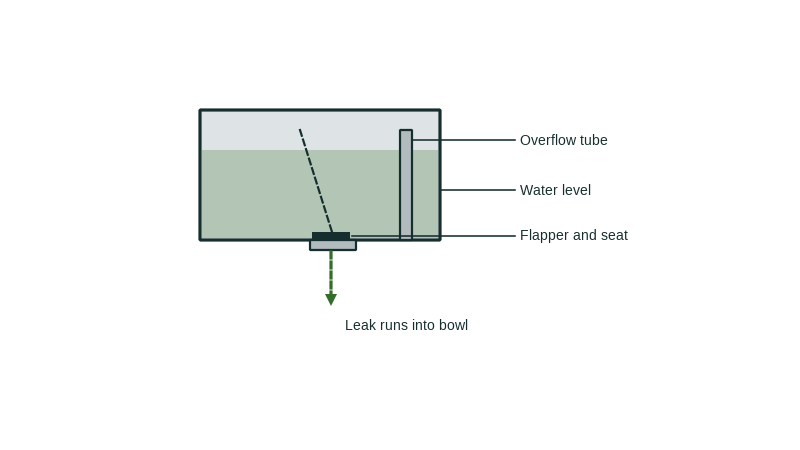
Other clues: the toilet tops itself up unprompted, the handle needs jiggling, or water trickles down the overflow tube. Try every toilet in the home, even one nobody uses. Read our guides on toilet flapper repair and stopping a running toilet.
Do sprinklers explain a high bill in summer or winter?
Yes, irrigation is the usual reason for seasonal swings. During Simi Valley's dry summers, a controller set for long cycles, a cracked sprinkler head or a leaking valve can use more than the rest of the house combined. A high winter bill without extra watering hints at a leak, since sprinklers should mostly be off.
Review the controller schedule, walk the yard while it runs looking for geysers, soggy spots and weak pressure, and inspect valve boxes for pooled water. A leak anywhere between the meter and the house, or on the irrigation line, will appear in the meter test with the house valve closed.
Do not forget a pool, a topped-up pond, an evaporative cooler or a fill system stuck on. Visitors, a new baby, a relative working from home or heavy laundry can each add noticeable use too.
Which other causes raise the bill?
A failed pressure regulator, which lets pressure creep up so every fixture flows faster, a leaking water heater relief valve, a dripping hose bib, a faulty softener or a water-using appliance such as an ice maker line can all add up. A bill that is high but steady may just reflect a rate change.
Pressure deserves a mention. Pressure beyond what fixtures are built for can cause hammering, leaks and wasted water. If a closing valve makes a bang, read the water hammer sound article and the overview of low pressure and regulators.
How can I use the meter to find a hidden leak?
Make sure every faucet and appliance is off. Next, find the meter's small leak indicator, usually a triangle or a dial that turns when any water flows, and note the reading. After 30 minutes to two hours with no water used, check again. A different number or a turning indicator means water is escaping.
In more detail:
- Make sure nobody is using water, and that the dishwasher, washer, ice maker and irrigation are idle.
- Lift the meter box lid at the street or the side of the lot. Watch for insects and the sharp lid edge.
- Write down the full reading and observe the leak indicator.
- Close the main valve to the house. If the meter stops, the leak lies within the house or between that valve and the house. Should the meter still turn after the house valve is shut, the leak is on the supplier's side, and the supplier should be informed.
According to the EPA, leaks in an average home waste more than 9,300 gallons of water per year, so hidden leaks are common. A slab leak or a buried line leak below a yard can run for weeks before a damp patch appears. A separate guide deals with that case: a big bill and no leak you can see.
Common questions
What is the usual length of a leak check?
A meter test needs 30 minutes to a couple of hours of waiting. A plumber's leak detection visit commonly lasts one to two hours, and more if the leak lies beneath a slab or in a yard. The plumber states an expected duration in the quote.
Which questions suit a plumber visit about a high bill?
Ask which method they use to find a leak, whether the price covers locating the leak or fixing it, the contractor license number, and what warranty applies to the repair, in writing. Insist that the quote is written down ahead of any work, and ask what happens if the leak turns out to be under the slab.
Is it necessary to be home during the visit?
Yes, an adult should be there, giving the plumber access to the meter, the water heater and fixtures and letting you approve extra work beforehand. If that is impossible, say so in the form and the plumber will explain what they need.
Why would a bill be high in winter?
With irrigation mostly off, a winter jump suggests a leak, a running toilet or more people at home. Run the meter test, then check toilets. If the meter holds steady with everything off, the extra use is real and the bill reflects it.
My bill doubled and nothing changed. Why?
Suspect a leak first. Then see whether the billing period ran longer, an estimated read replaced an actual one, or you crossed a pricing tier. Ask your supplier for the meter read dates. Our guides cover more plumbing causes.