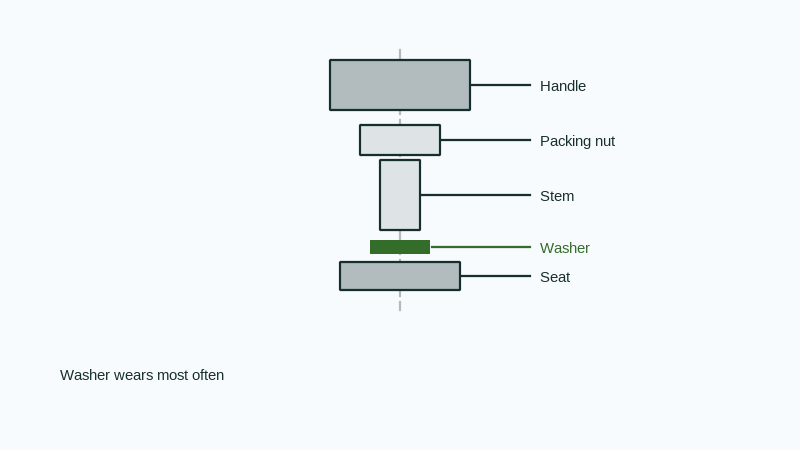
What stops a two-handle faucet from dripping?
Close the supply valves under the sink, run the faucet until it empties, take off the handle on the leaking side, draw out the stem or cartridge, and swap the worn washer, seat or O-ring. Put everything back in the opposite order and test. A fresh washer or cartridge ends most drips. For other fixture jobs, browse the page on taps, sinks and disposals.
Plug the sink drain first so no tiny screw can vanish down it. Lay a towel beneath your work area, photograph each step to help with reassembly, and line up the parts on the towel.
When the supply valves below the sink refuse to turn or fail to stop the water, shut the main valve for the house instead. A stuck valve is a separate problem, and worth fixing while you are there.
How do I find the leaking handle?
Watch what drips. Constant dripping from the spout with both handles off comes from one of two valves, hot or cold. To identify it, close one supply valve under the sink and watch. If the drip stops, the valve you shut feeds the leaking side.
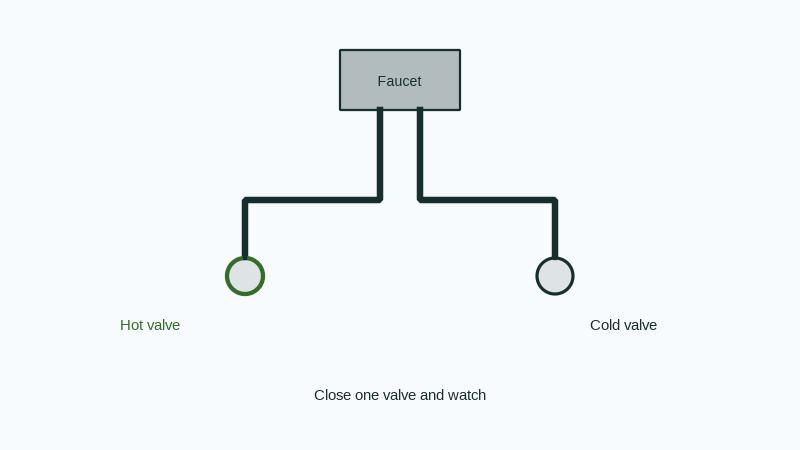
Hot water drips are more frequent, since heat wears rubber faster. A warm drip is a clue. A drip that appears only with a handle turned on, or seeps around the handle's base, points elsewhere: the O-ring or packing nut on the stem, not the seat washer.
Handles that will not close fully despite a firm turn tell the same story. Do not force them harder, because overtightening damages the seat. Remove the handle and look.
What type of two-handle faucet is it?
Two main designs exist. In a compression faucet, a stem carries a rubber washer that presses on a seat, and the handle needs several turns to go from open to closed. Ceramic disc and cartridge faucets need only a quarter or half turn and contain a sealed cartridge. The repair differs, so identify yours first.
Compression stems are the older design, found in homes built decades ago. Repairing them is cheap: a fresh washer, and occasionally a replacement seat. Ceramic disc and cartridge valves cost more, yet repair is quick since the whole cartridge is replaced. Match the cartridge to the brand and model, and take the old one with you to the store.
If you cannot tell, take off the handle and see what sits underneath. A decorative cap may conceal a screw, and a small flathead tool will lift it. A brand name on the body often reveals the cartridge type.
How is a compression faucet washer or seat replaced?
With the water off, loosen the packing nut, lift the stem out, remove the screw at its bottom and change the rubber washer. A rough or pitted seat can be dressed with a seat tool, or replaced using a seat wrench. Fit a new stem O-ring, grease lightly and reassemble.
The washer at the stem's base is a small rubber disc held by a brass screw. Match the old one's size and shape, because beveled and flat washers are not interchangeable. An assorted box of washers is cheap, but an exact match is better.
The seat is the brass ring the washer presses against. If it is scored, a new washer wears out fast. Pull it with a seat wrench and thread in a new one. When the seat is stuck, a seat-dressing tool smooths it instead. The leaky faucet repair guide covers the single-handle versions.
How is a cartridge swapped in a two-handle faucet?
Take off the handle, unscrew the nut or release the clip that retains the cartridge, and pull it straight up with pliers. Hold the new cartridge next to the old one, since the splines and length must match. Install it facing the same way, rub a little plumber's grease onto the O-rings, and refit the handle.
Cartridges can stick, particularly after years of hard water. A cartridge puller helps, and so does patience. Wiggling a cartridge from side to side can crack the faucet body.
If the new cartridge still drips, the faucet body may be damaged or the wrong part may have gone in. Replacement is then the realistic option. The page on faucet replacement cost explains the pricing, and the install faucet cost page covers the work that goes with it.
Does a two-handle tub or shower drip the same way?
The same method works. Tub and shower valves hide hot and cold stems or cartridges behind the handles, and they come out in the same way. Access is the difference: you may have to shut water to the whole house, since many bathrooms lack local shut-off valves.
Dripping from the shower head while the shower is off suggests a worn valve, and the EPA notes that a showerhead leaking 10 drips per minute loses over 500 gallons yearly. Thread tape on the pipe connection cures a leak at the head. Dripping from the tub spout suggests the valve.
If a wall or ceiling beside the tub or shower shows water staining, stop. The leak could be inside the wall, which calls for a plumber; the page on plumber for shower leak explains it.
At what point should I call a plumber?
Bring one in when the shut-off valves are stuck or leaking, the stems are corroded and refuse to budge, the faucet body is cracked, or the leak continues after new parts. Do the same if water is staining a wall, or the fixture sits in a wall you would need to open.
Submit the quote form listing the faucet's brand and type, which handle leaks, and a photo of the fixture. A nearby plumbing business gets your request from us, and businesses taking on requests pay us a fee. Form requests are read on weekdays, 9am to 5pm. You can request a quote here, or browse the guides at Arroyo Simi Plumbing.
Common questions
How long does a two-handle faucet repair take?
Most repairs wrap up inside an hour once the parts are on hand. Finding the right washer or cartridge eats the time, so bring the old part along when you shop. A stuck stem or corroded seat can double it.
How much water does a dripping faucet waste?
The EPA estimates a faucet dripping once a second can lose over 3,000 gallons annually. Worn washers and gaskets are the usual cause. The amount is small on any one day, but a year of drips shows up on the water bill and squanders a resource.
Should I replace both washers when only one leaks?
It makes sense. Both valves are the same age and have done the same work, so the other is likely close to failing. Replacing both while the tools are out adds little time and spares a second shut-off later. The parts are inexpensive.
What do I ask before hiring someone to repair a faucet?
Find out whether the quote includes parts and labor, covers the shut-off valves should they need work, and what warranty applies. Confirm the contractor license number with the state board, and get the price in writing ahead of the work. Hold on to the paperwork afterward.