What do I do first when my water heater leaks?
Shut off electricity or gas going to the heater, close the cold-water supply valve on its top, and open a hot tap elsewhere in the home to ease the pressure. Mop up and keep people away from the area. Then follow the leak back to its source. The water heater page lists the wider range of repairs.
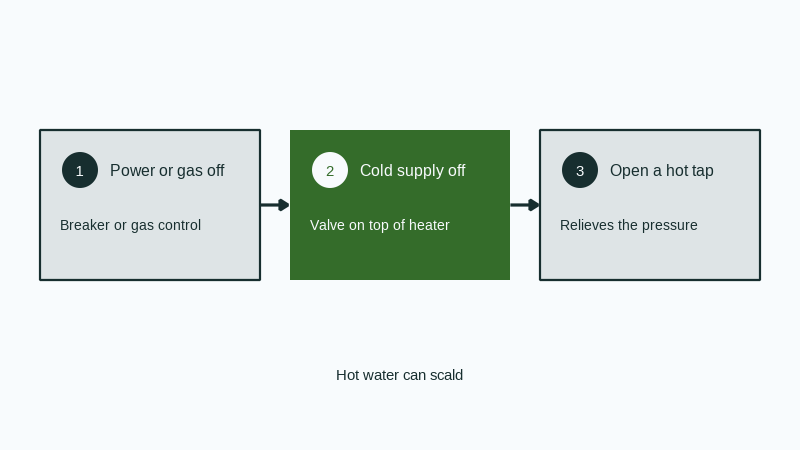
Electricity and water are a dangerous mix. For an electric heater, switch the breaker off before touching anything near the leak. For gas, set the gas control to off or to the pilot setting. If you smell gas, leave the building, use the gas utility's emergency line once outside, and use 911 if you feel in danger.
Heater water can be scalding. Keep away from any stream or puddle from the discharge pipe of the relief valve. Let the tank cool before opening the drain.
Is a leaking electric heater element repairable?
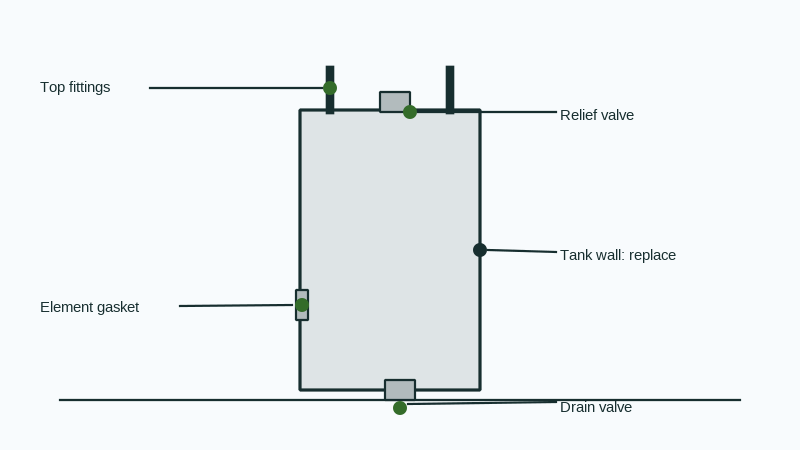
Often, yes. Leaks at the element flange usually come from a worn gasket or a loose element. Switch off the breaker, empty the tank below the element, remove the cover and element, fit a new gasket, and reinstall the element. Whoever handles the wiring should be comfortable with electrical work.
Test the circuit with a voltage tester before touching any wire. If you are unsure, hand it to a plumber or an electrician. The page on replacement water heater elements lists the signs and steps.
A corroded element housing, or a wet tank interior under the cover, suggests the leak is coming through the tank wall, and replacement is then the better option.
What fixes a leaking pipe connection or valve?
Fittings on top of the tank typically leak at the threads or at a flexible connector. Give it a slight turn with a wrench; if the leak persists, close the water, drain to below the fitting, and replace the connector or re-seal the threads. A corroded fitting or flexible line should be replaced rather than patched.
Dielectric unions and flex connectors have a limited lifespan. When the metal is crusty with white or green deposits, replace it. Use new thread tape or pipe compound, and choose the right connector size. A leak at the shut-off valve usually means the valve has worn out.
A dripping drain valve can often be cured by closing it all the way, or by capping its end. Many drain valves are plastic and wear out. Replacing one requires draining the tank, which is manageable but messy.
What does a dripping relief valve or discharge pipe mean?
A relief valve is a safety device that opens once pressure or temperature inside the tank gets too high. A drip can point to a worn valve, high house pressure, or a tank with no room for expansion. Never cap or plug the valve. Have a plumber find the cause.
If the valve drips only during burner or element operation, thermal expansion is a likely culprit. In a closed plumbing system, with a pressure regulator or check valve at the meter, heated and expanded water has nowhere to go. An expansion tank provides that room. The page on expansion tank replacement explains this, and the one on relief valve replacement covers the valve.
For a worn-out valve, the swap is simple, but the discharge pipe must be fitted properly and aimed at a safe spot. Hot water can scald, so this is a sensible task for a plumber whenever you have doubts.
When is a leaking tank beyond repair?
Water seeping from the tank body, whether at the bottom or through the jacket, means the steel liner has failed. A tank cannot be repaired from the inside. Replace the heater rather than waiting for a flood. Power it down, close the water, drain it and arrange a replacement.
Rust streaks, damp insulation and a pool at the base are the telltale signs. A heater ten years old or more, with a history of sediment, usually fails this way. A new anode rod fitted while the tank is still young can add years; see anode rod replacement.
Compare replacement options before choosing. The replacement cost guide for water heaters shows what drives a quote, and the tank versus tankless article helps if you are considering a different type.
Is installing a tankless water heater a DIY job?
Some owners try it, but the gas, vent and permit requirements make it a poor DIY project. A gas tankless unit needs correctly sized gas pipe, a vent made for that unit and often a condensate drain. Electric units need a heavy dedicated circuit. Errors risk fire, carbon monoxide and a failed inspection.
If a leaking tank has you considering tankless, start with the page on gas tankless installation. Check with the building office on permits: Moorpark has a Building and Safety Division, and so does Simi Valley.
To save money, handle the preparation yourself: clear the space, pick the unit and gather photos. Leave the connections to a plumber.
When should a plumber take over the leak?
Call in help when the leak originates at the tank, the relief valve, a gas line or any electrical part, or when it returns after your repair. Do the same if the source stays hidden, if the heater sits in an attic or above a ceiling, or if the tank is old.
Send the form with the heater's brand, age and fuel type, where it stands and where the water appears, and attach a photo. We forward the request to a nearby plumbing business, and those that accept requests pay us a fee. Requests are read on weekdays between 9am and 5pm. Request a quote, or return to Arroyo Simi Plumbing for the other guides.
Which part of the heater is dripping?
Dry every surface, then hold paper towel against the suspect spots and watch. Common sources are the pipe connections on top, the pressure relief valve and the pipe running from it, the tank's bottom drain valve, the gasket around a heating element (electric models only), and the tank itself. Water travels, so trace upward.
Condensation can pass for a leak. A chilled tank sitting in a warm, humid room, or a high-efficiency gas heater producing condensate, can drip with no fault at all. If the dripping stops while the heater is idle and the water is clear, condensation may be responsible.
The page on plumber for water heater leak explains when to ask for help, and the next sections take each source in turn.
Common questions
How long does fixing a heater leak take?
A fitting, connector or drain valve is commonly done in one to two hours. A relief valve, element or gasket takes somewhat longer. Replacing a tank generally runs a few hours, more if the venting or gas piping must change.
Are leaking water heaters hazardous?
They can be. Water meeting electricity is hazardous, hot water can scald, and a leaking gas heater may have a venting fault. Turn off the electricity or gas, close the cold-water supply and keep the area clear. Smell gas? Get outside and use the gas utility's emergency line from there.
How much water does a minor leak waste?
More than you might think. The EPA notes that one drip each second from a faucet can lose upward of 3,000 gallons annually, and a slow drip from a heater valve continues day and night. It can also rot the floor and invite mold. Fix it or shut the water to the heater.
What should I ask before hiring a repair person?
Ask what failed, whether repair or replacement is wiser, what the warranty covers and if a permit applies. Check the contractor license number with the state board, and get the price on paper ahead of the work. A written diagnosis makes quotes easier to compare.