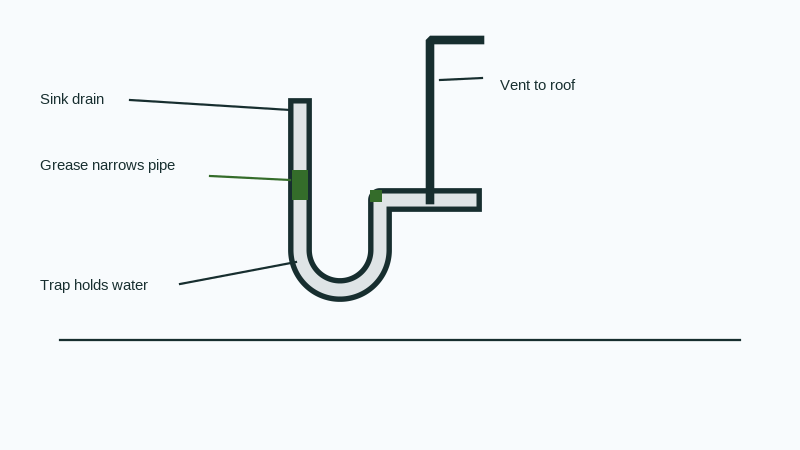
What causes a sink to empty slowly?
A pipe that has narrowed. With less room to escape, the water lingers. In a kitchen, the narrowing is mostly grease, food and soap that cooled and clung to the pipe wall. In a bathroom, it is hair tangled with toothpaste and soap scum. Less often a blocked vent or a fault further down the line is responsible. The drain and clog hub covers the other fixtures.
A sink that is sluggish without being fully stopped is a warning, not an emergency. The gap shrinks month by month, and a full blockage tends to arrive on the day guests do. Clearing it now takes less effort than clearing it later.
Begin by noting which sinks are affected. One slow sink points to its own trap or branch. Several fixtures slowing together, or gurgling when water runs, suggest a shared line, which is plumber territory.
What slows the kitchen sink without fully blocking it?
Grease is the usual reason. Hot grease goes down the drain as a liquid, then cools and coats the pipe, and every new load of dishwater adds a layer. The pipe narrows, the sink empties more slowly, and the smell worsens. Food scraps from a disposal can pack into the same layer.
A double kitchen sink with a disposal on one side adds more bends and a shared trap, so the slowdown may begin in either bowl. Test each side alone by filling it and pulling the stopper. When just the disposal side is slow, the trouble probably lies between the disposal and the shared pipe. The page on garbage disposal repair explains what deserves checking there.
Cold, thick grease also explains why the problem is worst in the morning, after a night of cooling. A short burst of hot water can help, but heavy grease deep in the line needs mechanical clearing.
What slows a bathroom sink?
Hair and soap. Hair snags on the stopper mechanism or the trap, binds with soap residue and forms a mat that water must squeeze through. Toothpaste, shaving cream and cosmetics pile on. A sink that slows after a few weeks of ordinary use most likely has this cause.
Lift or unscrew the stopper and look. Most people spot the problem within a minute, a dark clump on the stopper rod or just under the drain opening. A bent wire or a plastic strip made for drain cleaning pulls it out. Put on gloves, since what you find is unpleasant.
If that makes no difference, the trap beneath the sink may be holding the buildup. The guide to fixing a slow bathroom sink and the one on unclogging a bathroom sink go through the steps in order.
What if the drain is still slow once the stopper is clean?
If the stopper is clean yet the drain remains slow, the buildup sits deeper: in the trap, the arm leading to the wall, the branch line inside the wall or a partly blocked vent. A blocked vent makes the sink gurgle because air cannot get in behind the water, so it drains in a slow, noisy swirl.
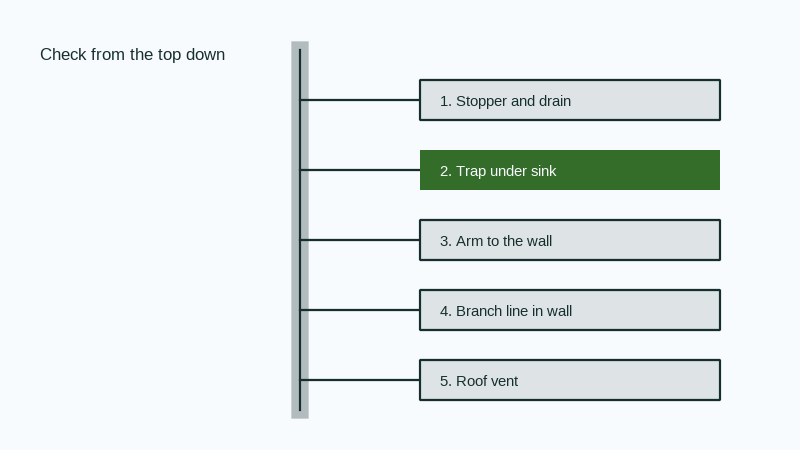
Inspect the trap first. Place a bucket beneath it, loosen the slip nuts by hand, and empty the trap into the bucket. Rinse it and look through the pipe arm. If the pipe is clear and the sink is still slow, stop there.
Roof vents on any home can clog with leaves, nests or debris. Do not climb onto a roof for this. A plumber can clear a vent safely.
Which home remedies work, and which are best skipped?
A plunger, a drain strip and a trap cleaning all work well. Hot water helps with soap. Baking soda mixed with vinegar fizzes but does little against a firm clog. Never pour boiling water into a plastic pipe or a porcelain sink, and do not mix chemicals, since some combinations release dangerous fumes.
For plunging, pick a flat-bottomed cup plunger for a sink, hold a damp cloth over the overflow opening and keep a tight seal. Plunge firmly with quick strokes. With a double sink, plug the other drain so the force goes where you want it.
Commercial drain cleaners are harsh chemicals. They can damage older pipes and fixtures, and they are hazardous if they splash, or if the clog remains and the plumber who comes later must deal with standing chemical water. Read the label, put on gloves and eye protection, and never combine products. The general drain unclogging guide lists a safer order of attempts.
Does salt in the drain every night do anything?
It is a folk habit, and it achieves very little. Salt does not dissolve grease or hair, and a spoonful is gone with the first rinse. A hot water flush once a week after a greasy meal does more, as does a drain strip or a trap cleaning every few months.
If your home has a septic tank, ask the company servicing the tank which drain products are safe for it before pouring anything in.
Prevention is the better habit: a mesh strainer in the kitchen and bathroom, grease wiped into the trash instead of rinsed away, and no coffee grounds or rice in the sink.
When should a plumber clear a sluggish drain?
Bring one in if more than one fixture is slow, if the sink gurgles, if water rises from a tub or floor drain, if a plunger and trap cleaning do nothing, or if slow drains return within weeks. These point to the main drain or a branch line, which needs a drain cleaning machine or a camera inspection.
You can request a visit with the quote form and describe what you tried. Say which fixtures are slow, whether there is any smell or gurgling and for how long it has been happening. That saves a trip, and Arroyo Simi Plumbing forwards your request to a local plumbing business. The clog pricing page explains how plumbers charge for a sink or a line.
If sewage backs up into a shower, tub or floor drain, do not use any water in the house, and arrange help at once. Backed-up sewage is a health risk, and the clog sits in the main line, not in a sink.
Common questions
How long does it usually take to unblock a slow sink?
Cleaning a trap or plunging takes ten to twenty minutes. A cable machine on a kitchen branch line often needs under an hour. A main line with roots or a belly in the pipe takes longer, and may call for a camera to find the cause.
Does a slow drain point to something bigger?
At times. One slow sink is normally local buildup. Several slow drains, gurgling toilets or water in a low floor drain suggest a main sewer line problem, often from roots or an old pipe that has shifted. If more than one fixture is affected, have the main line checked rather than treating each sink.
Will a sluggish drain add to my water bill?
Alone, a slow drain adds nothing to the bill, but people tend to run water longer while waiting. A leak at the trap or a dripping tap under the sink does waste water. The EPA says a faucet that drips once a second can waste over 3,000 gallons annually, so dry the cabinet floor and check.
What should I ask someone who is clearing a drain?
Ask what the price covers, if a camera inspection is part of it, how many fixtures or lines are covered, and what follows if the blockage returns. Have the price put in writing and check the contractor license number with the state board. A plumber who explains what was found is a good sign.