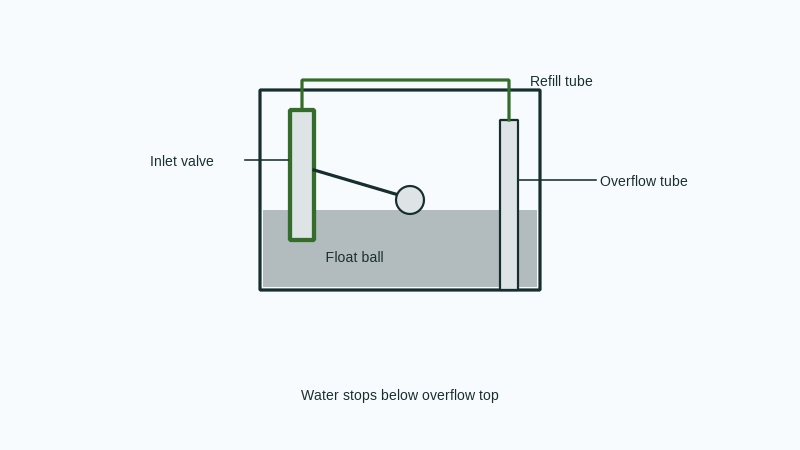
The inlet valve is the tall assembly standing at the left of the tank that lets water in until the float tells it to stop. When it wears out, you hear hissing, the tank refills without end or the toilet fills slowly. Most households can swap one in under an hour with a few tools. This page belongs to our toilet help section, and you can get to the rest from the home page or send a quote request.
How can I tell an inlet valve has gone bad?
A failing inlet valve shows up as water that continues to run once the tank has filled, a hiss that never stops, a tank that refills briefly every few minutes, or a very slow refill. Lift the lid and watch. Should water spill down the overflow tube, the valve is failing to shut off, and the float or valve seat is usually to blame.
To tell this apart from a flapper leak, try a dye test: put a few drops of coloring from the kitchen into the tank and wait around ten minutes. Tinted bowl water with no flush means the flapper is leaking, not the valve supplying extra water. The EPA recommends the same test. Our page on flapper repair covers that fault, and why a toilet keeps running lays out the full checklist.
A rattle or banging as the tank fills also points to the inlet valve, as does a hiss that starts only after you flush. Mineral build-up in hard water can clog the small diaphragm, so a clean is sometimes enough.
When does a plumber make sense for a toilet repair?
Hire one if the shut-off valve will not turn, the supply line shows corrosion, water is seeping from the floor, the toilet is one part of a bigger leak or you cannot remove the old valve. A toilet repair is a quick visit in most homes, and a plumber can replace the valve, shut-off and supply line together.
For toilet repair in Simi Valley and Moorpark, send the form and we pass it along to a plumbing business nearby, and that business takes over from there. We are paid by the businesses that accept requests. The plumber arrives with common fill valve types, checks the rest of the tank, and tests for leaks. The quote should list what gets replaced. The form is read each weekday from 9am to 5pm. Replacing a toilet outright is a bigger job covered in the toilet replacement cost guide.
Is cleaning or adjusting enough, or must the valve be replaced?
Sometimes cleaning works. Adjusting the float to stop the water about an inch below the upper end of the overflow tube fixes many cases. If the valve is clogged, a short flush of the supply line and a gentle cleaning of the diaphragm or seal can revive it. If the seal is cracked or the body is worn, replace the entire valve.
Fill valves are inexpensive, and replacement parts are generic across many toilets, so replacing often beats cleaning an old part. Shut off the water first. Be careful not to bend the supply line. Crusty scale around the fitting is a cue to check the line and shut-off valve too, which our guide to the toilet shut-off valve describes.
How do I swap an inlet valve?
Close the wall valve, then flush until the tank is empty and sponge out what remains. Detach the supply line, unscrew the nut beneath the tank that secures the old valve, lift it out and set the new one at the height the instructions specify. Tighten by hand, reattach the supply, adjust the float and test for leaks.
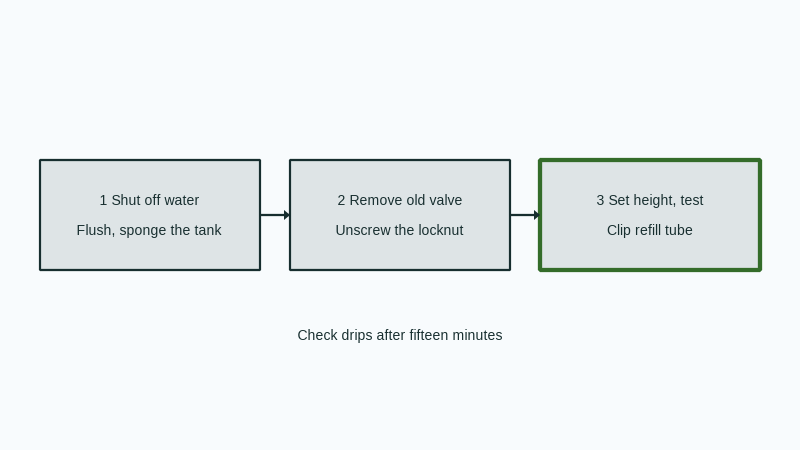
Small details help. Lay a towel on the floor and place a little bucket under the connection. Do not overtighten the plastic nuts, because they crack easily. Attach the refill tube to the top of the overflow pipe with its clip, so water is directed into it and not the bowl. Open the water slowly. Look for drips at the base nut and along the supply line, then flush twice and check again after fifteen minutes.
If the old shut-off valve under the toilet is stiff or leaking, replace it as well while the supply is disconnected. Rubber washers and plastic parts are cheap, so swap them rather than reuse them.
What if the tank leaks, or running continues after the new valve?
Examine the flapper, the overflow tube height and the float. If the tank itself leaks at its bolts or at the gasket between tank and bowl, that is a different repair. A tank that sweats can look like a leak, and a loose seat or base can too. Our guides to the overflow tube and toilet leaks cover the usual suspects.
If the toilet will not flush properly after the swap, a poor refill height or a blocked jet may be the cause. Read toilet flush repair for the next checks. If you notice movement at the base, a loose toilet seat or a failing wax ring may be the real problem.
Common questions
How much time does a fill valve swap need?
A homeowner with basic tools usually needs 30 to 60 minutes, and a plumber often finishes faster. A seized shut-off valve or corroded supply line adds time. Allow time for the tank to refill and for a leak check after the first flush. Keep the water off throughout the job.
Which questions should I put to the plumber for this repair?
Check that the quote covers the valve, a new supply line and shut-off, how the toilet is tested afterward and what happens if another part proves worn. Request the contractor license number and the price in writing, and ask whether a minimum visit charge applies.
Must someone be around during the visit?
Yes, normally. Someone must admit the plumber, show the toilet and confirm the fix. Water to that toilet is off while the work is under way. With two bathrooms, tell the plumber which toilet is failing and keep the space around it clear.
Does a running toilet deserve a repair?
Yes. A toilet that never stops can waste lots of water, and the EPA puts the yearly loss from leaks in an average home above 9,300 gallons. A running fill valve also raises your water bill. Fixing it is usually among the cheapest repairs in the house.