A toilet that refills over and over is annoying, yet the true cost is the water draining away. Usually the problem is a cheap part inside the tank that takes minutes to swap. This page helps you pin down the part, repair it yourself where that feels manageable, and spot the point where a professional should take the work. For other services in Simi Valley and Moorpark, head to our home page.
A running toilet is worth catching early because the leak is silent and continuous. You will see nothing unless you lift the tank lid or watch the water meter.
Why does a toilet run nonstop?
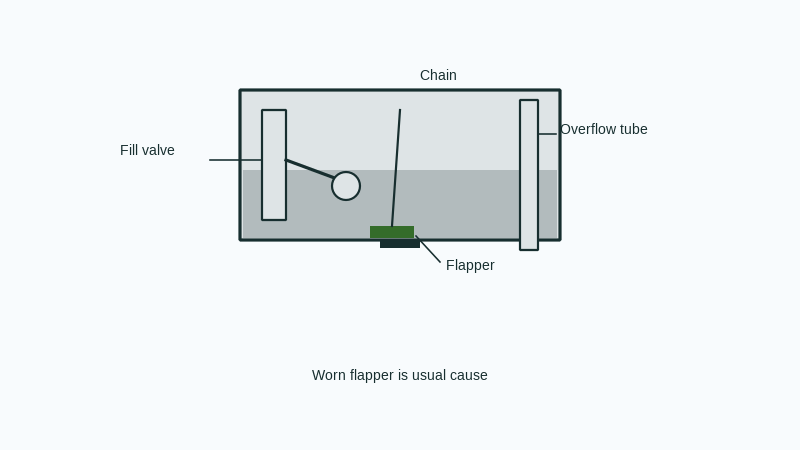
A toilet runs when the tank fails to seal completely or when the refill never shuts off. Typical causes include a worn flapper letting water creep into the bowl, a chain that is either overtight or hanging slack, a fill valve jammed open, and a float set so high that water pours into the overflow tube.
Down in the base of the cistern you will find the flapper, a rubber seal. With age it stiffens, warps or gathers mineral scale, and stops sealing. Water leaks into the bowl, the tank level drops, the fill valve opens to top it up, and the cycle repeats. A tank that refills every few minutes with nobody around is often called a phantom flush.
A chain connects the handle to the flapper. If it is taut, it holds the flapper slightly open. If it hangs loose, it may not raise the flapper all the way, which also weakens flushes. About one link of slack is normal. Beside the tank stands the tall fitting that admits water, the fill valve. When it sticks, or its float rides too high, water climbs to the overflow tube and drains away nonstop.
Which repairs can a homeowner handle?
Swapping in a new flapper or fill valve solves most running toilets, and you can do it yourself. Shut the supply valve, empty the tank by flushing, install the new part, then reopen the valve and test it. EPA reports that old or worn flappers cause most toilet leaks and calls replacing one quick and easy, so the flapper is the best first repair.
Take the old flapper with you to the store so you can match the size, since flappers differ and a poor fit leaks. A universal flapper often works, though confirm it sits flat. After reassembly, leave a bit of play in the chain and flush three or four times to check that the tank refills and stops.
Changing a fill valve is also doable, but it involves unscrewing the supply line and snugging the locknut under the tank, and overtightening can crack the porcelain. If the shut-off valve under the toilet will not close, stop there: that valve has to be replaced first, as the guide on repairing a toilet shut-off valve explains.
Why won't my toilet flush completely?
A weak or partial flush has different causes from a running toilet. The flapper may close too early, chain slack may stop the flapper from rising all the way, rim jets may be clogged, the tank may hold too little water, or the trap or drain may be partly blocked. First compare the tank level with the fill line.
A tank holding too little water gives the bowl less force. Locate the fill line marked inside the tank and set the float so the water rises to it. Rim jets are the tiny holes under the rim feeding the bowl; scale can plug them, and a small mirror plus a piece of wire shows whether they are open. A partial clog typically shows as a lazy swirl, with the bowl level rising and falling slowly.
If a plunger clears it, the clog was in the trap. A clog that returns may lie farther down the line. Flush trouble is covered in toilet flush repair, and blockages in clearing a clogged toilet.
When does a running toilet call for a plumber?
Bring in a plumber when a new flapper and fill valve change nothing, when the shut-off valve will not close, when water seeps out around the base, or when you find a crack in the tank or the bowl. Such jobs involve the supply line, the flange or the fixture itself. Fill in the quote form and your request goes to a local plumbing business. Those that accept requests pay us a fee.
Puddles around the toilet are a separate matter from a running tank. A failed wax ring, a loose closet bolt or a leaking supply line may be the cause, and ignoring it can rot the subfloor. A page on what a toilet-leak plumber visit involves walks through it. An old, cracked or perpetually troublesome toilet may be better replaced, and the pricing page on replacing a toilet explains the cost drivers.
Begin with the quote form, listing the symptom, the toilet's age and any parts you already swapped. The business that accepts your request visits the house and writes the price down before work starts. Jobs like these tend to go quickly once the correct part is on hand.
What does a running toilet do to my water use?
Because the flow is quiet and constant, a running toilet can waste far more than you would guess. EPA puts typical household leakage at more than 9,300 gallons annually, with worn toilet flappers among the usual causes. A family of four that uses more than 12,000 gallons monthly may have serious leaks, so check the toilet first whenever a bill looks high.
EPA also notes that fixing simple leaks can cut a water bill by about 10 percent. Toilet leaks are among the easiest to mend, which makes the tank a smart first check when the bill jumps. One of two utilities serves Simi Valley homes, and your bill shows which; either way, compare the usage line from one month to the next.
When no toilet is running and the bill still looks steep, continue with the causes of an unusually large water bill.
How do I figure out which part is failing?
Start with the dye test. EPA recommends putting a few drops of food dye in the tank and not flushing for 10 minutes; color in the bowl means the flapper leaks. Should the bowl stay clear while water keeps running, listen for hissing at the fill valve and see whether water reaches the overflow tube.
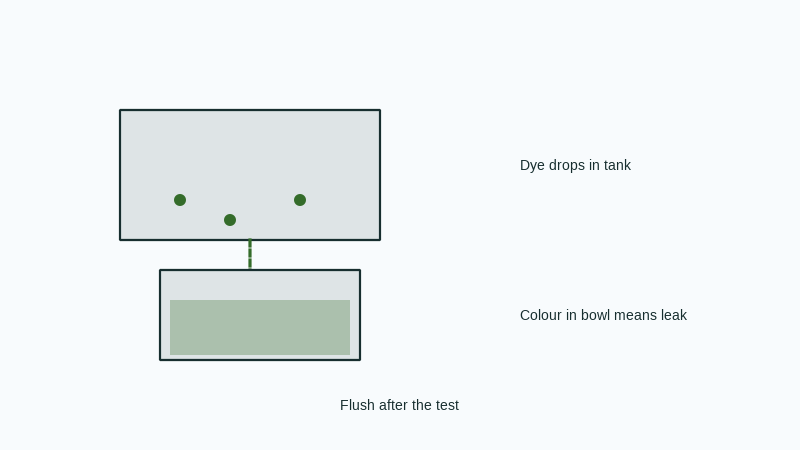
Flush immediately once the test ends, otherwise the dye can stain the tank. Colored bowl water points at the flapper, yet inspect the seat underneath for scale or a nick too, because a fresh flapper cannot cure a damaged seat.
If water climbs to the top edge of the overflow tube or spills over it, the float or the fill valve is out of adjustment or failing. Lower the float slightly and flush again. A level that refuses to stay down usually means the fill valve has worn out. Separate guides cover repairing a fill valve, the inlet valve and the flapper, plus one on fixing the overflow tube. A neighboring topic is a toilet that keeps going without stopping.
Common questions
How long does fixing a running toilet take?
A flapper or fill valve swap is typically quick, and many homeowners are done inside an hour. A plumber's visit runs longer if the shut-off valve or flange needs work, and the plumber will estimate the time on the day. Our form makes no promise about response times; someone reads requests Monday to Friday, 9am to 5pm.
What should I ask a plumber before a toilet repair?
Find out whether the quote includes parts, whether the plumber will check the shut-off valve and supply line during the visit, and what happens if the first part does not solve it. Get the price in writing before any work, and verify the contractor's license on the California Contractors State License Board website.
Does a running toilet raise my water bill?
Yes. EPA lists worn flappers among common household leaks and says leaks of this sort can waste upward of 9,300 gallons each year. Since the flow never stops, the bill may be your only clue. Repair it early, then compare the usage figure on the next bill to confirm the leak is gone.
How often does a flapper need replacing?
EPA says old or worn flappers cause most toilet leaks, so replace yours once it hardens or stops sealing. Mineral scale can wear them out sooner, so inspect it if the tank has scale or the toilet starts refilling on its own. A dye test once a year is a cheap way to catch a leak.