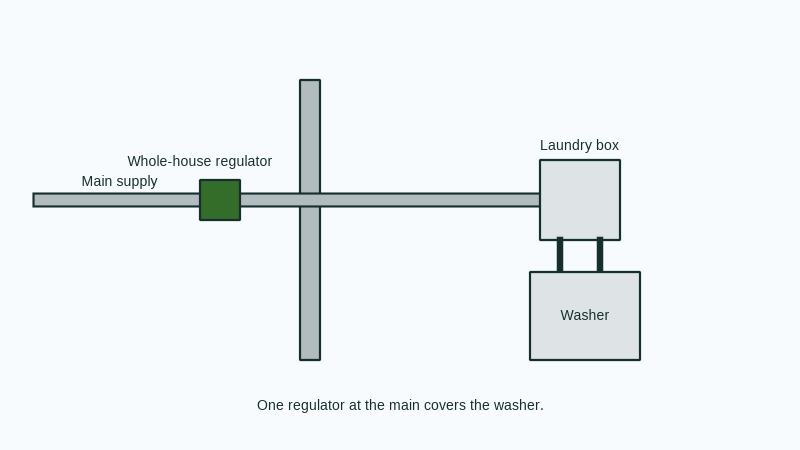
A washer is fed by two small valves behind the laundry box, and those valves, along with the rubber hoses connected to them, carry the full pressure of the house. If one regulator at the main already holds pressure in a safe range, the washer needs none of its own. If pressure runs too high, a regulator protects the whole house, washer included. It belongs to the sinks, showers, faucets and disposals group of guides, and a request through the form can bring a plumber out to take a reading.
Does the washer call for a regulator of its own?
Usually not. A whole-house regulator, set at the point where the main supply line comes into the home, shields every appliance on that supply. A separate unit at the washer is worth considering only if the house has no regulator, the laundry sits on a long branch with unusually high pressure, or a plumber has measured a problem there.
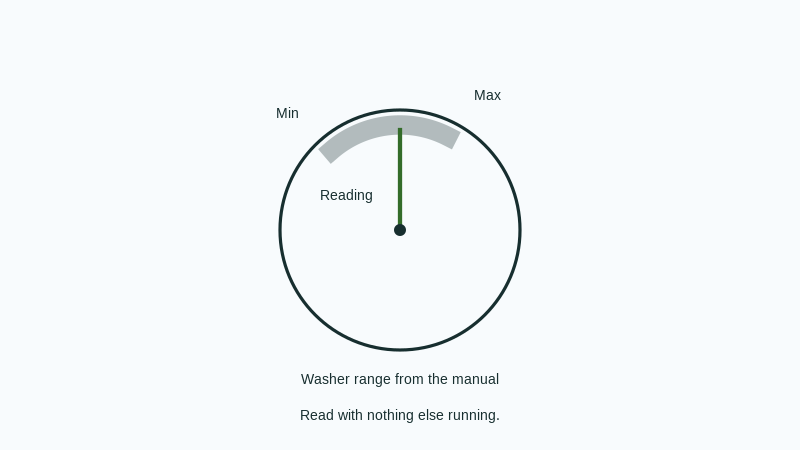
Washer makers print supply requirements in the manual, typically a minimum and maximum inlet pressure. If your pressure exceeds the maximum, the fix is a regulator for the house, not the machine. If pressure is under the minimum, the washer fills slowly and may show an error, and a regulator will not help. Measure first, then decide.
In what way does high pressure damage a washer?
High pressure strains the inlet valves, hoses and fittings. The machine may bang as the valve shuts, rubber seals wear out sooner, and a hose or fitting is more likely to split while nobody is home. Water damage from a burst washer hose is a common household loss.
Watch for a hammering knock when the washer stops filling, bulging hoses, leaks at hose ends and repeat valve failures. The knock itself is explained in the page about the sound of water hammer. Replacing old rubber hoses with braided ones is a cheap precaution, and so is closing the washer's two supply valves before a trip. Check the hose dates and replace them on the maker's suggested schedule.
What is the way to read the pressure at my washer?
Screw a pressure gauge onto a hose bib or the laundry valve, open the valve fully, and read the dial with nothing else running. Hardware stores sell a basic gauge. Compare the reading against the maximum in your washer manual and against the regulator setting if the house has one. A figure well above the washer's maximum means the house needs attention.
Take readings at different hours, since supply pressure shifts. The highest pressure often shows up before dawn or late in the evening. Write down the numbers and hand them to the plumber. Most Simi Valley homes are on Ventura County Waterworks District No. 8, and the eastern end is on Golden State Water, while Moorpark is on District No. 1; your supplier can describe typical pressure in your area.
Why does my washer take so long to fill?
A slow fill points to low pressure or flow, not a regulator problem. Look at the inlet screens on the back of the machine first: grit and scale collect in the tiny mesh filters. Close the supply valves, unscrew each hose, lift out the screen, wash it under the tap and put it back. Make sure both supply valves are fully open and no hose is kinked.
With clean filters and open valves, test pressure at another tap. If the whole house is weak, read about sudden low water pressure. If only the laundry is weak, suspect a valve left partly open, a clogged line or a failing washer valve. A washer that is slow only on hot may have a water heater issue, so see low hot water pressure.
Where is a regulator put in, and who does the fitting?
A whole-house regulator is mounted on the main line near where it enters the house, upstream of everything else. A point-of-use unit can sit on the washer's supply line. A regulator is a brass valve with an adjusting screw and a nut, and a plumber sets it with a gauge. Wrong settings give weak showers or noisy pipes.
Installing one alters the plumbing, so it is plumber's work. California generally expects a contractor license for work valued at $1,000 or above. Whether a small regulator swap needs a permit depends on the city, so ask the Building and Safety Division in Simi Valley or the Building and Safety office in Moorpark. Related pages cover how to find the regulator and whole-house regulators.
What can I do to prevent a washer hose from failing?
Replace old rubber hoses with braided stainless ones, check them each year for bulges and rust at the ends, and shut both supply valves when you are away for days. A drain pan beneath the machine and a floor leak sensor are worth considering. The EPA estimates the average home loses over 9,300 gallons a year to leaks.
A washer in an upstairs closet or a garage laundry nook beside a living area deserves extra care, because a failure can run quietly for hours. Look the area over each time you change the hoses. To learn how slow leaks are checked in similar spots, see the page on a leaking pipe beneath a sink. Back to Arroyo Simi Plumbing.
Common questions
Which water pressure range does a washing machine require?
The manual gives the range, with a minimum for proper filling and a maximum to protect the valves. Many makers publish both on a data sheet. Measure pressure at the laundry valve with a gauge and compare. If it falls outside the range, a plumber can adjust the house regulator or replace it.
Will a regulator quiet a noisy washer?
It can if the noise is high pressure making the valve bang as it shuts. Water hammer arrestors help with that too. A rattling drum or a pump noise has nothing to do with pressure. Begin with the manual and the machine's level, and only then look at the supply.
Does a brand-new washer need a regulator?
A new washer is as pressure-sensitive as an old one, so measure first. If the house regulator keeps pressure inside the range in the manual, no extra part is needed. New braided hoses and open valves are the right basics. Keep receipts and the manual in case a warranty question comes up.
Is fitting a washer regulator a job for the homeowner?
A small point-of-use fitting is within reach of a handy person who closes the water and checks for leaks. A whole-house regulator is plumber's work, and in California it falls under the contractor rules. If unsure, submit a request so a plumber can measure the pressure first.