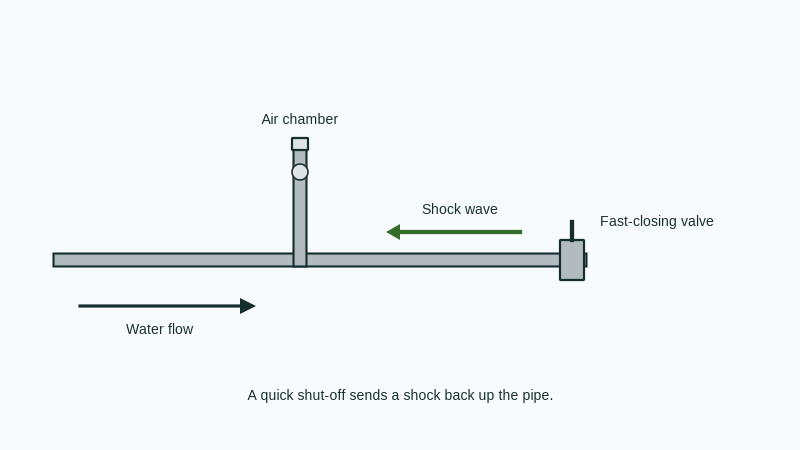
Water hammer is the bang, thump or shudder you hear when flowing water is halted suddenly. A fast-closing valve, high supply pressure or loose pipes are the usual causes. It is often only a nuisance, though shocks that keep repeating can loosen joints and shorten the life of fittings. Try the quick checks below first, and if the noise stays, go to Arroyo Simi Plumbing and request a local plumber.
How does water hammer sound, and what is happening in the line?
It may come as one sharp bang, a quick run of knocks, or a rattle after a tap or valve closes. Moving water carries momentum. A fast-shutting valve stops it dead, and the resulting pressure wave travels back down the pipe, which makes loose pipes strike wood or each other.
The sound follows patterns you can use to find the source:
- One bang when a washer or dishwasher fills and stops. The appliance valve closes quickly.
- A knock when you shut a single lever faucet fast. Single lever taps close in a blink.
- A rattle that runs along a wall. Loose pipe straps let the pipe move.
- A squeal or hum with flow. That is a different problem, often a worn washer or high velocity.
Try to note which fixture triggers it, and the time of day. Writing that down helps a plumber narrow down the cause before opening anything.
Why does a house get water hammer?
Triggers include a fast-closing valve, excessive supply pressure, unsecured pipes, or a lost air cushion in the line. Older homes have air chambers that slowly fill with water. Modern appliances close valves fast, and a home with no working regulator runs at full street pressure.
Causes, listed from most to least common:
- High water pressure. The supply pushes harder, so the shock is bigger. In many homes a regulator sits close to the main, and if it fails or is absent, pressure climbs. See the water main pressure regulator.
- Quick-closing valves. Washing machines, dishwashers and ice makers use solenoid valves that stop flow in an instant.
- Loose pipes. A pipe not strapped to the framing slaps against it.
- Waterlogged air chambers. The short vertical stubs behind fixtures that once cushioned the shock fill with water.
- Thermal expansion. A closed system with a water heater can see pressure spikes. A small expansion tank helps. Read about swapping out a water heater expansion tank.
Your water comes from the district serving your street, and its pressure depends on where you live and how high your lot sits. A house at the bottom of a slope gets more pressure than one near the crest, which is one reason where your house stands matters.
What stops water hammer for good?
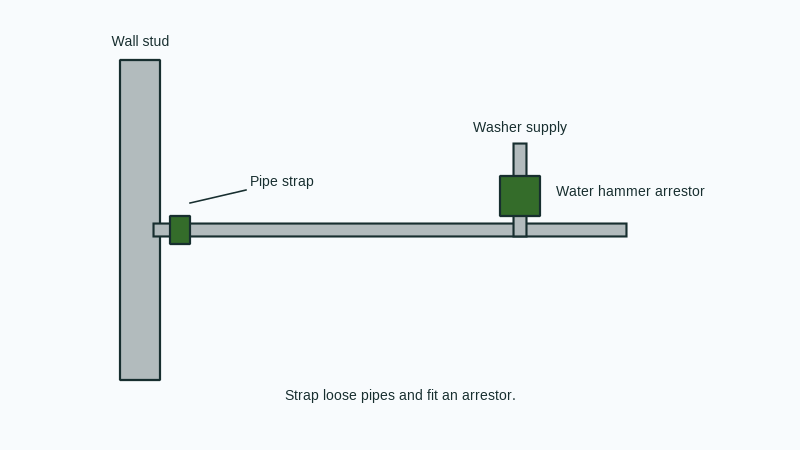
Begin with the cheap fixes: secure loose pipes, drain the system to refill air chambers, and measure the pressure using a gauge on a hose bib. If pressure is high, a regulator has to be fitted or replaced. When one appliance is the cause, a water hammer arrestor on that supply line often solves it.
Work in this order:
- Secure pipes. Where you can see pipe in a garage, crawl space or attic, add padded clamps or straps so it cannot knock. Foam pipe insulation between pipe and wood also deadens noise.
- Refill air chambers. Close the main, open both the top and bottom taps to empty the system, then shut those taps and bring the main back up gradually. Air returns to the chambers. On some systems this is only a temporary fix.
- Check pressure. A gauge screws onto a hose bib and reads pounds per square inch. If the reading is far above what the pipes and fixtures should see, ask the plumber about a regulator. The pages on replacing a pressure regulator and whole house regulators cover the options.
- Add arrestors. A small sealed device on the supply to the washer or dishwasher absorbs the shock. Screw-on types fit between the hose and the valve.
- Slow the valve. Replace a worn fast-closing tap valve.
If the noise comes from the washing machine only, the washing machine pressure regulator page offers a closer fix.
Can water hammer harm my pipes?
Rarely from a single bang, but over time yes. Repeated shocks stress joints, loosen fittings, and can crack old pipes or valves, especially galvanized steel or brittle plastic. It can also hasten wear on fixtures and washing machine hoses. Fix the cause rather than live with it.
A leak that starts after years of knocking is typically at a joint. If you see a damp patch, a stain or a drop in water pressure, treat the sound as a symptom and look closer. The checklist is on the page about recognizing a burst pipe.
Gas piping can rattle in a different way, and that is not water hammer. If you hear banging near a gas appliance, or smell gas, get out of the building and reach the gas utility from outdoors; 911 is for anyone in danger. Do not work on gas pipe yourself.
When should a plumber look at the noise?
Get help when the bang is loud, when it began after other work, when leaks accompany it, or when simple fixes do not help. Do the same when pressure readings are very high. A plumber can test pressure, inspect the regulator and expansion tank, add arrestors and strap pipes you cannot reach.
When you send a quote request, it is forwarded to a local plumbing business, and the businesses that accept requests pay us a fee. Include these details:
- Which fixture or appliance sets it off.
- Whether it happens with hot water, cold water or both.
- Where in the house you hear it: wall, ceiling, crawl space or garage.
- If you know of an expansion tank or a regulator on the water line.
If pressure is weak while the pipes also knock, the article on low water pressure may help, since the regulator or a half-closed valve could be responsible.
Which remedy suits my home?
Let the cause decide: high pressure points to a regulator, one noisy appliance to an arrestor, loose pipes to straps, and a closed water heater system to an expansion tank. The right fix is the one that matches what a gauge and a short inspection show.
A simple comparison:
| Symptom | Likely cause | Usual fix |
|---|---|---|
| Bang on every fixture | High pressure | Fit or replace a regulator |
| Bang at one appliance | Fast valve | Arrestor on that line |
| Rattle along a wall | Loose pipe | Straps or foam padding |
| Bang once hot water has run | Thermal expansion | Expansion tank |
| Occasional knock | Waterlogged chamber | Drain and refill, or arrestor |
A California contractor license is needed for paid work above a small dollar threshold, and the CSLB website allows you to verify it. Fitting a regulator at the main is plumbing work that should not be guessed at.
Common questions
How long does a water hammer fix take?
Strapping a pipe or fitting an arrestor can run under an hour. A pressure regulator swap takes a few hours, and an expansion tank about the same. A hidden pipe issue behind a wall takes longer. Following a pressure check, the plumber should state the expected time.
What should I ask a plumber about banging pipes?
Ask if a pressure reading is part of the visit and which fix they expect to use. Also learn the minimum charge, and whether parts such as regulators or arrestors are included. Check the contractor license number on the CSLB website before agreeing.
Will water hammer go away by itself?
Rarely. The cause remains in the system, so the shocks return whenever the valve closes. A refilled air chamber may quiet things for a while before the noise comes back. Fixing the cause protects fittings and appliance hoses from slow damage.
Can I live with a small knock?
A faint knock now and then is not urgent, but it signals pressure or a loose pipe. Look for the cause when convenient, and fix it before the noise gets louder. Watch for leaks, stains and falling pressure, which would make it more urgent.