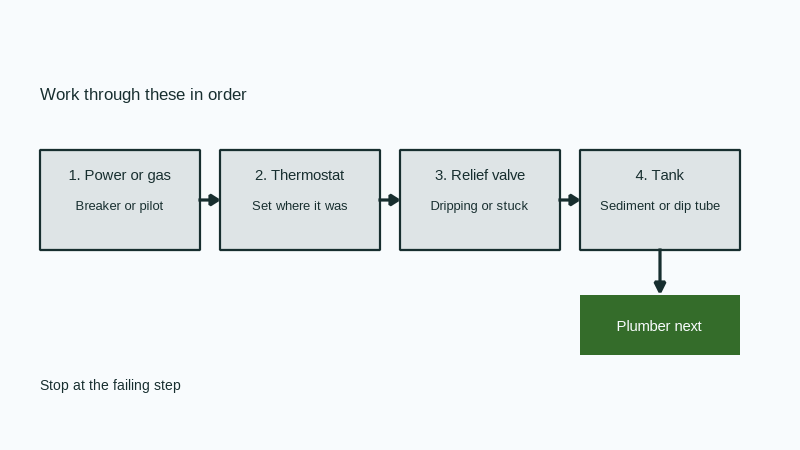
Start with whatever feeds the heater. A pilot that has gone out on a gas unit, or a breaker that has tripped on an electric one, produces the same cold shower as a broken part, and each check takes two minutes. When both look fine, work through the thermostat, the relief valve and then the tank. The steps below follow that order and connect to the broader guide on water heater repair. If none of the fixes work, ask us to pass your job to a plumber.
What should I test first if the taps run cold?
Inspect the supply before the settings. On a gas heater, look at the pilot light and the gas valve. On an electric model, open the breaker panel, then press the heater's own reset button. After that, confirm the thermostat is still where you left it. All three checks cost nothing and take only minutes.
Rule out the simple causes too. Check that the cold-water inlet valve, found on top of the tank, is open, and ask whether the power dropped overnight. An outage can trip an electric heater's safety control, and a gas unit with an electronic igniter needs electricity to light. If some taps deliver hot water and others do not, one mixing valve or a crossed line may be at fault, not the heater. Two related pages: one on a cold kitchen tap and one on a shower that runs cold.
What stops an electric water heater from heating?
Electric units lose heat for three reasons: a tripped breaker, a burned-out upper or lower element, or a high-limit reset button that has popped. Switch off the breaker before handling anything. The red reset button sits behind the access panel; press it once. A second trip means a part has failed, and that repair belongs to a plumber.
Two heating elements sit inside an electric heater. A dead upper element usually leaves you with nothing hot at all, while a failed lower element still leaves some hot water, though only a little, and it drains quickly. Swapping an element is a common repair, covered on our page about replacing a water heater element. Never open the panel while power is live, and keep water off the wiring: if the panel is wet, stop there and send for a plumber.
What stops a gas water heater from heating?
A gas unit that delivers nothing hot usually has one of three faults: a pilot flame that has died, a thermocouple that fails to detect the flame, or a faulty gas control valve. The viewing window shows whether the pilot is burning. Follow the lighting label exactly if the unit has one. Should the smell of gas ever reach you, exit the building.
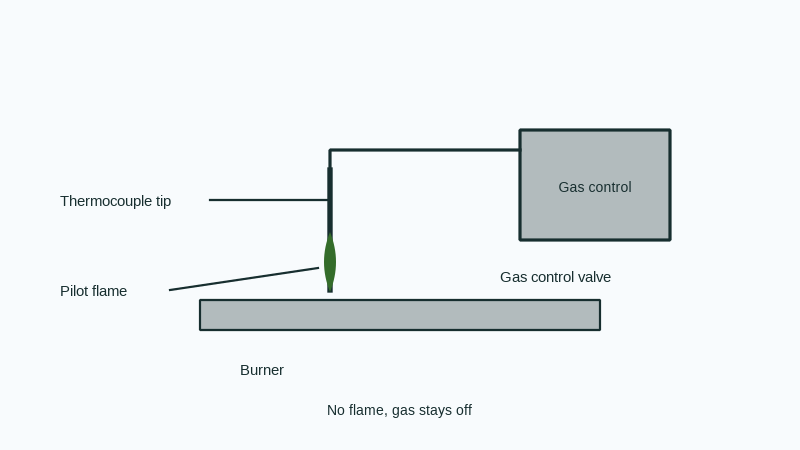
With a gas odor present, light nothing, touch no switches, and contact your gas utility from outside (that is SoCalGas on streets with gas service). Use 911 if you think anyone is in danger. When a pilot keeps going out, a worn thermocouple often turns out to be the cause, and thermocouple replacement is routine plumber work. Gas piping and gas control repairs are regulated work, so do-it-yourself stops at relighting the pilot per the label.
Why does the hot water in my tank drain away so fast?
Sediment causes this more than anything else. Minerals collect at the tank bottom, where they block heat from reaching the water, whether it comes from the burner or the lower element, and take up room, which leaves less space for hot water. Rumbling or popping while the heater runs is a clue. A flush of the tank can help if the heater is still fairly new.
Other causes include a broken dip tube, which sends cold water straight to the top of the tank where it mixes with the hot, and a thermostat set too low. See dip tube replacement for the symptoms. The anode rod guards the tank's steel, and a worn one can speed corrosion, as explained in anode rod replacement. Tanks do wear out eventually; typical ages appear in the water heater lifespan guide.
Why is the water cold even though the heater is running?
If the unit is running yet the tap water stays cold, the fault sits somewhere between tank and tap. Possible culprits are a failed mixing or anti-scald valve, a stuck check valve, a shutoff that is partly closed, or hot and cold lines swapped during earlier work. A heater that runs without delivering hot water is its own category, covered on this page.
Test the hot tap nearest the heater, then the one furthest away. Hot at the near tap and cold at the far one places the problem in the distribution pipe or the fixture. If both stay cold, carefully feel the heater outlet, because pipes beside a working heater ought to be hot. Scalding is a genuine risk: set the thermostat as the heater's label advises and test the water with your hand before a child gets in.
What goes wrong with a tankless water heater?
A tankless unit shows an error code, and its manual explains each one. Typical culprits are an inlet filter that has clogged, mineral scale coating the heat exchanger, a blocked vent, a weak gas supply, or water flow too low to fire the burner. Hard water makes scale form faster.
Manufacturers such as Rheem publish code lists, and a plumber familiar with the model can read them. Our page on Rheem tankless repair covers that line. Many people ask why plumbers are cautious about tankless units: the upfront price is higher, venting and gas sizing must be correct, and hard-water areas need regular descaling. To weigh the two types, read tank vs tankless.
What are my options as a renter without hot water?
Send your landlord or the property manager a written message right away. California tenant law generally treats working hot water as part of a livable rental, though the official state tenant guide or the housing office gives the exact rule. Save a dated copy of what you sent and photograph the unit.
Do not try to open the heater or relight a shared gas appliance. If a central boiler serves the building, the fault may reach every unit and only the owner can repair it. Tenants rarely hire plumbers for a rental, so route the request through the landlord.
When should a plumber take the job?
Call a plumber in when a reset will not hold, the heater leaks, you smell gas, the tank bangs loudly, or an aging unit keeps failing despite earlier fixes. For a leaking tank, replacement is usually the answer rather than repair, so expect the plumber to talk about swapping the whole heater.
A water heater swap in California typically requires a permit. Labor and materials totaling $1,000 push a job into contractor license territory under state rules. In Simi Valley, the City's Building and Safety Division issues permits; in Moorpark, they come from that city's Building and Safety office. For an urgent leak, emergency water heater repair sets out the options. Check what replacement costs before you decide. Back to Arroyo Simi Plumbing.
Common questions
What can a tenant do when the apartment has no hot water?
Send your landlord a written notice and hold onto a copy. Arranging the repair falls to the landlord or building manager, since the heater is part of the building. If the problem drags on, see the California Department of Consumer Affairs tenant guide or your local housing office for your options. Do not repair the heater yourself.
Which symptoms show a water heater is wearing out?
Warning signs include lukewarm water, a supply that runs out fast, rumbling noises, rusty water from the hot tap, a pilot that repeatedly goes out, and damp spots or rust near the base of the tank. An older heater showing several of these signs should be considered for replacement rather than another repair.
Who repairs a heater that makes no hot water?
For a gas or electric tank, a plumber deals with the heater and its gas or electrical connections. A unit owned by the landlord is the landlord's job to fix. A fault in the house wiring goes to an electrician first. A gas odor means you should exit the building and notify your gas utility from outside.
What explains cold taps when the heater is switched on?
Likely causes include a dead heating element or burner, a broken dip tube, a faulty mixing valve, or a fault in the lines between tank and tap. Sediment and a tripped safety control also cut output. Feel the temperature at the heater outlet to find out whether the heater or the pipes are to blame.